
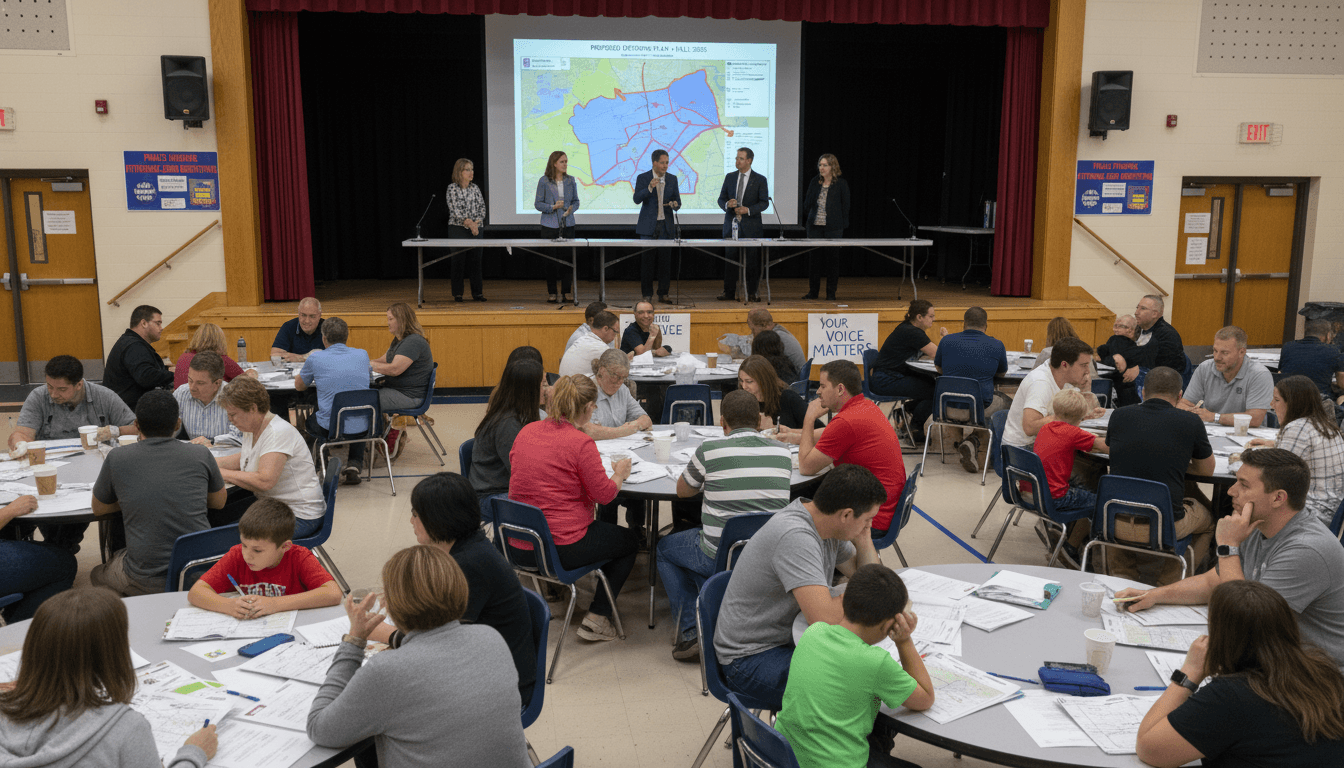
School Board Attendance Zone Rezoning Newsletter for Families
Attendance zone rezoning is one of the most emotionally charged governance actions a school board can take. Families who have built school communities over years, who have chosen homes based on school assignments, or who have children in the middle of a school experience feel the weight of a boundary change in a very personal way. The newsletter that communicates a rezoning proposal is not simply a policy document. It is the moment when a family learns that their child's school life may be disrupted, and how it is written matters enormously.
This guide covers what to include in a rezoning newsletter, how to communicate the disruption honestly and empathetically, and how to structure communication through the full rezoning process from proposal to implementation.
Explain the problem that is driving the rezoning
Attendance zones are not redrawn for administrative convenience. They are redrawn because something has changed: enrollment growth that has left one school overcrowded while another operates below capacity; a new school opening that needs students to reach a sustainable enrollment level; demographic shifts that have created significant resource imbalances between schools; or a facilities change like a closure or consolidation. The newsletter should explain the specific condition that is driving the proposal. "Jefferson Elementary is currently enrolled at 127% of its intended capacity, with portable classrooms in the parking lot and three programs sharing the gymnasium. Lincoln Elementary, three miles away, is enrolled at 71% capacity. The board is considering attendance zone changes to bring both schools to sustainable enrollment levels." This context does not eliminate opposition, but it makes the opposition more productive.
Present the proposed boundary changes with specifics
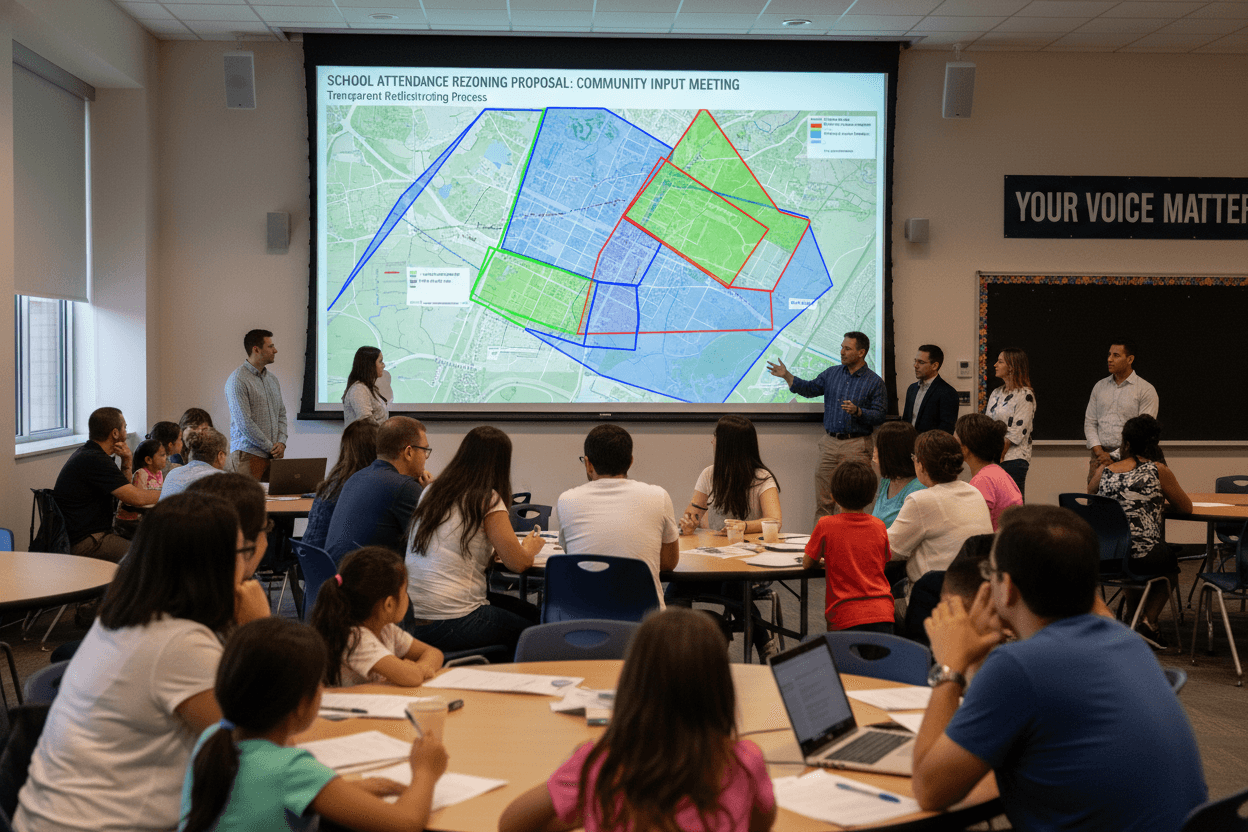
Families affected by a rezoning need to know whether their specific address falls within the new zone. The newsletter should include a link to an interactive or downloadable map showing the proposed new boundaries, with street-level detail. If the district has a lookup tool where families can enter their address to find their new school assignment, link to it prominently. "Enter your address at district.edu/zone-lookup to find your school assignment under the proposed new boundaries." A family who has to search through a PDF map and guess whether their block falls on one side or another of a boundary is receiving inadequate communication.
Clarify which students are affected and when
In many rezoning proposals, students currently enrolled at a school are grandfathered in for some period, while new enrollees follow the new boundaries. The newsletter should state this policy clearly. "Students currently enrolled at Jefferson Elementary will have the option to remain at Jefferson through the end of their elementary years under the approved grandfathering policy. Students entering kindergarten in fall 2027 will be assigned to their school under the new boundary map." Ambiguity about grandfathering generates more anxiety and complaints than almost any other aspect of a rezoning.
Describe the community input process and how it affects the decision
Rezoning proposals that are communicated as final decisions before community input has been gathered generate significantly more opposition than proposals that are communicated as genuine drafts subject to revision based on community feedback. If the board has not yet voted, the newsletter must make it clear that the proposal can change as a result of community input and that the input process is real. "The board is accepting written comments through March 15 and will hold four community listening sessions at schools in the affected zones. The board will consider all input before voting at the April 8 meeting. Previous proposals have been modified based on community feedback; this process is intended to work the same way."
Acknowledge the disruption directly
A rezoning newsletter that is entirely focused on the logistics without acknowledging the human experience of being told your child is changing schools comes across as tone-deaf. Acknowledge it plainly: "We understand that for families affected by these proposed changes, this is unsettling news. Changing schools can be hard, and we do not want to minimize the difficulty of that transition for children who have built friendships and relationships with teachers at their current school." Empathy stated directly, followed by specific supports and a genuine input process, is more effective than empathy implied through careful word choice.
Explain transition supports for affected students
Families who know that the district is actively planning for the transition experience are more confident about a rezoning than families who receive only the boundary information and nothing else. Name specific transition supports: orientation events at the new school before the year begins, introductions to the new principal and key staff, commitments to honor extracurricular activities through the current year for students who are mid-season, counselor availability to help students process the transition, and a dedicated contact for families with transition questions. The specifics matter.
Provide a timeline from proposal to implementation
A rezoning newsletter should give families a complete timeline of what happens next: community input deadlines, board vote date, effective date for new boundaries, and key milestones for enrollment in the new school if the proposal is adopted. "March 15: Written comment period closes. April 8: Board vote. May 1: Families in affected zones receive official school assignment letters for 2027-28. May 20: New student orientation at receiving schools. August 12: First day of school under new boundaries." A family who can see the full timeline feels more in control of the process than a family who knows only that something is changing, sometime, in the future.
Use Daystage to communicate consistently through the full process
Daystage monthly newsletters give school boards a professional, consistent channel for communicating through every stage of a rezoning: the initial proposal, the community input period, the board vote, the grandfathering policy, and the transition support. When families receive regular updates through a newsletter they trust, the rezoning process feels managed and fair rather than chaotic and arbitrary. The quality and consistency of district communication during a rezoning is often what determines whether the community accepts the outcome or remains in conflict over it long after the vote. The newsletter is that communication.
Get one newsletter idea every week.
Free. For teachers. No spam.
Frequently asked questions
What should a school board rezoning newsletter include?
Cover the reason the district is proposing rezoning, which specific attendance zones are being changed, what the new boundaries are and when they take effect, how families can determine which school their child will attend under the new map, what the appeals or exception process is, and how families can participate in the community input process before the board votes. Families who are directly affected need more detail than the average newsletter provides, and districts should plan for follow-up communication targeted to affected zones.
How do you communicate a rezoning that will separate children from their current school community?
Acknowledge the disruption directly and honestly. 'We know that for many families, changing schools means leaving teachers, classmates, and programs they have built relationships with. That is a real loss, and we do not take it lightly.' Pair the acknowledgment with specific supports: transition visits to the new school, commitments to honor existing extracurricular activities through the year, and a clear contact for families with specific concerns. Empathy and specifics together are more effective than reassurance alone.
How early should families be notified about a proposed rezoning?
Families need to receive the initial proposal notification at least six months before the effective date, and ideally longer. Families making housing decisions, childcare arrangements, and educational plans need the lead time. A rezoning communicated two months before implementation does not give affected families a meaningful opportunity to plan or to participate in the governance process.
How do you communicate a proposed rezoning while the process is still in public comment?
Be clear in every communication that the proposal has not yet been adopted and that community input is part of the decision process. 'The board is considering the following attendance zone changes for 2027-28. No decision has been made. The board will receive community input through March 15 before voting at the April 8 meeting.' Families who participate in input sessions but are not informed that their input can change the outcome feel that the process was theater, not governance.
How does Daystage support rezoning communication?
Daystage monthly newsletters give school boards a professional, consistent channel for communicating through every stage of a rezoning process: initial proposal, community input period, board vote, and post-adoption implementation support. When families receive regular updates through a trusted newsletter channel, the process feels manageable rather than chaotic. Clear, consistent communication is the most important thing a district can do during a rezoning.

Adi Ackerman
Author
Adi Ackerman is a former classroom teacher and curriculum writer with 8 years in K-8 schools. She writes about school communication, parent engagement, and what actually works in real classrooms.
More for School Board
Ready to send your first newsletter?
3 newsletters free. No credit card. First one ready in under 5 minutes.
Get started free