
School Board Open Enrollment Newsletter: Choices and Deadlines
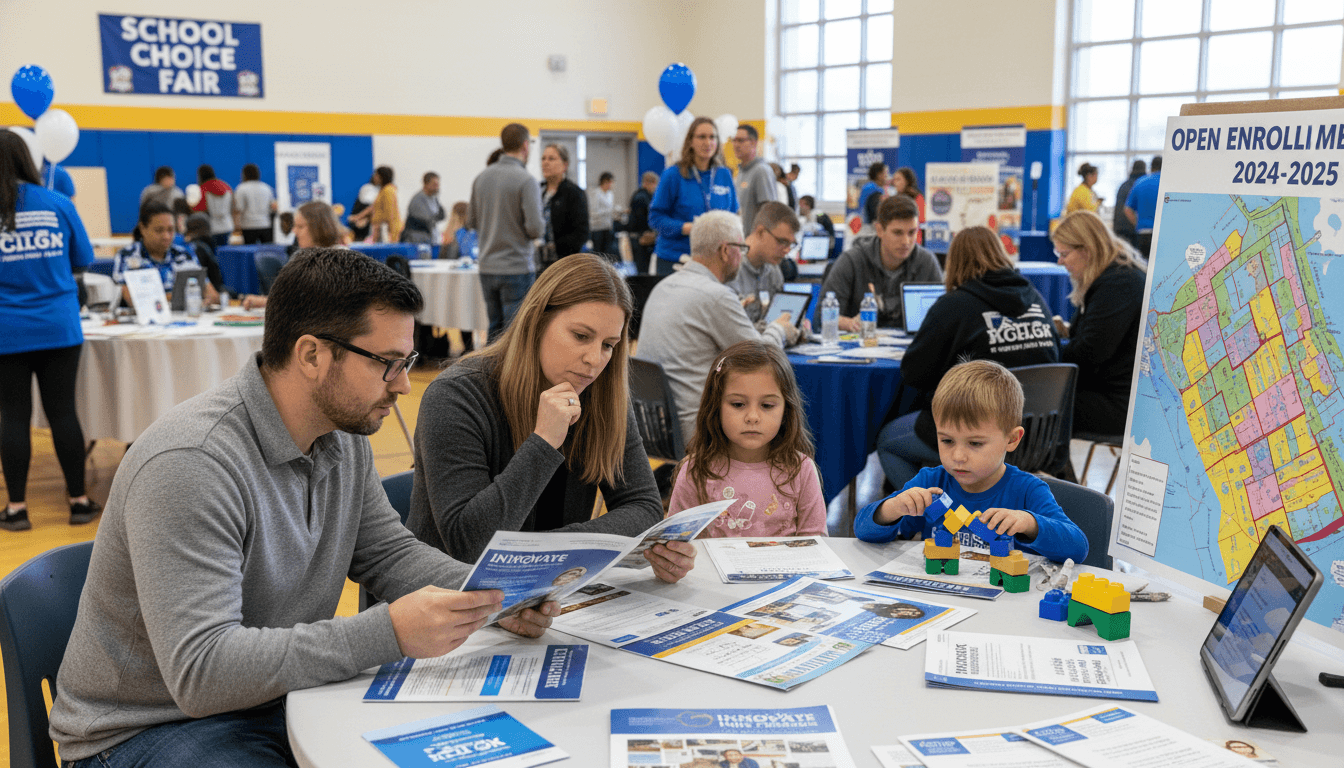
Open enrollment season is one of the highest-stakes communication periods in any school district's year. Families who do not receive clear, timely information about school choice options miss application deadlines, enroll in default placements that may not fit their children's needs, or lose spots in high-demand programs simply because they did not know the window was open. A well-structured open enrollment newsletter prevents all three of these outcomes.
This guide covers what to include in an open enrollment newsletter, how to communicate school choice options clearly, and how to structure the communication sequence so that no family is left behind by a missed deadline.
Open with the dates that cannot be missed
Put the enrollment window dates and the application deadline at the top of the newsletter, in a format that is impossible to skim past. "Open enrollment for the 2026-27 school year runs January 6 through February 14. All applications must be submitted by February 14 at 5:00 PM." This is not the place for a warm introduction or a paragraph of context. Families who receive the newsletter while checking email on a phone will see the dates and know immediately whether they need to read further. The rest of the newsletter provides the context; the top provides the dates.
Describe each enrollment option specifically
Open enrollment newsletters that say "all schools in the district are accepting applications" without explaining what each school offers are not actually informative. Families need to know what programs are available, what makes each school distinct, what grade levels are enrolling, and which schools have seats available versus which are likely to fill. A brief, accurate description of each program option, whether a dual-language program, a STEM magnet, a project-based learning school, or a neighborhood school with a particular arts focus, gives families the basis they need to make a real choice.
Explain how enrollment decisions are made
The most common source of confusion in open enrollment is the selection process. Families apply and then do not know when they will hear back, how the decision will be made, or what to do if they are not selected for their first-choice school. Be explicit: "Applications received during the open enrollment window will be entered into a random lottery held on February 21. Families will be notified of their placement by March 1. Students not placed in their first-choice school will be added to the waitlist automatically." When the process is transparent, families trust it even when the outcome is not what they hoped for.
Address the neighborhood school default
Many families do not realize that if they do not apply during open enrollment, their child will be assigned to their neighborhood school by default. For some families, the neighborhood school is the right choice, and no further action is needed. For others, knowing that inaction equals a default assignment is the piece of information that prompts them to apply. State this explicitly: "If you do not submit an application during open enrollment, your child will be enrolled in your attendance zone school. You are not required to apply if your attendance zone school is your preferred option."
Explain what to do if a school is oversubscribed
High-demand programs receive more applications than they have seats. The newsletter should explain what happens in that situation: how the waitlist works, how families will be notified if a seat opens, and what their options are if their first-choice school does not have space. "If Washington Elementary's dual-language kindergarten is oversubscribed, remaining applicants will be placed on a ranked waitlist. Families on the waitlist will be contacted by phone if a seat opens before August 1." Families who understand the waitlist process handle disappointment more gracefully than families who feel the process was opaque.
Provide language access and application support
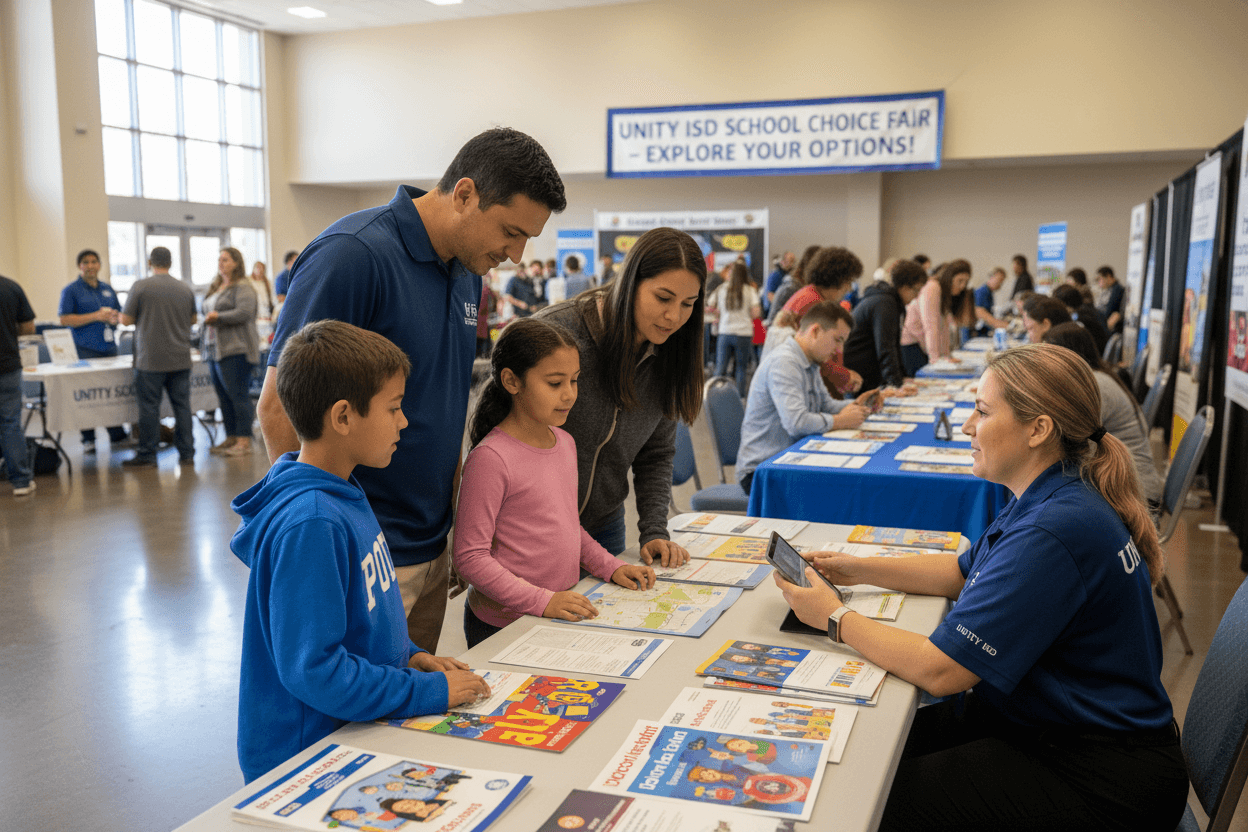
Open enrollment newsletters must reach families who speak languages other than English, and districts with significant multilingual populations need to provide translated versions of enrollment information, not just the English newsletter with a note that translation is available upon request. Additionally, some families need help navigating the application process itself. Name the specific support available: enrollment fairs, one-on-one appointments at the district office, online applications with multilingual interfaces, and phone support during business hours. Include the contact number and office hours in the newsletter itself.
Include a school visit or information night schedule
Families making school choice decisions want to see the schools they are considering. An open enrollment newsletter that includes a schedule of school tours, information nights, or virtual open houses gives families a concrete next step beyond reading the newsletter. "Lincoln Elementary will host a school tour on January 14 at 6:00 PM. Register at lincolnelem.edu/tour." Including specific event dates in the newsletter, rather than directing families to find them on the website, reduces the friction that prevents participation.
Use Daystage to keep enrollment communication on schedule
Daystage monthly newsletters give districts a professional, consistent format for enrollment communication that reaches families before deadlines pass. Build a template with an enrollment section that activates during enrollment season, with deadline dates that stand out and application links that are easy to find. When open enrollment communication is organized and sent through a channel families already trust, application rates go up and last-minute confusion goes down. Families who understand their options make better choices for their children, and districts that communicate those options clearly strengthen trust with the communities they serve.
Get one newsletter idea every week.
Free. For teachers. No spam.
Frequently asked questions
What should an open enrollment newsletter include?
Cover the enrollment window dates, which schools have available seats, the application process and where to submit, how enrollment decisions are made (lottery, first-come first-served, or preference criteria), and what happens if a school is oversubscribed. Families making school choice decisions need complete information upfront, not a series of follow-up notices.
How far in advance should a district send open enrollment newsletters?
At minimum, send the first notice four to six weeks before the enrollment window opens, and a reminder two weeks before the application deadline. Families with multiple children or complex scheduling situations need lead time to research options, visit schools, and gather application materials. Late notices produce lower participation and more last-minute errors.
How do you communicate school choice options without creating the perception that some schools are better than others?
Describe each program and school by what it specifically offers, not by performance rankings. A dual-language immersion school, a project-based learning school, and a STEM magnet all have distinct program features that appeal to different family priorities. Avoid language that implies a hierarchy. Describe the fit, not the ranking.
What language access obligations apply to open enrollment newsletters?
Federal law requires that districts provide meaningful access to education programs for families with limited English proficiency. Open enrollment newsletters should be translated into any language spoken by a significant portion of the district's families, as determined by the district's language access plan. Critical enrollment deadlines must be communicated in families' home languages, not only in English.
How does Daystage support district open enrollment communication?
Daystage monthly newsletters give districts a reliable, professional channel for time-sensitive enrollment communication. Build a template with a clear enrollment section that appears each winter, with consistent formatting that families recognize and deadlines that stand out visually. When enrollment communication is organized and predictable, participation rates go up and last-minute confusion goes down.

Adi Ackerman
Author
Adi Ackerman is a former classroom teacher and curriculum writer with 8 years in K-8 schools. She writes about school communication, parent engagement, and what actually works in real classrooms.
More for School Board
Ready to send your first newsletter?
3 newsletters free. No credit card. First one ready in under 5 minutes.
Get started free