

School Board Discipline Policy Update Newsletter for Parents
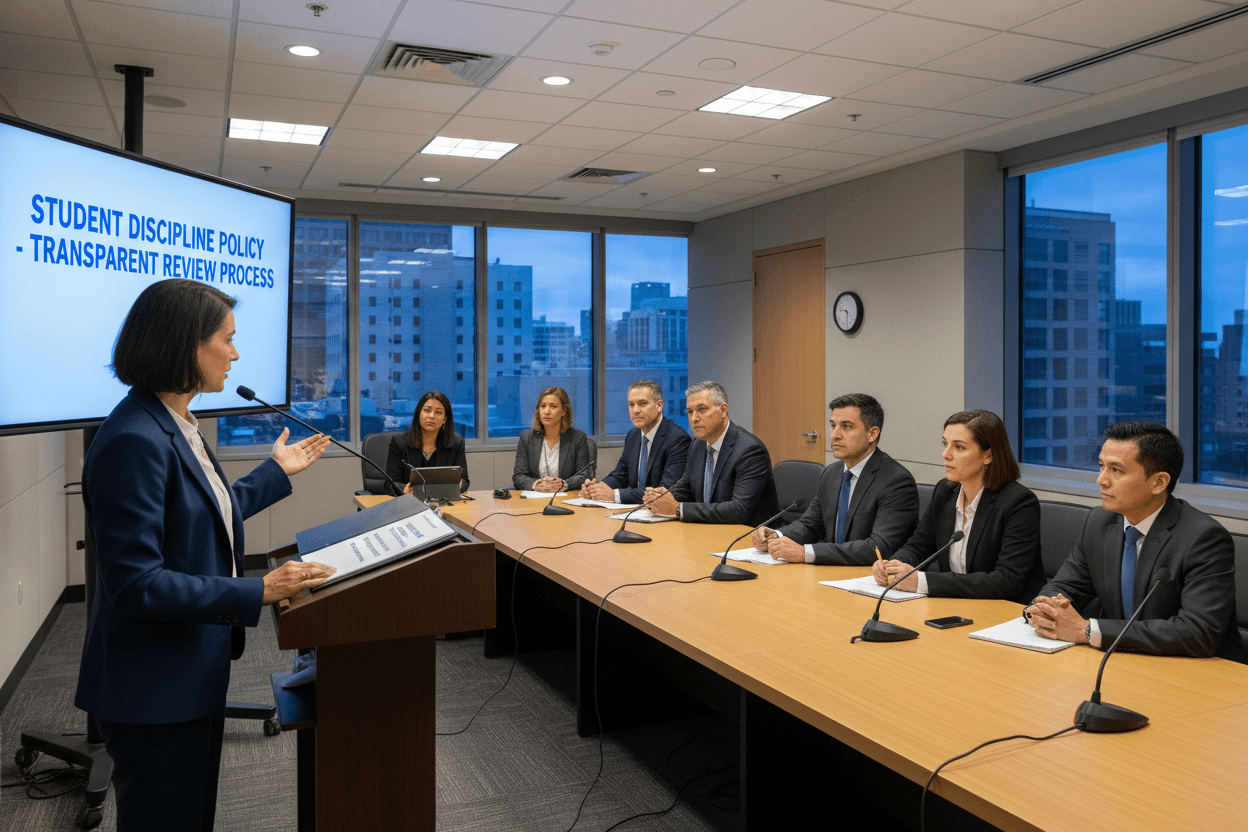
Student discipline policy is one of the most consequential areas of school board governance for families. When a discipline policy changes, families need to understand what shifted, why the board made that decision, and how the new policy will work in practice at their child's school. A newsletter that communicates this clearly builds trust. A newsletter that announces the change without context generates confusion and, often, backlash.
This guide covers how to write a discipline policy update newsletter that gives families the information they need, explains the board's reasoning, and prepares both parents and students for the change.
Name exactly what changed
Start with specifics. "We have updated our student code of conduct" is less useful than "Beginning August 15, students who accumulate three unexcused absences will be referred to a school counselor for a check-in, rather than receiving an automatic in-school suspension." Families need to know which behaviors are affected, what the consequences look like under the new policy, and how that differs from what came before. Reference the specific policy sections that were amended so that families who want the full text know where to find it.
Explain the reasoning behind the change
School boards change discipline policies for identifiable reasons: state law updated, a district equity audit revealed disproportionate suspension rates, community feedback called for restorative approaches, or data showed that existing consequences were not improving student behavior. Whatever drove the decision, say it plainly. "Our 2024-25 discipline data showed that Black and Latino students were suspended at rates three times higher than their peers for the same infractions. The board reviewed that data and approved a restorative practices framework to address this disparity." This is far more credible than a vague statement about "updating our approach to student support."
Describe how the policy will be implemented
Policy documents describe rules. Families need to know what those rules look like in a hallway, a classroom, or a principal's office. Explain the specific steps that will happen when a student is referred for a disciplinary matter: who contacts the family, at what point, what happens at the school level before any formal consequence is applied, and what rights families have during the process. If the district is training staff on new procedures, mention it. Families are more confident about policy changes when they know that implementation is actually being prepared for.
Address restorative practices if applicable
Many districts are shifting from punitive discipline toward restorative practices, which focus on repairing harm rather than solely applying consequences. If your district is making this shift, the newsletter needs to explain what restorative practices actually are. A brief, concrete example helps: "Instead of an automatic three-day suspension for a physical altercation, students involved will participate in a facilitated conversation with a trained counselor to identify the cause of the conflict and agree on steps to repair the relationship. A suspension may still result if the situation warrants it, but it is not the automatic first response." Parents who have never heard of restorative justice need a plain explanation, not a reference to the research literature.
Clarify parent rights and contact points
Every discipline policy newsletter should include a clear section on parent rights. When does the family have the right to be present? What is the appeals process if a family disagrees with a disciplinary decision? Who is the specific contact person at each school level, and how can families reach them? Providing a name, phone number, and email address for the district's student services coordinator, along with campus-level contacts, removes the friction that prevents families from asking questions when they arise.
Acknowledge community concerns if they exist
If the board received public comment on the discipline policy during the approval process, the newsletter should acknowledge that input. Not in a defensive way, but in a way that demonstrates the board heard the community and considered what was said. "We received 47 written comments during the public review period. The most common concerns were about how discretion will be applied fairly across schools and what training teachers will receive. We have incorporated additional staff training requirements into the implementation plan as a result." This kind of transparency builds credibility even with families who opposed the change.
Connect the policy to your district's larger goals
Student discipline policy does not exist in isolation. It connects to the district's broader goals around student wellbeing, school climate, and academic achievement. A newsletter that places the policy update in that larger context, noting how it supports the district's strategic plan or responds to community feedback gathered over time, gives families a frame for understanding why the board is spending time and resources on this area. Districts that communicate discipline policy as part of a coherent student support strategy are seen as more thoughtful than those that communicate each policy change as a standalone event.
Use Daystage to send policy updates families will read
Daystage monthly newsletters give districts a professional, consistent format for communicating policy updates before they take effect. A newsletter with a dedicated policy update section, written in plain language and sent through a channel families already trust, reaches more families more effectively than a policy document posted to the district website. When discipline policy changes, families deserve to hear about it directly, not discover it when a situation arises.
Get one newsletter idea every week.
Free. For teachers. No spam.
Frequently asked questions
What should a school board discipline policy newsletter include?
Cover the specific policy sections that changed, the reason for each change, how the updated policy will be enforced at the school level, what families can expect if their child is involved in a disciplinary situation, and who to contact with questions. A newsletter that explains the why behind policy changes is far more effective than one that simply announces them.
How do you communicate a major discipline policy overhaul without alarming families?
Lead with the problem the change addresses, not the change itself. If the board is moving away from zero-tolerance suspensions toward restorative practices, explain what data or community input prompted the shift, what outcomes the board expects to see, and what support structures will be in place. Families respond better to change when they understand the purpose behind it.
How much legal and policy language should appear in a discipline policy newsletter?
Very little. Reference the specific policy document number so families can find the full text if they want it, but translate all key provisions into plain language in the newsletter itself. A family should not need to read the actual policy document to understand how discipline will work in their child's school.
When is the right time to send a discipline policy update newsletter?
Before the policy takes effect, not after. Families should know about significant discipline policy changes before the school year begins or before the effective date, so they have time to discuss expectations with their children. Sending the newsletter after a policy has already been applied to a situation creates friction and erodes trust.
How does Daystage help school boards communicate discipline policy updates?
Daystage monthly newsletters give school boards a reliable, professional channel for communicating policy changes before they take effect. Build a template with a clear policy update section, plain-language summaries, and a consistent format that families recognize. When families trust the communication channel, they engage with policy information rather than ignoring it.

Adi Ackerman
Author
Adi Ackerman is a former classroom teacher and curriculum writer with 8 years in K-8 schools. She writes about school communication, parent engagement, and what actually works in real classrooms.
More for School Board
Ready to send your first newsletter?
3 newsletters free. No credit card. First one ready in under 5 minutes.
Get started free