

School Board Community Forum Newsletter: Invitation and Agenda
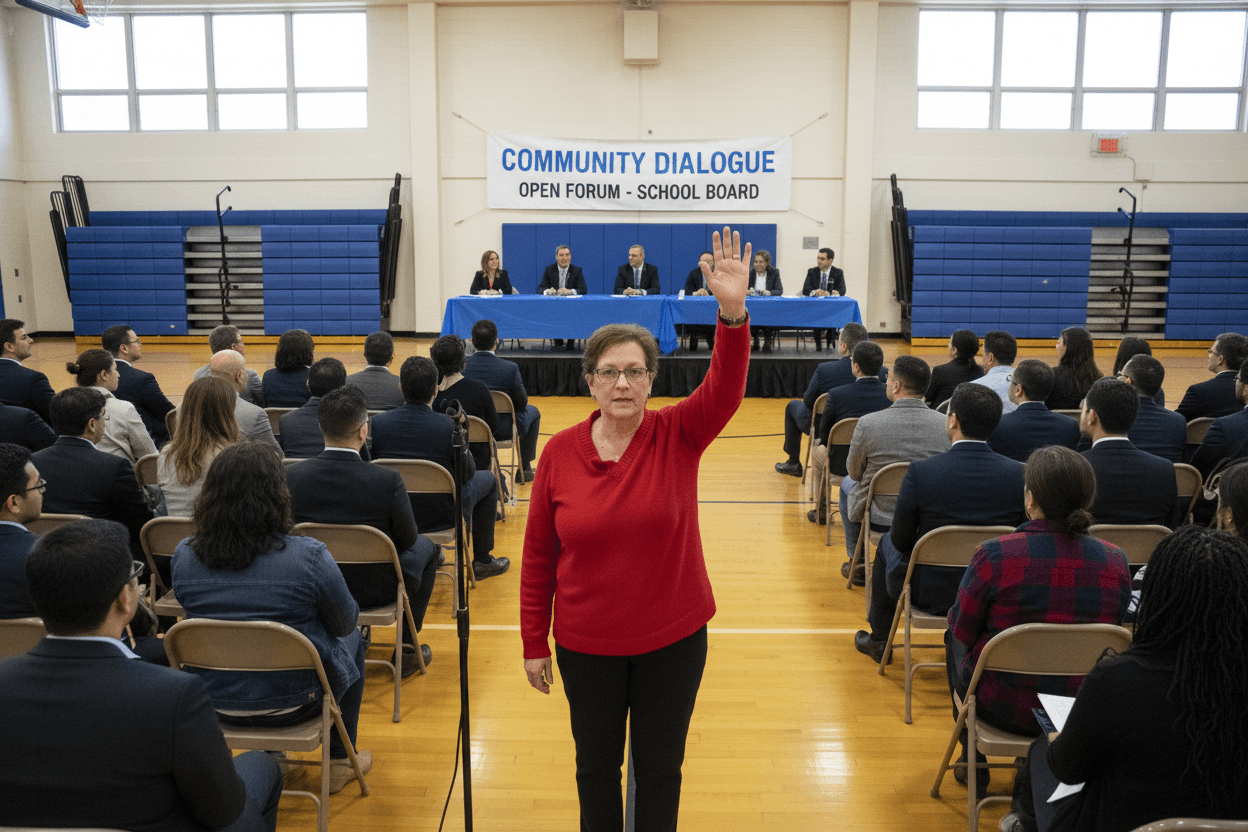
Community forums are the most direct expression of democratic governance in a school district. They are the moment when the board creates space for the public to speak and commits to listening before it acts. The newsletter inviting families to a community forum is not administrative paperwork. It is the difference between a well-attended forum that generates real community input and an empty room that gives the board permission to say it tried. How the invitation is written determines who shows up and how prepared they are to participate.
This guide covers what to include in a community forum invitation newsletter, how to write an invitation that signals the input is genuine, and how to handle forums on contentious topics where community trust is already strained.
State the purpose of the forum in the first paragraph
The opening of a forum invitation newsletter should tell families, in one or two sentences, exactly what the forum is about and what the board intends to do with the input it receives. "The board is inviting all community members to a public forum on the proposed changes to the district's middle school schedule. This forum is one of two public input sessions the board will hold before voting on the proposal at the November 14 meeting." Families who do not know immediately what the forum is for and why their participation matters will not read further. Start specific.
Share the agenda with time allocations
Families who know what will happen at a forum and how long each section will take are more likely to attend and more prepared when they arrive. The newsletter should include the agenda in enough detail that a family can decide whether to attend from start to finish or arrive for the portion most relevant to them. "6:30 PM: Welcome and overview of the proposal (15 min). 6:45 PM: Staff presentation of research and recommendations (20 min). 7:05 PM: Public comment period, 3 minutes per speaker (60 min). 8:05 PM: Board reflection and next steps (10 min)." A timed agenda signals respect for participants' time and signals that the board has prepared a structured process rather than an open-ended meeting.
Explain how community members can participate
Not every community forum has the same participation structure. Some require speakers to sign up in advance. Some accept speakers on a first-come basis. Some include small group discussions. Some collect written comments. The newsletter should explain exactly how a community member can participate and what to do before the forum to ensure they have a voice. "Community members who wish to speak during the public comment period should sign up at the door beginning at 6:00 PM or online at district.edu/forum-signup by 5:00 PM on October 14. Written comments can be submitted to [email] by October 21. All comments, whether submitted in person or in writing, will be included in the board's input summary."
Name the accessibility supports available
A forum invitation that does not mention translation services, ASL interpretation, or childcare effectively excludes families who would attend if those supports were available and who might assume they are not. The newsletter should list available supports and explain how to request them. "Spanish and Somali interpretation will be available at the forum. Families who require interpretation in another language should contact [name] at [email] by October 8. Childcare will be provided for children ages 3-12 in Room 204. Space is limited; register by October 10 at district.edu/forum-childcare." Making accessibility visible makes the forum genuinely open to the full community, not just families for whom no accommodations are needed.
Be explicit about where the decision stands
The most common reason community members do not attend forums is the belief that the decision is already made and attendance is performative. The newsletter should address this belief directly. "The board has not voted on this proposal. The board will not vote until the November 14 meeting. The input gathered at the October 14 and October 21 forums will be summarized by the superintendent and presented to the board alongside the staff recommendation before the vote. This input has shaped previous decisions and will shape this one." If the board has genuinely changed positions based on community input in the past, naming a specific example is more persuasive than a general assurance.
Provide background materials families can review before attending
Community members who come to a forum without understanding the proposal use their speaking time to ask basic questions rather than to share informed perspectives. The newsletter should link to materials families can review before the forum so they can participate more meaningfully. "The full proposal, including the staff research summary and the three options the board is considering, is available at district.edu/schedule- proposal. We encourage all attendees to review the proposal before the forum so that public comment time can focus on community values and priorities rather than information-sharing." Background materials are a service to the community, not a technicality.
Explain what will happen with the input after the forum
Families who have attended forums and seen no visible connection between their input and the board's decision are less likely to attend future forums. The newsletter should explain, specifically, what happens to the community input after it is gathered. "Following both community forums, the superintendent will compile all written and spoken input into a summary report organized by theme. That report will be posted on the district website within 10 days of the final forum and will be presented to the board at the November 7 work session. Board members will have read the full summary before the November 14 vote." A defined process for using input makes participation feel purposeful.
Use Daystage to invite the community through a trusted channel
A forum invitation sent from an unfamiliar email address or posted only to the district website reaches a fraction of the community a newsletter reaches. Daystage monthly newsletters give school boards a format and channel that families already open and trust. When a forum invitation arrives through the same newsletter that families read for school calendars and program updates, it benefits from that established relationship. Districts that use Daystage year-round report stronger community forum attendance precisely because the invitation arrives through a channel families pay attention to.
Get one newsletter idea every week.
Free. For teachers. No spam.
Frequently asked questions
What should a school board community forum newsletter include?
Cover the purpose of the forum and the specific decision or topic it addresses, the date, time, and location including directions and parking, the agenda with time allocations for each item, how community members can participate and whether there is a sign-up process for speaking, whether translation services or childcare will be available, and how the input gathered at the forum will be used. Families who understand exactly what will happen at a forum and how their participation connects to a real decision are more likely to attend.
How do you write a forum invitation that communicates the forum is not a rubber stamp?
Be explicit about where the decision stands and what role community input plays. 'The board has not made a decision on this question. The forum on March 12 is one of three community input sessions the board will hold before the April vote. Input from these sessions will be summarized for the board and presented alongside the staff recommendation. Previous community forums have resulted in meaningful changes to proposed policy.' Families who believe their input matters show up. Families who believe the decision is already made do not.
How should a forum newsletter handle a topic that has generated significant community conflict?
Acknowledge the conflict directly and explain the forum format in detail so families know what to expect. 'We know this topic has generated significant community discussion and that families hold a range of views. The forum will be moderated to ensure all perspectives have time to be heard. Each speaker will have three minutes. Board members will listen without debating during the input session. We are committed to a process where every community member who attends feels their perspective was respected.' Naming the ground rules in the newsletter reduces tension before people arrive.
How far in advance should a forum invitation newsletter be sent?
Send the initial invitation at least three weeks before the forum date. Families need time to arrange childcare, adjust work schedules, and decide whether to attend. Send a reminder one week before the forum and a final reminder 48 hours before. Three-touch communication increases attendance meaningfully compared to a single announcement. For forums on high-stakes topics, consider a direct phone or text notification in addition to the newsletter for families in directly affected communities.
How does Daystage help school boards build community participation in governance?
Daystage monthly newsletters give school boards a consistent channel that families trust and open regularly. When a forum invitation arrives through the same newsletter families already read for school updates, it benefits from that established trust. Districts that use Daystage year-round report that community forum attendance is higher when invitations arrive through a familiar channel than when they are sent as standalone announcements from unfamiliar email addresses.

Adi Ackerman
Author
Adi Ackerman is a former classroom teacher and curriculum writer with 8 years in K-8 schools. She writes about school communication, parent engagement, and what actually works in real classrooms.
More for School Board
Ready to send your first newsletter?
3 newsletters free. No credit card. First one ready in under 5 minutes.
Get started free