
School Board Academic Achievement Newsletter: How Are We Doing

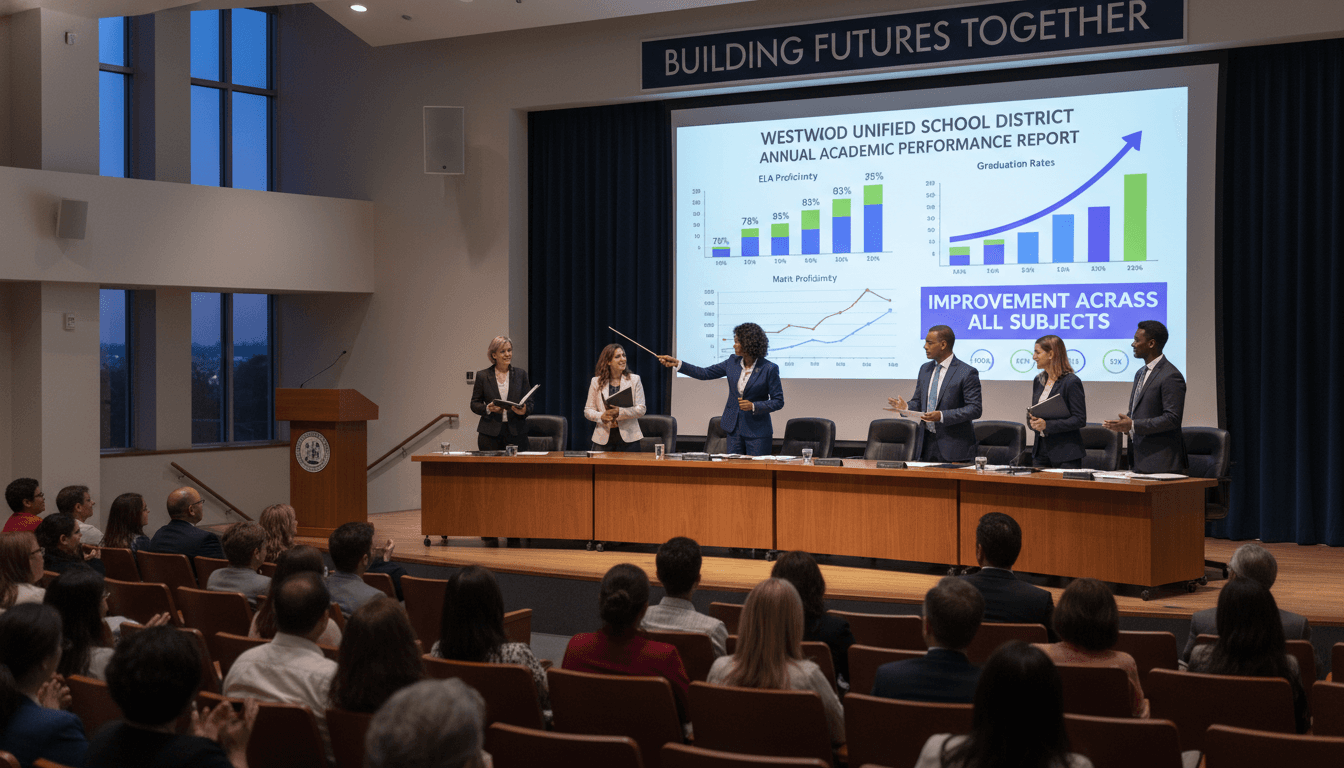
Academic achievement data is the most direct measure available of whether a district's schools are working for students. When the board communicates this data honestly, with context and a clear improvement plan, it demonstrates accountability to the community it serves. When the board avoids, softens, or delays communicating achievement results, it signals that institutional reputation matters more than student outcomes. Families notice the difference.
This guide covers how to write an academic achievement newsletter that presents data clearly, explains what the numbers mean, addresses results that are below target honestly, and gives the community a credible picture of where the district is headed.
Release the data promptly after results arrive
State assessment results become available to districts on a predictable schedule. Some districts communicate these results to families within days of receiving them. Others delay for weeks or months, waiting for the annual report to be formatted, reviewed, and approved through multiple layers of administration. Families who want to understand their district's academic performance will find state-reported data on public websites. A district that communicates results before families discover them elsewhere demonstrates that it trusts the community with the full picture. The newsletter should go out within two weeks of the district receiving results.
Present the overall picture first, then the disaggregated data
Start with the district-level summary: the percentage of students meeting or exceeding grade-level standards in reading and math at each tested grade level. Then present the disaggregated data by student population. Disaggregated results, showing outcomes for students by race, income level, English learner status, and disability status, are legally required to be reported publicly and are the most important data in the report for understanding whether the district is serving all students equitably. A newsletter that only presents aggregate results without disaggregation is incomplete.
Show the trend, not just this year's number
A single year of data tells one story. Three to five years of trend data tells a more complete and more useful one. A district where fourth-grade reading proficiency has increased from 48% to 67% over four years, even if 67% is still below the state average, is a district where something is working. A district where proficiency has held flat for five years despite new programs and investments has a different problem. Present trend data in a format families can read easily: a simple table with year-by-year figures for each grade and subject area gives a clear picture without requiring statistical expertise.
Name the programs that are driving improvement
When academic results improve, the newsletter should explain what changed to produce that improvement. "Reading proficiency in grades 1 through 3 increased by an average of 8 percentage points this year. We attribute this in part to the Structured Literacy professional development program completed by all K-3 teachers in fall 2024, and to the expanded intervention block in the elementary daily schedule adopted in August 2024." Connecting specific programs and investments to specific outcome improvements helps families understand where district resources are going and builds support for continued investment in what works.
Address results that are below target directly
Every district has areas where student performance is not where the board or community wants it to be. The newsletter should name these areas directly, explain what the board believes is contributing to the gap between actual and target performance, and describe the specific actions approved to address them. "Middle school math proficiency declined by 4 percentage points this year, continuing a three-year trend. The board commissioned an independent curriculum review that found misalignment between our current math materials and state standards. The board will vote on a new curriculum adoption at the March meeting." Naming the problem and the response is more credible than presenting declining results without context.
Explain what the data means for individual students
District-level assessment results describe populations, not individual students. The newsletter should clarify this and explain how families can get information about their own child's performance. "The data in this newsletter describes the performance of all students in each grade level across the district. If you want to understand your own child's performance on these assessments, contact your child's school to schedule a meeting with the teacher or principal. Individual student results are available in the district's parent portal." This prevents families from incorrectly applying district averages to assumptions about their own children.
Acknowledge what external factors the district cannot control
Student academic performance is influenced by factors inside and outside school. Chronic absenteeism, housing instability, food insecurity, and pandemic-era learning disruption all affect student outcomes in ways that a curriculum change or a new assessment program cannot fully address. A newsletter that honestly acknowledges these factors, alongside the district's programmatic response, demonstrates that the board understands the full complexity of the problem. "High chronic absenteeism in early grades continues to be the most significant factor suppressing reading proficiency gains at the elementary level. We are expanding attendance outreach and family support services in the schools most affected." This is more credible than implying that all problems are within the district's control to solve.
Use Daystage to make achievement reporting a regular expectation
Daystage monthly newsletters give school boards a professional, consistent format for communicating academic achievement data to the full district community. When families receive achievement results through a trusted newsletter channel, with context and improvement plans included, they engage with the data as part of an ongoing relationship with the district rather than as isolated news events. Boards that communicate achievement data regularly, honestly, and with a commitment to improvement build the community confidence that makes accountability real. The newsletter is how that accountability takes shape.
Get one newsletter idea every week.
Free. For teachers. No spam.
Frequently asked questions
What should a school board academic achievement newsletter include?
Present district-level proficiency data by grade and subject, disaggregated results by student population, year-over-year trend data, a comparison to state averages where appropriate, and the district's specific response to results that are below target. The newsletter should give families a complete, honest picture of where the district stands academically and what the board is doing about areas that need improvement.
How do you communicate test score data that declined year over year?
Name the decline directly, explain the factors the district believes contributed to it, and describe the specific actions the board has approved in response. 'Third-grade reading proficiency dropped from 61% to 54% between 2024 and 2025. We attribute part of this to higher chronic absenteeism in early grades following the pandemic period. The board has approved expanded attendance support programs at nine elementary schools starting in August 2026.' Honest acknowledgment of a problem, paired with a credible response, builds more trust than framing a decline as a minor variance.
Should a district compare its test scores to neighboring districts?
Be careful with cross-district comparisons. Student demographics, socioeconomic factors, and program structures vary significantly between districts. If you make comparisons, contextualize them with the relevant demographic and resource differences. Comparing to state averages, or to the district's own prior-year performance, is usually more informative and less misleading than district-to-district comparisons.
How do you communicate academic achievement data to families who do not understand standardized testing?
Avoid jargon. 'Proficiency' means the student can do grade-level work. 'Below proficiency' means additional support is likely needed. Explain what each assessment measures and why it matters. A brief explanation of what a student in the third grade is expected to be able to do in reading, and what percentage of district third graders can currently do it, is more useful than scaled score averages and percentile rankings.
How does Daystage support academic achievement communication?
Daystage monthly newsletters give school boards a professional, consistent channel for communicating annual achievement results to the full district community. Build an academic achievement section into your district newsletter template and send it immediately after state assessment results are released. When families receive results directly, through a channel they trust, with context and improvement plans included, they engage with the data constructively rather than finding it on a news website first.

Adi Ackerman
Author
Adi Ackerman is a former classroom teacher and curriculum writer with 8 years in K-8 schools. She writes about school communication, parent engagement, and what actually works in real classrooms.
More for School Board
Ready to send your first newsletter?
3 newsletters free. No credit card. First one ready in under 5 minutes.
Get started free