

Michigan School Board Newsletter Guide: Communicating Governance in a Choice-Heavy State
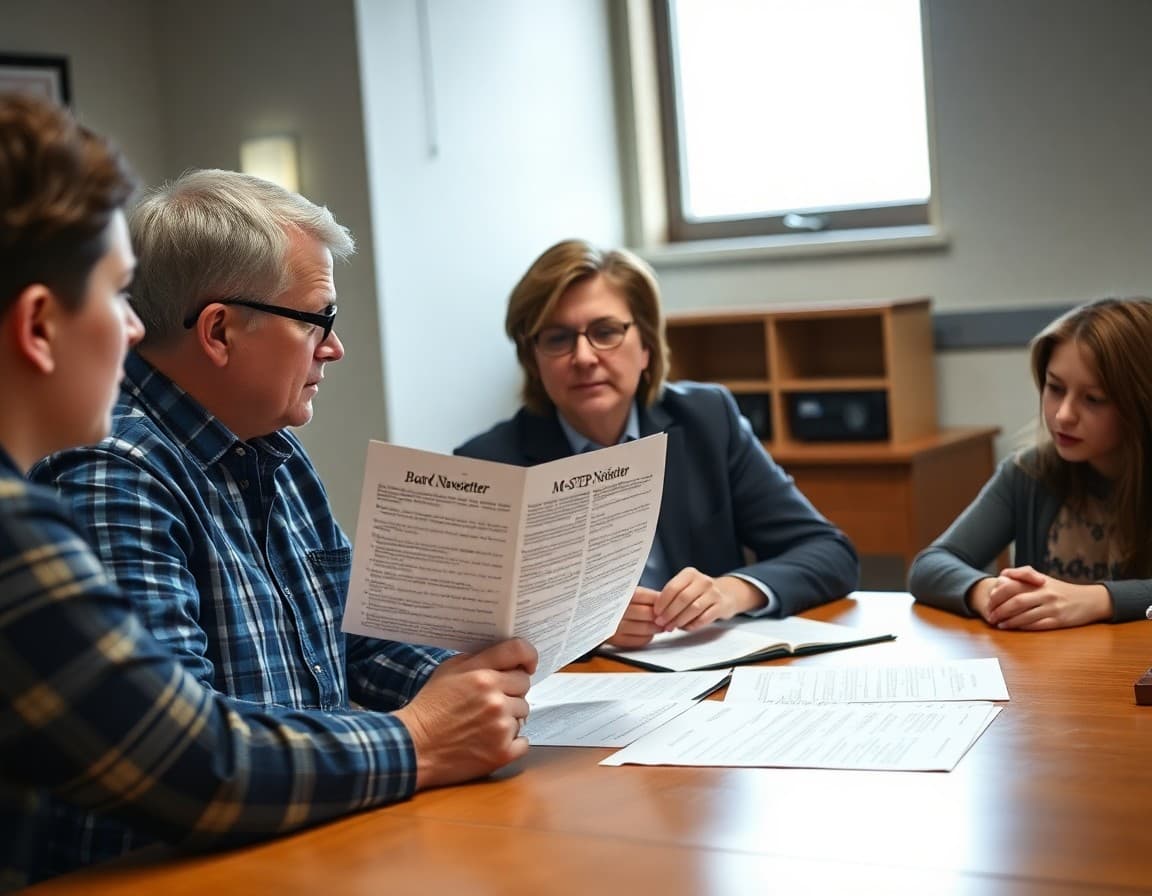
Michigan school boards govern more than 540 school districts in a state with one of the most extensive school choice systems in the country. Inter-district choice, a large charter school sector, and virtual school options mean that Michigan families have real alternatives to their local district schools. In this environment, a board newsletter serves two purposes: fulfilling the governance obligation to keep community members informed, and communicating the value of local schools to families who are actively evaluating their options.
This guide covers what Michigan school board newsletters should include, how to communicate in Michigan's competitive school choice environment, and how to build community trust through regular, substantive governance communication.
Board meeting decisions and governance communication
Michigan board meeting summaries should provide the context families need to understand what the board decided and why. For each significant decision, explain the problem being addressed, the alternatives that were considered, and why the board chose this course. In communities where families are actively comparing local district schools to alternatives, board decisions about curriculum, programs, and school environment carry particular weight. Substantive meeting summaries that connect decisions to student benefits are more effective than procedural reports.
M-STEP results and Michigan School Index accountability
Michigan administers the M-STEP assessment in grades 3 through 8 and the PSAT and SAT in high school. Annual results are publicly available and are used to calculate Michigan School Index accountability scores. When results are released, board newsletters should address them directly. Report scores by school and subject, explain what they mean, describe what the board is doing in areas of underperformance, and acknowledge strong results. Proactive communication about assessment data is more credible than silence.
Communicating in Michigan's school choice environment
Michigan families can choose from inter-district public school options, charter public schools, and virtual schools, in addition to their local district school. Board newsletters should communicate what the local district offers that distinguishes it in this competitive environment. This means being specific about academic programs, extracurricular opportunities, special services, and school culture, not just citing test scores. Districts that make an affirmative, evidence-based case for their schools in board communications are better positioned in Michigan's enrollment competition than those that communicate only about governance procedures.
Foundation allowance and budget transparency
Michigan's school funding is based primarily on the foundation allowance, a per-pupil amount that districts receive for each student enrolled. Because foundation funding follows students, enrollment losses directly reduce district revenue. Board newsletters should communicate clearly about the foundation allowance level, how it compares to prior years, and how the board is managing resources given current enrollment trends. Budget transparency builds the community confidence that supports stable enrollment.
State policy changes and local board response
Michigan's legislature regularly produces education policy changes, and the Michigan Department of Education issues guidance that local boards must implement. When state policy changes affect local families, board newsletters should translate them into plain language: what changed, what the district is doing to comply, and what families need to know. Boards that interpret state requirements in local terms serve their communities more effectively.
Community participation opportunities in Michigan
Michigan's Open Meetings Act ensures that board meetings are publicly accessible. Board newsletters should make that access meaningful: preview upcoming agenda items, explain significant decisions coming before the board, and provide clear information on how to attend, comment, and participate. Advisory committee openings and community listening sessions should be promoted with specific logistics.
Using Daystage for Michigan board newsletters
Daystage supports Michigan school boards in building a consistent, professional newsletter practice. Design a monthly template with standard sections: meeting summary, assessment results, school choice context, foundation allowance and budget information, and participation opportunities. Boards that publish consistently and communicate substantively build the community trust that sustains enrollment and community investment in local public schools.
Board elections and communication continuity in Michigan
Michigan school board elections occur in November on a regular cycle. Newsletter communication should be designed as an institutional function that persists through membership changes. Introduce new members, acknowledge departing members, and maintain the same structure and publication schedule across election cycles. In Michigan's competitive school environment, a stable, consistent board communication channel is itself a signal of institutional quality.
Get one newsletter idea every week.
Free. For teachers. No spam.
Frequently asked questions
What should a Michigan school board newsletter include?
Board meeting decisions with explanations, M-STEP and PSAT/SAT results, Michigan School Index accountability scores, school choice context, foundation allowance and budget information, policy changes, and community participation opportunities. Michigan boards that explain the reasoning behind decisions build more community trust than those that announce outcomes without context.
How often should Michigan school boards publish a newsletter?
Monthly publication aligned with the regular board meeting cycle is appropriate for most Michigan boards. Michigan's highly competitive school choice environment, with extensive charter school and inter-district choice options, means consistent communication that makes the case for local schools is particularly valuable.
How should Michigan boards communicate about M-STEP results?
Michigan's student test results are publicly available and closely watched by families making school choice decisions. Board newsletters should address M-STEP and other assessment results promptly and honestly: report the scores, explain what they mean, describe what the board is doing in response to areas needing improvement, and acknowledge strong results. Boards that engage with assessment data proactively are more credible than those that wait for the conversation to come to them.
How should Michigan boards communicate about school choice and enrollment competition?
Michigan has among the most extensive school choice environments in the country, with inter-district choice, a large charter sector, and virtual school options. Board newsletters should communicate what the local district offers, make an evidence-based case for local schools, and provide context about how enrollment decisions affect district resources. Districts that lose students to choice options benefit from proactive, honest communication about their value proposition.
How does Daystage support Michigan school board communication?
Daystage gives Michigan school boards a professional newsletter platform for consistent, clear board communication. Build a monthly template with standard sections covering meeting summaries, assessment results, school choice context, budget information, and community participation. Consistent communication that makes a clear case for local schools is especially valuable in Michigan's competitive enrollment environment.

Adi Ackerman
Author
Adi Ackerman is a former classroom teacher and curriculum writer with 8 years in K-8 schools. She writes about school communication, parent engagement, and what actually works in real classrooms.
More for School Board
Ready to send your first newsletter?
3 newsletters free. No credit card. First one ready in under 5 minutes.
Get started free