

Kansas School Board Newsletter Guide: Transparent Governance Communication
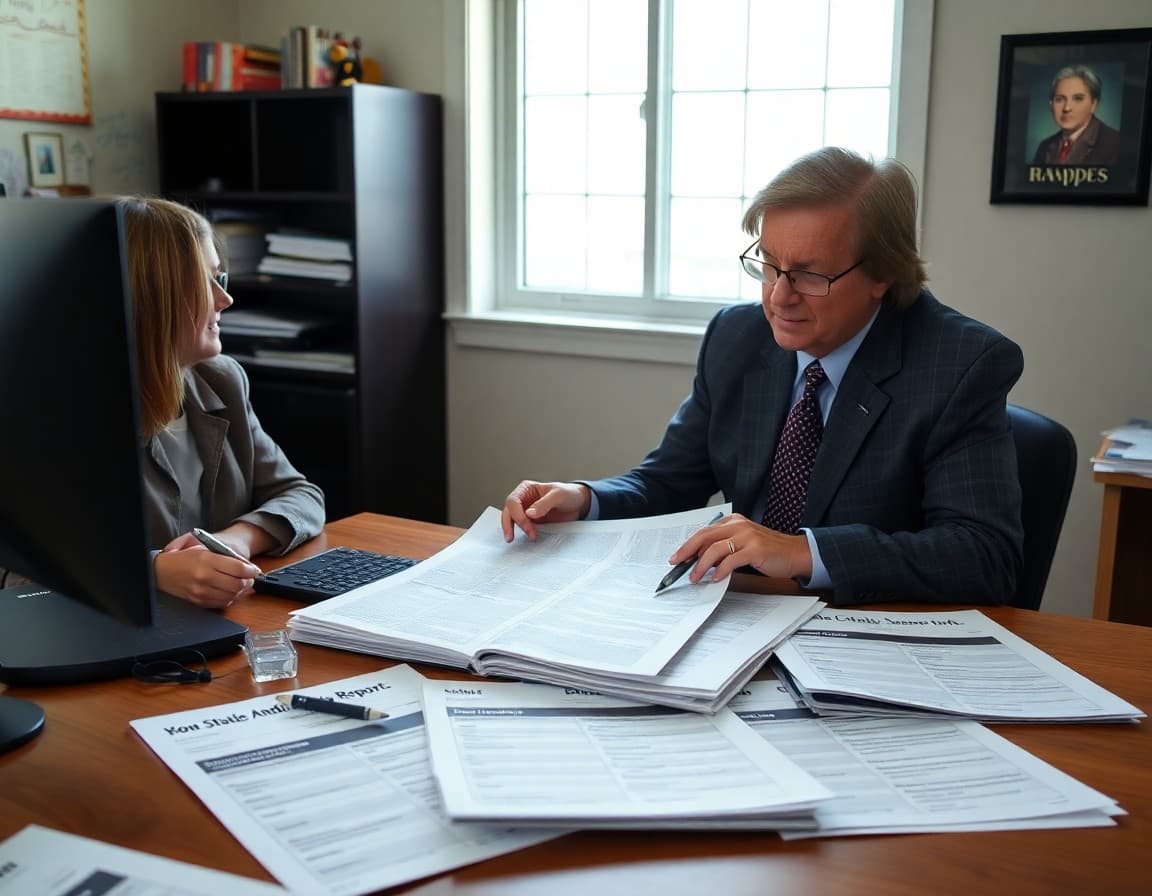
Kansas school boards govern nearly 300 school districts across a state with a notable history of school finance litigation and a strong tradition of local control in education governance. The Kansas Supreme Court has repeatedly weighed in on what adequate education funding requires, and those decisions have shaped the school finance formula and the conversations around it. In this context, a board newsletter that communicates clearly about how education dollars are raised and spent serves both a governance purpose and a practical accountability function.
This guide covers what Kansas school board newsletters should include, how to communicate on the issues most relevant to Kansas districts, and how to build community trust through consistent, transparent governance communication.
Board meeting decisions explained in plain terms
Kansas board meeting summaries should be written for community members who were not present at the meeting. For each significant decision, explain what was decided, what problem it addresses, what alternatives were evaluated, and why this path was chosen. Kansas communities value plain, direct communication from their elected officials. A newsletter that explains the board's reasoning is more effective at building trust than one that simply reports vote outcomes.
Kansas State Assessments and academic accountability
Kansas administers state assessments in English language arts, mathematics, and science across multiple grade levels. When assessment results are released, board newsletters should address them directly and honestly. Report what the data shows for the district and for individual schools, explain what the results mean, describe what the board is doing in response to areas of underperformance, and acknowledge where performance is strong. Boards that engage with assessment data proactively are more credible than those that wait for community members to raise questions about results.
School finance, the base state aid formula, and the Rose standards
Kansas uses a weighted per-pupil funding formula with additional support for at-risk students, English learners, and students with disabilities. The adequacy standard established by the Kansas Supreme Court's Rose decision provides a framework for evaluating whether funding is sufficient to support the educational outcomes the state constitution requires. Board newsletters should explain how the district is funded, where the base aid per pupil stands relative to adequacy benchmarks, and how the board is allocating resources to meet its educational obligations.
Local option budget and mill levy communication
Kansas districts can supplement state funding through the Local Option Budget, which allows boards to levy additional property taxes up to a percentage of state funding. When the board takes action on LOB rates, communicate clearly: what the board is proposing, what it would fund, how it would affect local property taxpayers, and what the alternative would mean for district programs. Families who understand how the local option budget works are better positioned to engage in the public hearing process.
Policy changes and state legislation affecting Kansas families
Kansas's legislature regularly produces education policy changes, and the State Board of Education issues guidance that local boards must implement. When state policy changes affect local families, board newsletters should explain what changed, what the district is doing in response, and what families need to know. Boards that interpret state requirements in local terms are more useful to families than those that pass along KSDE communications without adding context.
Community participation and public engagement opportunities
Kansas's Open Meetings Act ensures that board meetings are accessible to the public. Board newsletters should preview upcoming agenda items, explain significant decisions coming before the board, and provide clear information on how to attend, submit public comment, and connect with board members. Advisory committee openings and community listening sessions should be promoted with specific logistics that make participation accessible.
Using Daystage for Kansas board newsletters
Daystage supports Kansas school boards in building a consistent, professional board newsletter practice. Design a monthly template with standard sections: meeting summary, assessment updates, school finance information, and community participation. Boards that publish consistently and communicate substantively build the community trust that sustains public investment in Kansas schools.
Board elections and communication continuity in Kansas
Kansas school board elections occur on the general election cycle. Newsletter communication should be designed as an institutional function that persists through membership changes. Introduce new members, acknowledge departing members, and maintain the same structure and publication schedule through election years. Consistent communication across board transitions signals institutional stability and accountability.
Get one newsletter idea every week.
Free. For teachers. No spam.
Frequently asked questions
What should a Kansas school board newsletter cover?
Board meeting decisions with explanations, Kansas State Assessments results, Rose standards adequacy context, school finance updates, policy changes, and specific opportunities for community participation. Kansas boards that explain the reasoning behind significant decisions build more community trust than those that announce outcomes without context.
How often should Kansas school boards publish a newsletter?
Monthly publication aligned with the regular board meeting cycle is appropriate for most Kansas boards. Kansas has a long history of school finance litigation, and boards that communicate clearly and consistently about how education dollars are used build the community understanding that supports continued investment in public education.
What are the Rose standards and why do they matter for Kansas board communication?
The Rose standards, established by the Kansas Supreme Court, define what an adequate education means for Kansas students: sufficient oral and written communication skills, sufficient knowledge of economics, sufficient knowledge in math and sciences, and preparation for both work and citizenship, among other elements. Board newsletters that connect governance decisions to these adequacy standards demonstrate that the board understands its constitutional obligations.
How should Kansas boards communicate about the school finance formula?
Kansas uses a base state aid per pupil formula with weightings for students with special needs, English learners, at-risk students, and other categories. When the legislature changes the formula or the base amount, board newsletters should explain what changed, what it means for local revenue, and how the board plans to respond. Families who understand the school finance formula are better advocates with their legislators.
How does Daystage support Kansas school board communication?
Daystage gives Kansas school boards a professional newsletter platform for consistent, clear board communication. Build a monthly template with standard sections covering meeting summaries, assessment results, finance updates, and community participation. Consistent structure and publication schedule are the foundation of community trust in board communication.

Adi Ackerman
Author
Adi Ackerman is a former classroom teacher and curriculum writer with 8 years in K-8 schools. She writes about school communication, parent engagement, and what actually works in real classrooms.
More for School Board
Ready to send your first newsletter?
3 newsletters free. No credit card. First one ready in under 5 minutes.
Get started free