
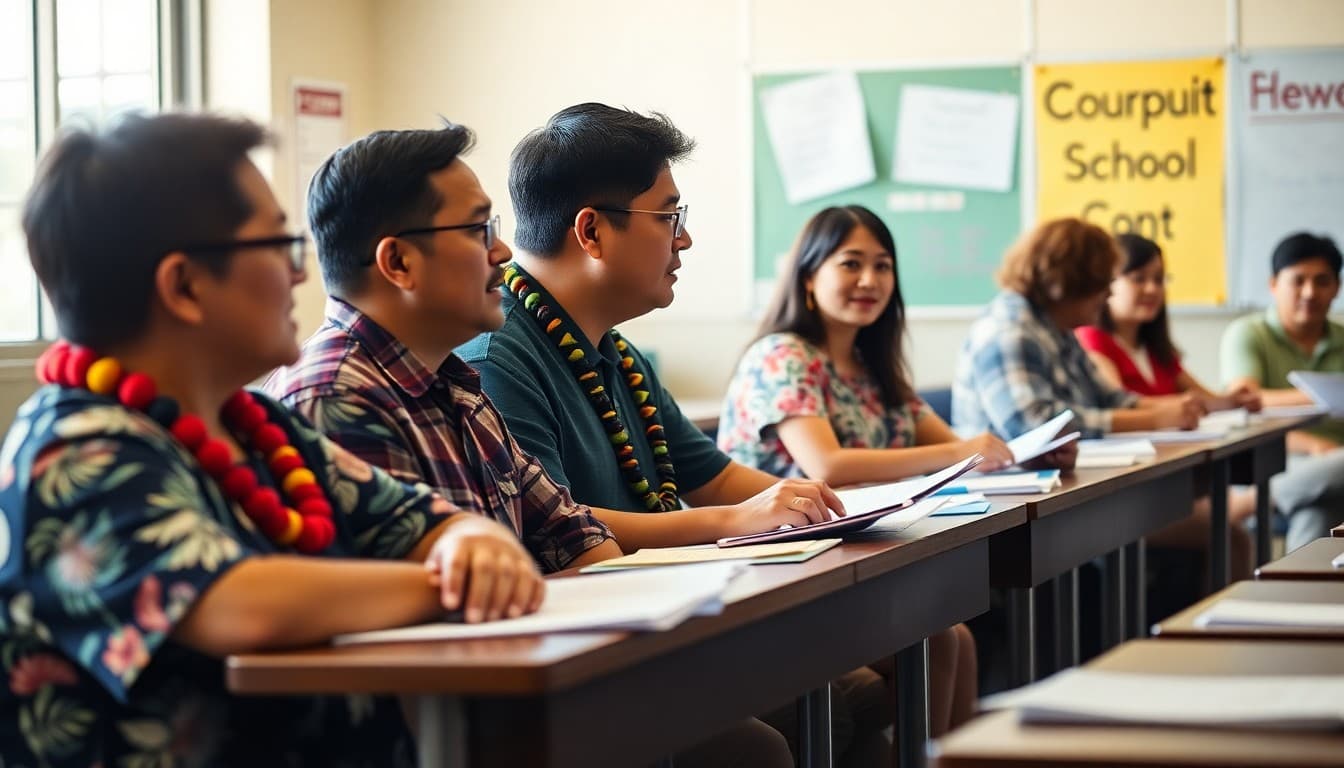
Hawaii School Board Newsletter Guide: Statewide Governance Communication

Hawaii is unique among the fifty states in having a single statewide school system governed by one Board of Education. There are no county school boards, no local superintendent elections, and no district-level budget votes. All public school governance flows through the State BOE and the Hawaii Department of Education. This structure means that board communication has statewide implications and that the responsibility for keeping families across all islands informed about governance decisions falls on a single institution.
This guide covers what Hawaii BOE newsletters should include, how to communicate effectively in a statewide governance structure, and how to build community trust through regular, substantive governance communication across diverse island communities.
Communicating statewide board decisions to local families
Because Hawaii's Board of Education governs all 256 public schools, its decisions affect families statewide. Meeting summaries should explain what was decided and what it means for schools and families across the state. For policies or curriculum changes, clarify which grade levels or school types are affected and when implementation begins. Families in Honolulu, Maui, Hawaii Island, and Kauai all need to understand how board decisions apply to their local schools.
State assessment results and statewide accountability
Hawaii administers Smarter Balanced assessments in grades 3 through 8 and high school, along with the Hawaii State Assessment in science. When results are released, the BOE newsletter should address them at the statewide level: overall performance trends, performance by student group, areas of strength, and areas where the system is not meeting its goals. Complex area newsletters can add regional context. Boards that communicate honestly about assessment data, including gaps and challenges, are more credible than those that only share positive results.
Strategic plan progress updates
Hawaii's Board of Education maintains a multi-year strategic plan that guides statewide education priorities. Regular newsletter updates on strategic plan progress keep families informed about where the system is heading and how it is progressing toward its goals. These updates should be specific: which goals are on track, which are behind, and what the board is doing to address challenges. Vague updates about "ongoing progress" are less useful than specific data and honest assessments of where the system stands.
Native Hawaiian education and BOE commitments
Native Hawaiian students and communities have specific educational interests and rights that the BOE is committed to addressing through its strategic plan and policy decisions. Board newsletters should communicate progress on Native Hawaiian education commitments directly and specifically, not as a footnote to general updates. Families who see their community's needs addressed substantively in official board communication are more likely to trust the institution and engage with governance processes.
Budget and weighted student formula transparency
Hawaii's education budget is set by the state legislature and allocated through a weighted student formula that directs additional resources to students with greater needs. When legislative budget decisions affect Hawaii's schools, board newsletters should explain the implications: what the legislature funded, what it did not, and how the DOE is managing resources within the appropriation. Families who understand the state budget process are better positioned to engage with their state legislators about education funding priorities.
Community participation across Hawaii's island communities
Hawaii's geographic dispersion across six major islands creates challenges for in-person participation in statewide board governance. The BOE should communicate clearly about how families can participate: where board meetings are held and how they can be attended via video or phone, how to submit written testimony, and how community members can engage with advisory committees and complex area processes. Removing participation barriers for families on neighbor islands demonstrates that the board sees its accountability as statewide, not concentrated in Honolulu.
Using Daystage for Hawaii board newsletter communication
Daystage supports Hawaii's Board of Education in building a consistent, professional statewide newsletter practice. Design a standard board newsletter template with sections covering meeting decisions, strategic plan progress, assessment results, and participation opportunities. The Daystage platform makes it straightforward to deliver professional board communication to families across all of Hawaii's island communities.
Complex area communication as a complement to BOE newsletters
Hawaii's complex area structure divides the state into regional groupings of schools under a complex area superintendent. Complex area newsletters can supplement BOE communication by providing regional context: what board decisions mean for local schools, how assessment results compare across the complex, and what participation opportunities exist locally. The most effective Hawaii school communication operates at both levels: statewide governance context from the BOE and local implementation detail from complex area offices.
Get one newsletter idea every week.
Free. For teachers. No spam.
Frequently asked questions
How is Hawaii's school governance structure different from other states?
Hawaii has a single statewide school system with one Board of Education governing all public schools rather than dozens of local boards. This means board communication has statewide reach and is more centralized than in other states. Complex area superintendents manage regional implementation, and newsletters at both the board level and complex area level serve important communication functions.
What should Hawaii BOE newsletters cover?
Board meeting decisions with explanations, Smarter Balanced and HSA assessment results, strategic plan updates, policy changes, budget and weighted student formula information, and opportunities for community participation. Hawaii's single-district structure means board decisions affect all 256 public schools, so explaining the statewide implications of each decision is especially important.
How should Hawaii communicate about state assessment results?
Hawaii administers the Smarter Balanced Assessment Consortium assessments and the Hawaii State Assessment. When results are released, BOE newsletters should address them at the statewide level: what the data shows overall and by student group, what it means, and what the board is doing to support improvement. Complex area newsletters can contextualize results at the regional level.
How should Hawaii boards communicate about Native Hawaiian education?
Native Hawaiian students and families are a significant population in Hawaii's schools, and the BOE has specific commitments around Native Hawaiian education through the Strategic Plan. Board newsletters should communicate progress on these commitments specifically, not as a subcategory of general updates. Families who see their community's educational needs addressed directly in official board communication are more likely to engage with governance processes.
How does Daystage support Hawaii school board communication?
Daystage gives Hawaii's Board of Education and complex area offices a professional newsletter platform for consistent, clear communication. Build standard newsletter templates with sections covering board decisions, strategic plan progress, assessment updates, and participation opportunities. Consistent structure helps Hawaii families across all islands know what to expect from board communications.

Adi Ackerman
Author
Adi Ackerman is a former classroom teacher and curriculum writer with 8 years in K-8 schools. She writes about school communication, parent engagement, and what actually works in real classrooms.
More for School Board
Ready to send your first newsletter?
3 newsletters free. No credit card. First one ready in under 5 minutes.
Get started free