
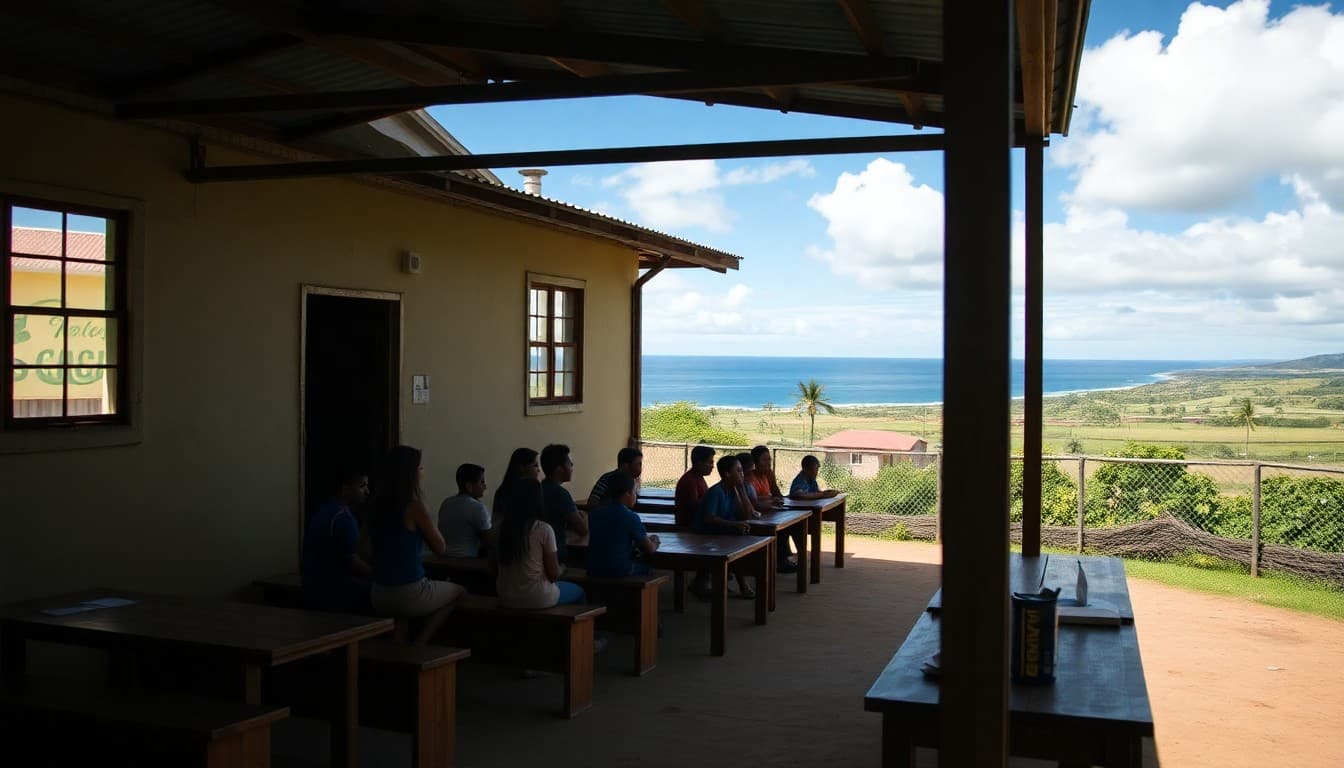
Hawaii Rural School Newsletter Guide for Neighbor Island and Hawaiian Homelands Schools

A teacher at a school in Kaunakakai, Molokai starts every newsletter with "Aloha mai kakou" and a sentence about what the class has been studying. She writes it in a way that reflects the community she serves: warm, direct, rooted in place. Her family response rate is higher than any school in her district. The newsletter's cultural tone is not decoration. It is the reason families read it.
Hawaii's Rural School Communication Landscape
Hawaii's neighbor islands, particularly Molokai and Lanai, have small, tight-knit communities with limited broadband infrastructure and deep Native Hawaiian cultural presence. The Big Island's Puna and Ka'u districts have similar connectivity challenges, alongside communities shaped by the 2018 Kilauea eruption that displaced hundreds of families. Communication systems for these schools need to account for both technical limitations and cultural context.
Molokai: Community-Centered Communication
Molokai has the highest percentage of Native Hawaiian residents of any island. Schools here serve a community with strong oral communication traditions and a wariness of institutional communication that does not reflect the community's values. A newsletter that reads like a form letter from a mainland school district will not be read. One that sounds like it was written by someone who knows the families, uses place names, and acknowledges community events will be passed around.
Hawaiian Language Immersion Schools
Hawaii has a network of Hawaiian language immersion schools, called Punana Leo preschools and Kula Kaiapuni programs, where instruction is conducted entirely in Hawaiian. Newsletters for these schools should be fully bilingual or Hawaiian-first. A newsletter that does not reflect the school's linguistic mission undercuts the message the school sends every day in the classroom.
Connectivity Constraints on Neighbor Islands and Big Island
Satellite internet is common in remote Big Island communities. Data caps mean large email newsletters may not load. Plain-text email under 10KB loads on any connection. For schools on Molokai, the community center, the local health center, and the schools themselves are distribution points where printed newsletters reach families who do not check email regularly.
What Every Hawaii Rural School Newsletter Should Include
Five items: key dates, meal program information, one Title I or program resource notice, any schedule changes, and a community or student recognition. For Hawaiian communities, including a reference to local cultural events, fishing seasons, or community gatherings alongside school calendar items builds the newsletter's role as a community document, not just a school document. Keep reading time under three minutes.
Food Security and Hawaiian Communities
Hawaii's rural communities, particularly on Molokai and in Puna, have high rates of food insecurity despite the state's overall wealth. Many families rely on fishing, hunting, and small-scale farming alongside school meal programs. Newsletters that communicate free meal availability plainly and without stigma reach families who might not otherwise use the program. Write it clearly: "Breakfast and lunch are free for all students. Doors open at 7:30."
Title I Requirements and Cultural Respect
Hawaii Title I schools must distribute their parent engagement policy, school-parent compact, and annual report. In Native Hawaiian communities, presenting these documents as required paperwork rather than community agreements misses the relationship-building opportunity. Framing the school-parent compact as a shared commitment, not a compliance document, gets better family response. Daystage makes it easy to add this framing consistently to each quarter's newsletter without rebuilding the layout.
Reaching Families Through Community Networks
In small island communities, word of mouth and community networks are often more reliable than email. Posting the newsletter at the community center, the local market, and the park builds distribution that email cannot replicate. For families in Puna who may have unreliable power and internet after volcanic events, a printed newsletter distributed at the school pickup line is sometimes the only communication that gets through.
Hawaii rural schools that build newsletters grounded in cultural respect and practical access reach the families who most benefit from consistent school communication. The aloha spirit in the newsletter is not just tone. It is strategy.
Get one newsletter idea every week.
Free. For teachers. No spam.
Frequently asked questions
What are the communication challenges for Hawaii's rural schools?
Schools on Molokai, Lanai, and rural parts of the Big Island and Maui face limited broadband, geographic isolation, and communities where Hawaiian cultural communication norms matter as much as technical delivery methods. Many families speak Hawaiian Creole English (Pidgin) at home, and some Hawaiian language immersion communities prefer communication that reflects their cultural values.
How should Hawaii schools approach Hawaiian language in newsletters?
Including a Hawaiian greeting or a few words in Olelo Hawaii in the newsletter signals respect for the community's identity. For Hawaiian language immersion schools, a fully bilingual newsletter is the appropriate standard. For other schools with Native Hawaiian student populations, cultural acknowledgment in language and tone builds family trust.
How do Big Island rural schools handle connectivity gaps?
Puna and Ka'u districts on the Big Island have limited broadband and volcanic road infrastructure challenges. Lightweight plain-text email newsletters paired with printed copies distributed at the school or local community center are the most reliable approach.
What newsletter content matters most to Hawaii rural families?
Meal program information, Title I program availability, after-school program enrollment, and testing schedules are the highest priority. For Hawaiian Homelands communities, cultural events and community connection information are also valued content.
What newsletter tool works for Hawaii rural schools?
Daystage delivers lightweight school newsletters with open-rate analytics. For Hawaii's geographically isolated schools, knowing which families are not engaging digitally helps target printed distribution and community outreach.

Adi Ackerman
Author
Adi Ackerman is a former classroom teacher and curriculum writer with 8 years in K-8 schools. She writes about school communication, parent engagement, and what actually works in real classrooms.
More for Rural & Title I
Rural School Newsletter Guide: Communication Strategies for Small and Remote Schools
Rural & Title I · 7 min read
How Rural Schools Serving Indigenous Communities Can Design Newsletters That Build Trust
Rural & Title I · 5 min read
Title I Parent Engagement Newsletter: Meeting Federal Requirements While Building Real Connections
Rural & Title I · 8 min read
Ready to send your first newsletter?
3 newsletters free. No credit card. First one ready in under 5 minutes.
Get started free