

Title I Parent Engagement Newsletter: Meeting Federal Requirements While Building Real Connections
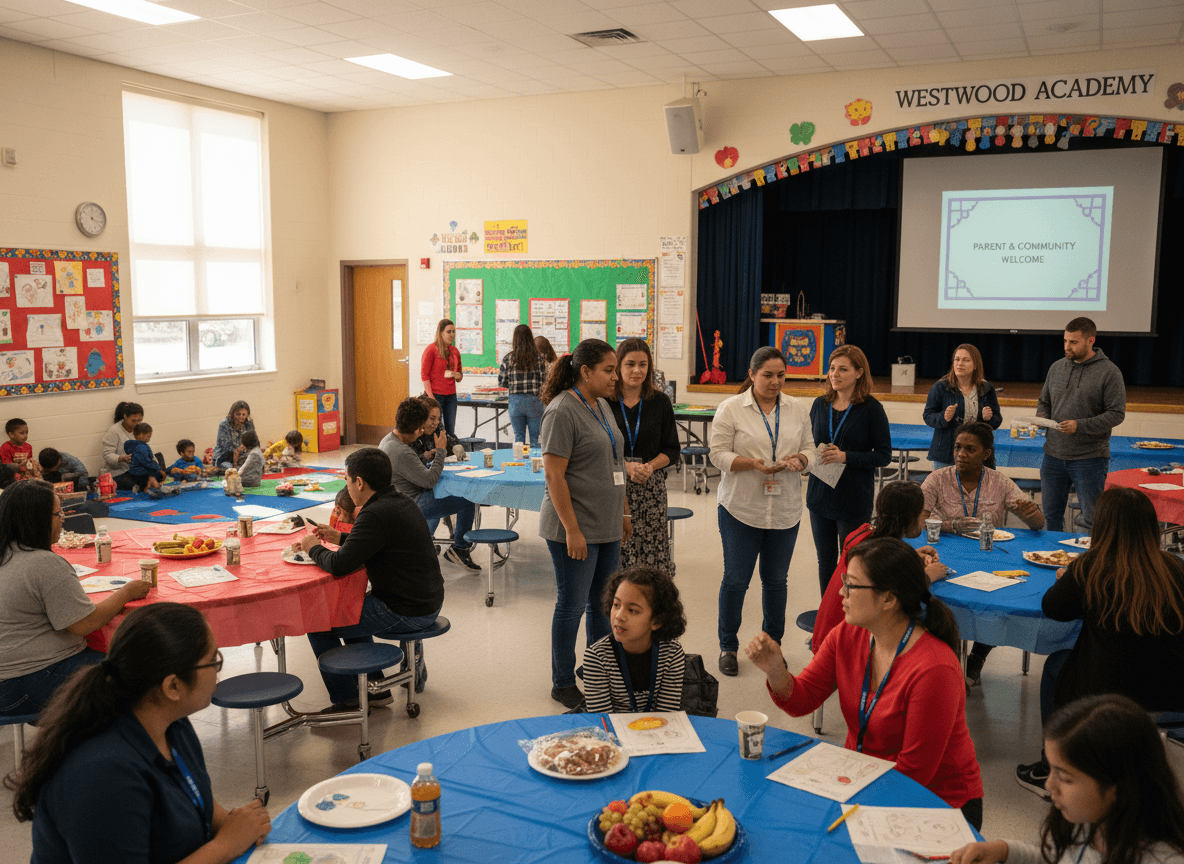
Title I schools operate under specific ESSA requirements for parent and family engagement. These include notifying parents of school designation, providing a written parent and family engagement policy, offering annual meetings, and communicating about their child's progress in ways that families can understand. Many Title I schools treat these requirements as a compliance checklist that runs parallel to their real communication efforts. That separation is a missed opportunity.
The newsletter is the one communication channel that can satisfy federal notification requirements while also building the kind of authentic relationships with families that actually improve student outcomes. Here is how to use it for both.
Understand what ESSA actually requires in writing
Section 1116 of ESSA requires Title I schools to notify parents at the beginning of the school year that the school has received Title I funds, provide information about the school's academic performance, and communicate parents' right to request information about teacher qualifications. These notifications must be in a language families can understand.
None of this language requires a separate legal-looking letter sent in an envelope. You can deliver these notifications through your newsletter, supplemented by an annual letter or meeting invitation. The newsletter format allows you to present the required information in plain, accessible language rather than the dense compliance language that families often ignore. Check with your district's Title I coordinator about which specific notifications must be delivered as standalone documents versus which can be integrated into regular communication.
Translate the academic jargon in your school's improvement data
Title I schools are required to share their proficiency data with families in a way they can understand. The school report card data that comes from state report cards is often presented in formats that are genuinely hard to interpret without a background in educational measurement. Your newsletter can translate this.
When your school receives its annual assessment results, write a newsletter section that explains what the data shows in plain English: "This year, 58% of our 3rd graders met the state reading standard. That is up from 52% last year. We are still below the state average of 68%, and here is what we are doing specifically to close that gap..." This kind of honest, specific, forward-looking communication builds more trust than either hiding the data or presenting it in raw form without context.
Make the parent and family engagement policy a living document, not a stored PDF
ESSA requires Title I schools to develop a written parent and family engagement policy with input from parents and make it available to the public. In most schools, this document lives in a folder on the school website that almost no one reads. Your newsletter can change this.
Once per year, summarize the key points of your school's parent engagement policy in the newsletter: what opportunities exist for families to be involved in school decisions, how the school collects family feedback, and how families can access Title I services. Then link to the full document. This does not replace the policy document -- it makes it accessible to families who will never navigate to the school website to find it.
Use the newsletter to drive attendance at the annual Title I meeting
The annual Title I meeting requirement -- offering at least one meeting to inform parents about the school's participation in Title I and parents' rights under the law -- has notoriously low attendance at most Title I schools. The families who most need to understand their rights under ESSA are often those least likely to attend an evening school meeting.
Use your newsletter to drive attendance with specifics rather than a generic invitation. "Our annual Title I family meeting is November 7 at 6 PM. We will explain how our Title I funding is being used, share this year's student achievement data, and answer questions. Childcare and light dinner will be provided. Spanish interpretation available." Specificity about childcare, food, and interpretation removes three common barriers. Send the reminder in the newsletter for three consecutive weeks before the meeting.
Communicate what Title I funding actually buys
Many families in Title I schools do not know what Title I funding is or what it provides. They may not know that the reading specialist who works with their child is funded by Title I, or that the after-school tutoring program is a Title I service, or that the professional development that brought a new math curriculum was paid for with Title I dollars.
Making this visible matters. It gives families context for why the services exist, it builds support for the federal program when it comes under political scrutiny, and it signals that the school takes the responsibility of those funds seriously. A brief annual newsletter feature -- "How Title I Funding Supports Our Students This Year" -- that lists specific programs and what they cost is more impactful than any compliance notification.
Build two-way communication, not just notifications
ESSA explicitly requires that Title I schools provide opportunities for parents to share information about how the school can better support them, not just receive information from the school. Your newsletter can be a vehicle for this too. Include a standing invitation for feedback: "Have a question or suggestion about our school's programs? Email [name] or fill out this brief form [link]." Once per year, publish a summary of what you heard and what changed as a result.
Families who see their feedback reflected in school decisions become more engaged, not less. The act of publishing "You told us, and here is what we changed" is one of the most powerful trust-building moves a Title I school can make in its communication.
Document your outreach, because compliance audits are real
Title I coordinators and district staff sometimes need to demonstrate to state and federal reviewers that parent engagement activities happened and families were notified. Newsletter records with open rate analytics constitute evidence of outreach. Keep records of your newsletter send dates, the content of parent engagement communications, and engagement metrics.
If you use a newsletter platform with analytics, export and save open rate reports after each major notification. This documentation supports compliance audits without requiring the school to maintain a separate paper trail. It also demonstrates that the school's outreach was not just technically completed but actually reached families -- a distinction that matters to thoughtful reviewers.
Get one newsletter idea every week.
Free. For teachers. No spam.
Frequently asked questions
When should Title I schools communicate ESSA parent engagement requirements to families?
Deliver the required Title I school designation notification and parent rights information in the first newsletter of the year. Follow up with a three-week series of reminders before the annual Title I meeting. Publish the academic proficiency update in the newsletter as soon as the state report card data is available.
What should a Title I parent engagement newsletter include to satisfy ESSA requirements while building genuine trust?
Include a plain-language explanation of what Title I funding actually pays for in your school, specific academic proficiency data with context rather than raw numbers, a summary of your parent engagement policy with a link to the full document, and clear logistics for the annual meeting including childcare, food, and interpretation services.
How can Title I schools reach families who are unlikely to attend evening meetings or navigate the school website?
Deliver all required notifications through the newsletter itself in plain language rather than relying on the school website or back-to-school packets. Remove attendance barriers for the annual Title I meeting by stating explicitly in the newsletter that childcare and Spanish interpretation will be provided, three weeks in a row before the event.
What are the biggest barriers to meaningful parent engagement in Title I schools beyond simple attendance numbers?
Many families at Title I schools have had negative experiences with schools in their own childhoods, which makes any official communication feel like bureaucratic obligation rather than genuine outreach. Academic jargon in proficiency reports prevents families from understanding what the data means. And ESSA compliance communication often runs separately from real school communication, signaling it is paperwork rather than relationship.
Can a newsletter platform help Title I schools maintain compliance documentation for audits?
Yes. A tool like Daystage provides open rate analytics after each send, which constitutes documented evidence that parent notifications were delivered and families were reached, not just sent to. Export and save those reports after each required ESSA notification. This supports compliance audits without a separate paper trail.

Adi Ackerman
Author
Adi Ackerman is a former classroom teacher and curriculum writer with 8 years in K-8 schools. She writes about school communication, parent engagement, and what actually works in real classrooms.
More for Rural & Title I
Rural School Library Newsletter: How School Librarians Communicate Resources and Programs to Families
Rural & Title I · 5 min read
Rural School Transportation Newsletter: Communicating Bus Routes and Schedules to Families
Rural & Title I · 5 min read
Title I Parent Information Meeting Newsletter: How Schools Communicate Annual Meetings to Families
Rural & Title I · 5 min read
Ready to send your first newsletter?
3 newsletters free. No credit card. First one ready in under 5 minutes.
Get started free