
Third Grade Reading Newsletter: Sections That Get Read
Third grade is the year reading gets serious. The books get longer. The vocabulary gets harder. The questions stop being "what happened" and start being "why did it happen and what does it mean." Some kids cruise through. Some hit what teachers and researchers call the third grade slump. A third grade reading newsletter has to speak to both groups and give every parent one concrete thing to do.
Open with the chapter book on the table
Lead with the title. "Our read-aloud this cycle is The Tale of Despereaux by Kate DiCamillo. Small groups are reading Stone Fox and Sarah Plain and Tall." Parents recognize those titles. Their child mentions Despereaux at dinner and the parent has a hook. Without the title, the dinner question dies at "we read in class."
Name the third grade shift, calmly
Once per year, in the September or October newsletter, explain what is changing. "Third grade reading is a step up. The books are longer. The vocabulary is harder. The questions move from what happened on a page to what happened across a chapter. Some kids find that step exciting. Some find it frustrating, especially in the first months. Both reactions are normal." That paragraph prevents three weeks of parent panic emails.
The comprehension focus, in one sentence
Pick one comprehension skill per cycle. Main idea across paragraphs. Character motivation. Cause and effect. Theme. Name it in plain words. "This cycle we are working on figuring out why characters do what they do, not just what they did." Done.
One home question
Each focus maps to one home question. "At home this week, after your child reads a chapter, ask: why do you think the character did that? One question, one chapter. That is plenty." Parents will do one thing. Five things, they will do zero.
A working two-week template
"Hello families. Our read-aloud this cycle is The Tale of Despereaux. Small groups are reading Stone Fox. Reading focus this cycle: figuring out why characters do what they do, not just what they did. At home this week, after your child finishes a chapter, ask: why do you think the character did that? One question is plenty. Heads up: state reading assessment window opens in March. I will send a parent guide before practice starts."
Keep the structure the same every cycle
Four sections. Books. Focus. Home question. Heads-up. Same order every two weeks. Parents who see the same structure twice start reading it on autopilot. Random structure trains them to skip.
How Daystage helps with third grade reading newsletters
Daystage holds the four-section template, sends a clean email to every family on your list, and formats it to read on a phone. No PDF, no portal, no app. The cycle write-up takes ten minutes from your couch on Sunday. The parents who opened in September are still opening in May.
Get one newsletter idea every week.
Free. For teachers. No spam.
Frequently asked questions
What is the third grade slump and should I mention it in the newsletter?
Yes, mention it once, calmly, with context. The third grade slump is the well-documented dip some readers hit when texts shift from short, illustrated books to longer chapter books with more abstract vocabulary. Naming it for parents prevents the panic that comes when a kid who loved reading in second grade starts resisting it in October of third. The newsletter can normalize what is happening and give one small action.
Which chapter books belong in a third grade reading newsletter?
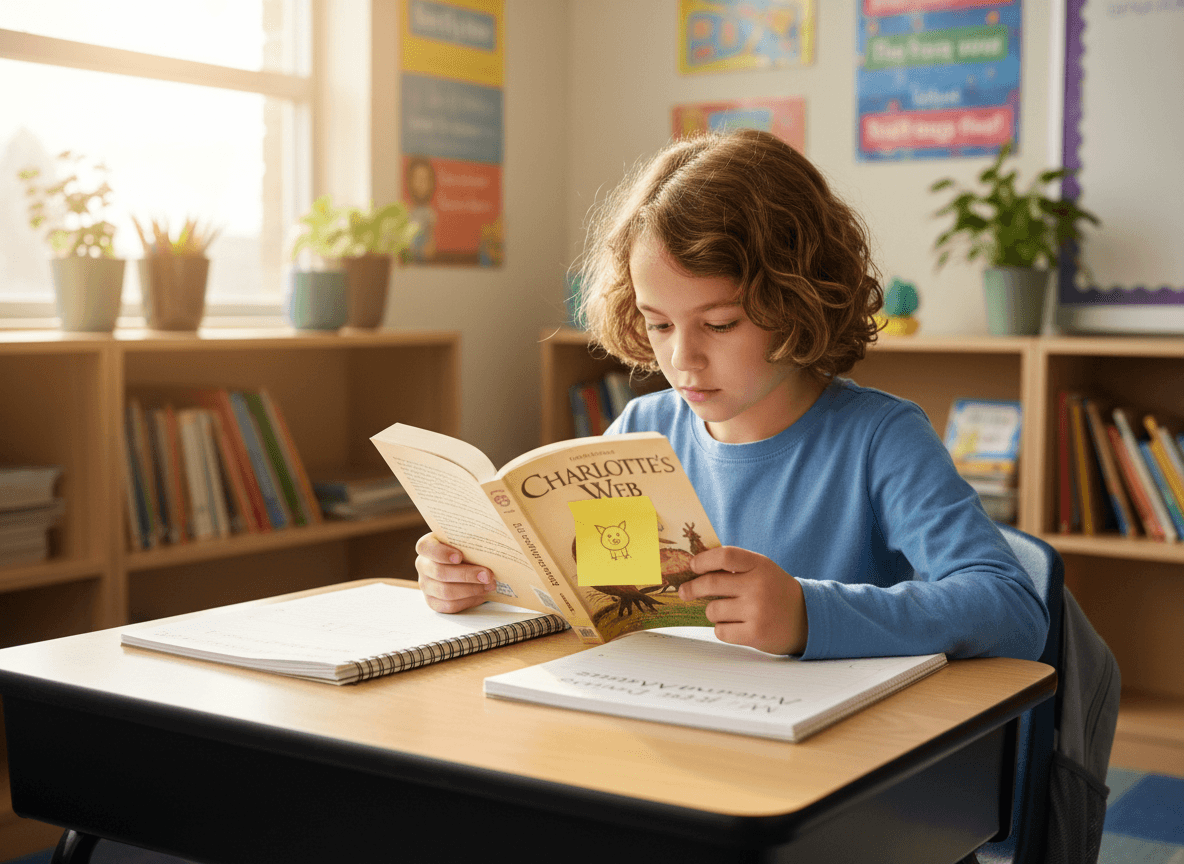
The ones you are actually reading. Common picks include Charlotte's Web, The Tale of Despereaux, Stone Fox, Sarah Plain and Tall, Because of Winn-Dixie, The One and Only Ivan. Name the read-aloud and the small-group titles. Parents who recognize a book feel oriented.
How do I explain multi-paragraph comprehension to parents?
In plain language. 'In third grade we are not just asking what happened on this page. We are asking what happened across the last three pages, and why it matters to the rest of the story.' One sentence is enough. The example is more useful than the definition.
Should I include the reading level numbers in the newsletter?
Class-level context, yes. Individual scores, no. Saying 'most of our class is reading at the M to P range right now' is useful. Saying 'your child is reading at level L' belongs in a conference, not a group email.
What is the easiest way to send a third grade reading newsletter consistently?
An email tool that holds your template and sends to your full class list in one click. Daystage was built for this. Save the structure once. Each cycle, swap the book, the focus, and the home question. No portal, no PDF, no app.

Adi Ackerman
Author
Adi Ackerman is a former classroom teacher and curriculum writer with 8 years in K-8 schools. She writes about school communication, parent engagement, and what actually works in real classrooms.
More for Reading Newsletter
Ready to send your first newsletter?
3 newsletters free. No credit card. First one ready in under 5 minutes.
Get started free