

Reading Newsletter Explaining Structured Literacy
Structured literacy shows up in district documents, IEP meetings, and parent questions, often without a clean definition attached. Most parents who have heard the term cannot say what it means or how it differs from what their older child experienced. A focused newsletter that explains structured literacy in plain language prevents a year of small misunderstandings. Here is the structure and the language to use.
Start by linking it to the science of reading
Two sentences up front. "Structured literacy is a teaching approach backed by the research known as the science of reading. The two terms are not identical. The science is what we know about how reading works. Structured literacy is one of the main ways classrooms teach in line with that science." That clarifies the whole vocabulary before parents have to ask.
Name the five pillars
One sentence each, no academic prose.
Phonemic awareness: hearing and manipulating the individual sounds in words, before the letters are involved.
Phonics: matching those sounds to letters, then blending letters into words.
Fluency: reading accurately, at a good pace, with expression.
Vocabulary: knowing what words mean, especially the words that show up in books but not in conversation.
Comprehension: understanding and remembering what was read.
Five lines. Parents now hold a working frame for the whole reading block.
Mention Orton-Gillingham in one sentence
"Structured literacy traces back to Orton-Gillingham, a method developed in the 1930s for students with dyslexia. Most current programs are descendants of that work." That is the whole history lesson the newsletter needs. Families with kids in dyslexia evaluation will recognize the name immediately. Other families read past it without losing the thread.
Who benefits most
"The strongest evidence is for students with dyslexia, students with reading difficulties, and English learners. The line we use: structured literacy is essential for some students and beneficial for all. That is why we teach this way to the whole class, not just the kids who need it most." This single paragraph prevents the most common parent question: why is my non-dyslexic kid doing dyslexia work?
What you will see in your child's day
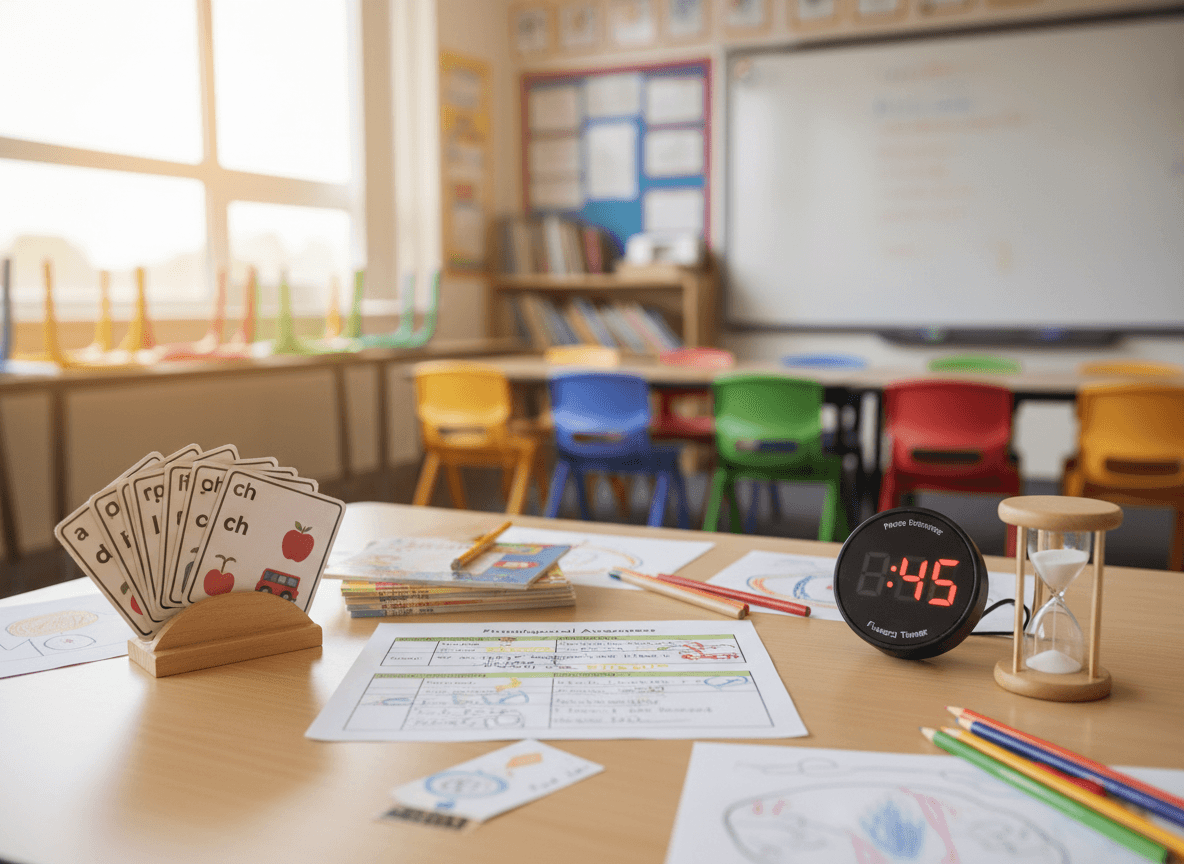
Three concrete examples. Finger tapping to count sounds in a word. Decodable texts with controlled patterns. A short fluency timing once or twice a week. Naming these makes the abstract approach visible. Parents can match what they see in the backpack to what they read in the newsletter.
A short illustration
"A second grader sat with me last week and read the sentence 'The bench had a black cat.' Two months ago she would have looked at the picture, guessed 'bed' for bench, and moved on. This week she tapped the four sounds in bench, blended them, paused on the digraph 'ch,' read it correctly, and kept going. That is structured literacy doing exactly what it is supposed to do."
What this is not
Head off the common misreading. "Structured literacy is not worksheets all day. It is not the end of read-aloud, picture books, or chapter books. It is the part of the day where we teach the code, in a clear order, with cumulative review. Everything else, the books, the discussions, the writing, still happens." This paragraph saves a dozen September emails.
How Daystage helps with the structured literacy newsletter
Daystage holds this kind of topic newsletter as a clean, reusable template. Write it once, send it to every family on your list, keep it for next year's class. The email is formatted for phones, with no PDF or portal in the way. The structured literacy explanation arrives the same week every year for the same grade, and parents read it without effort.
Get one newsletter idea every week.
Free. For teachers. No spam.
Frequently asked questions
Is structured literacy the same as the science of reading?
Closely related, not identical. The science of reading is the body of research. Structured literacy is one of the main teaching approaches the research supports. Saying 'we use structured literacy' is saying 'we teach in line with the science of reading.' That distinction is worth a sentence in the newsletter so parents do not get lost in the terminology.
What are the five pillars of structured literacy?
Phonemic awareness, phonics, fluency, vocabulary, and comprehension. Each is taught explicitly, in sequence, with cumulative review. Parents do not need a textbook chapter on each one. They need to know the five exist and that their child's daily lessons touch each in some way over a week.
What is Orton-Gillingham and where does it fit?
Orton-Gillingham is the original structured literacy method, developed in the 1930s for students with dyslexia. Most modern structured literacy programs trace back to its principles. Mentioning it in the newsletter signals to parents whose kids have dyslexia that you know the lineage. Other parents skim past the name and that is fine.
Who benefits most from structured literacy?
All readers benefit, but the strongest evidence is for kids with dyslexia, kids with reading difficulties, and English learners. The often-quoted line is true: structured literacy is essential for some students and beneficial for all. That sentence belongs in the newsletter because it explains why a method designed for dyslexia became the school-wide approach.
How do I send a topic-specific newsletter like this?
Use a saved template with three or four sections and write the topic content once. Daystage holds the structure, sends the same clean email to every family in your class or grade, and keeps the structured literacy explanation reusable for next year. No portal, no PDF, just an email parents can read on their phone.

Adi Ackerman
Author
Adi Ackerman is a former classroom teacher and curriculum writer with 8 years in K-8 schools. She writes about school communication, parent engagement, and what actually works in real classrooms.
More for Reading Newsletter
Ready to send your first newsletter?
3 newsletters free. No credit card. First one ready in under 5 minutes.
Get started free