
Reading Newsletter Explaining the Science of Reading
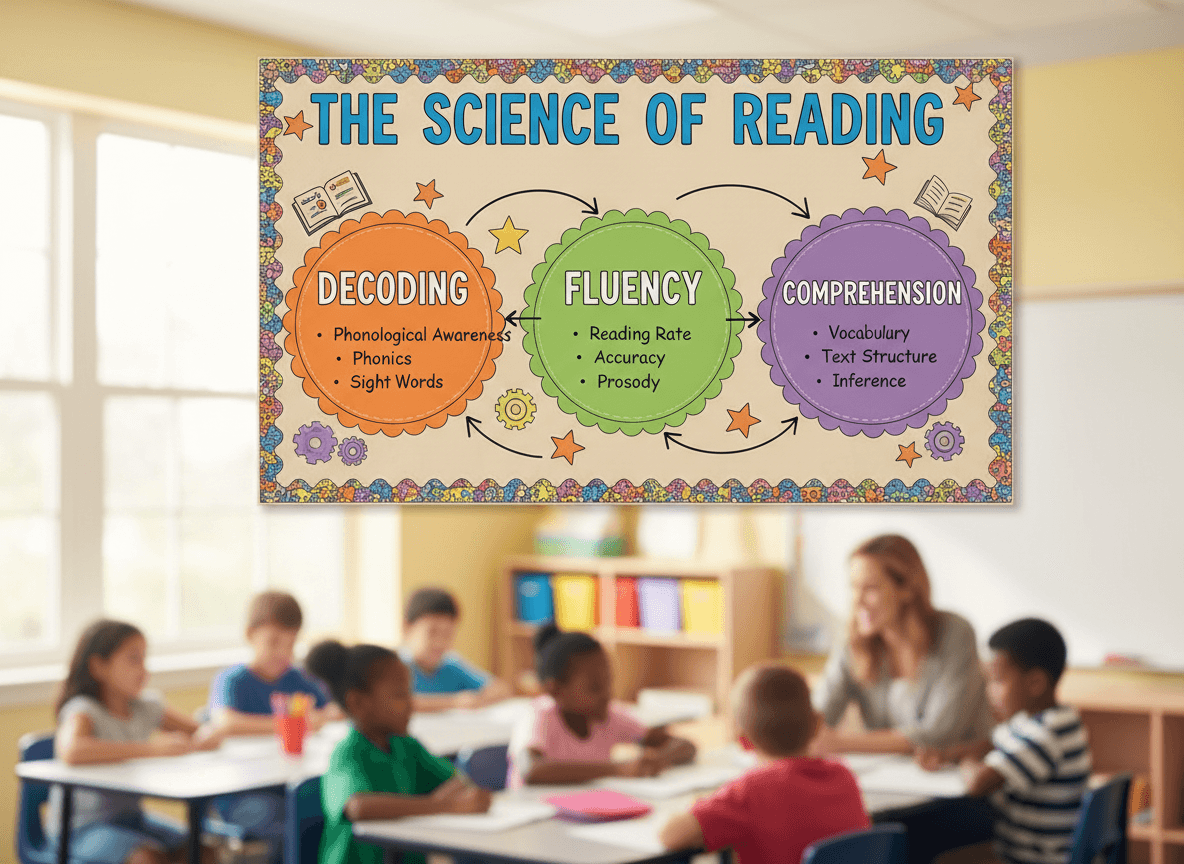
The science of reading is the most-asked-about phrase in parent emails right now, and the least clearly explained. Most parents have heard it. Most have not been told what it means. A newsletter that translates the research into plain language, names what changed in the classroom, and handles the balanced literacy question honestly, does more for parent trust than any back-to-school night ever will.
Define it in two sentences
Skip the academic prologue. "The science of reading is the body of research that explains how the brain actually learns to read. The short version: most kids need explicit instruction in phonics, then practice with fluency, vocabulary, and comprehension, in that order." That is the working definition. Parents can carry it into the next conversation. A page-long history of reading instruction makes them glaze.
Name what changed in the classroom
Five concrete shifts, one sentence each. Explicit phonics every day in K through second grade. Decodable texts for early readers. Phonemic awareness as a separate routine. Vocabulary instruction tied to read-alouds. Comprehension built on background knowledge. Five lines. Parents now know what their kid is actually doing differently this year compared to last year.
Handle the balanced literacy question with care
This is the section parents will reread. Be honest, do not assign blame. "For many years, classrooms used a method called balanced literacy, which encouraged kids to guess unfamiliar words using pictures and the first letter. The research has since shown that approach leaves many kids behind, especially those with dyslexia. We have moved to a structured phonics approach because the evidence is now clear." Parents who taught their older kids under the old approach will appreciate the honesty more than reassurance.
What parents will see and hear at home
Concrete. "You will hear your child say sounds out loud, not just words. You will see take-home books with simple, decodable sentences. You may notice fewer 'guess the word from the picture' prompts. All of this is on purpose." Parents need to know what to expect so the homework page does not look like a regression to them.
One example to make it real
"Last week, a first grader brought home a decodable that read 'Sam ran. Sam ran fast. Sam ran to the bag.' A parent emailed asking why the book seemed so simple. The answer: that book is built so the child can sound out every single word using patterns they already know. Reading it independently builds confidence and accuracy. The 'richer' books, with pictures the child cannot decode without guessing, come later, after the code is solid."
What this does not mean
Head off the common misread. "The science of reading does not mean we have stopped reading great books out loud. We still read aloud every day. We still build vocabulary, background knowledge, and a love of stories. What changed is how we teach the code that lets kids read those stories on their own." That paragraph prevents the "they only do phonics now" misunderstanding.
Format choices that matter
Under 500 words for a topic newsletter. Five sections, in the order above. Bold the section labels. No PDF, no links to long research papers, no jargon. If a parent wants the research, link one trusted source at the bottom, not five.
How Daystage helps with the science of reading newsletter
Daystage holds the five-section structure so the explanation reads the same clean way to every family on your list. You write the version once, send to every parent in one click, and have a clean artifact to reuse the next time a parent asks. The email lands in the inbox formatted, mobile-friendly, with no PDF and no portal in the way.
Get one newsletter idea every week.
Free. For teachers. No spam.
Frequently asked questions
Do parents actually want to know about the science of reading?
More than teachers think. The phrase has been in the news, on parent group chats, and on social media for the last three years. Many parents have heard it without ever getting a clear definition. A newsletter that explains it plainly answers a question they have been carrying around for a while.
How do I explain the science of reading without sounding academic?
Two sentences. 'The science of reading is the body of research that explains how the brain actually learns to read. The short version: most kids need explicit instruction in phonics, plus practice with fluency, vocabulary, and comprehension, in that order.' That is the entire definition a parent needs to start.
How do I handle the balanced literacy question without picking a fight?
Acknowledge the shift, name what changed, skip the blame. 'For many years, classrooms used a method called balanced literacy, which assumed kids could guess unfamiliar words using pictures and context. The research has since shown that approach leaves many kids behind, especially those with dyslexia. We have moved to a structured phonics approach because the evidence is now clear.' Parents respect honesty about the change. They distrust pretending nothing shifted.
What does the science of reading actually change in my classroom?
Five things. Explicit phonics every day in K through second grade, often longer. Decodable texts in the early grades instead of three-cueing prompts. Phonemic awareness as a separate routine, not a vague embedded skill. Vocabulary instruction tied to read-alouds. Comprehension built on background knowledge, not generic strategy worksheets. Naming those five in a newsletter shows parents the work, not the slogan.
What is the easiest way to send a newsletter like this?
A clean, formatted email straight to parent inboxes. Daystage was built for the kind of teacher communication that explains research without burying parents in PDFs or links. Save the structure once, swap the topic each cycle, and send to your full class list in one click.

Adi Ackerman
Author
Adi Ackerman is a former classroom teacher and curriculum writer with 8 years in K-8 schools. She writes about school communication, parent engagement, and what actually works in real classrooms.
More for Reading Newsletter
Ready to send your first newsletter?
3 newsletters free. No credit card. First one ready in under 5 minutes.
Get started free