
Fifth Grade Reading Newsletter: What to Send Each Month
Fifth grade reading is where novels start carrying real weight. Students are reading books with multiple plotlines, characters who change across the story, and themes parents would call grown-up. Inferencing becomes the main skill. The volume of reading goes up. A fifth grade reading newsletter has to keep parents oriented through all of that without turning into a book report.
Lead with the novel and the skill
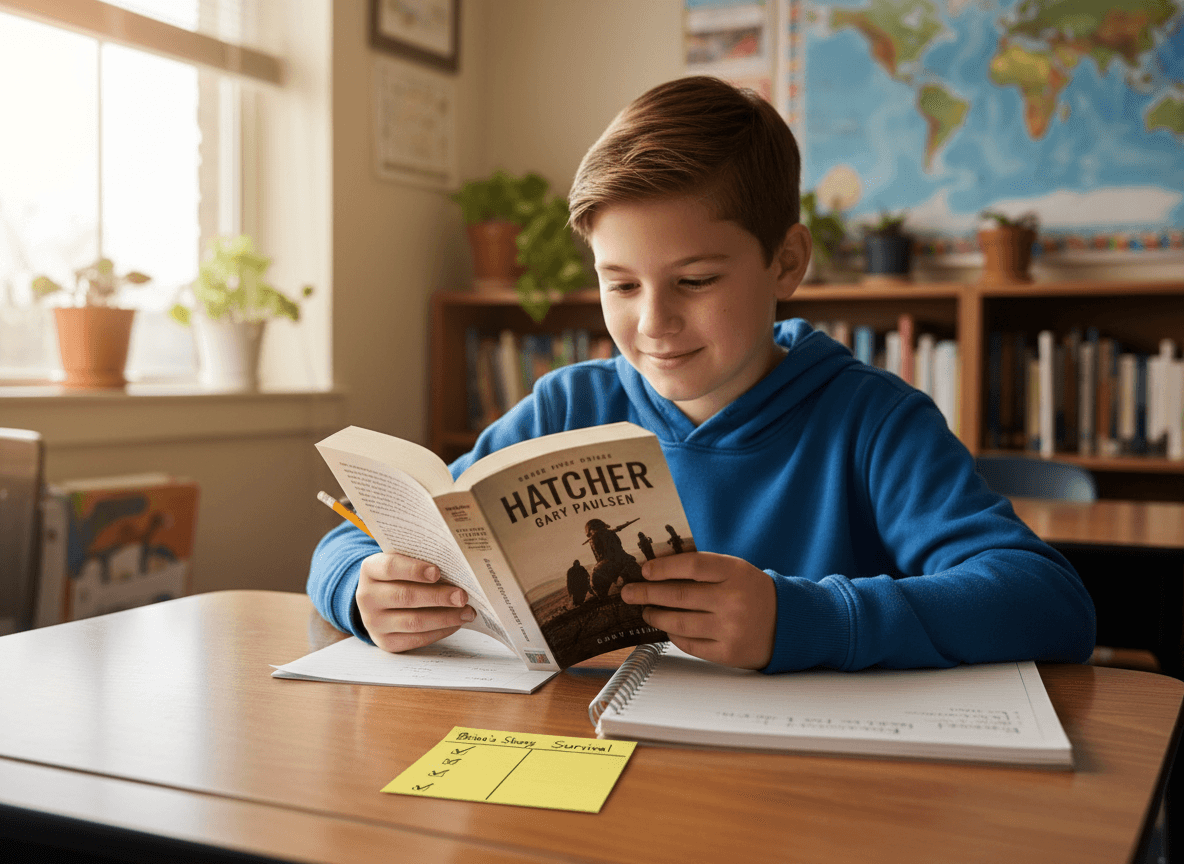
"Our read-aloud this cycle is Hatchet by Gary Paulsen. Small groups are reading Esperanza Rising and Wonder. Reading focus this cycle: inferencing, which is putting clues together to figure out what the author did not say directly." Two sentences, parents have a hook.
Name the multiple-plotline shift, once
Early in the year, devote one paragraph to it. "In fifth grade, novels often follow more than one storyline at once. Wonder has chapters from five different characters. Esperanza Rising shifts between Mexico and California. If your child seems to be reading slower or flipping back, that is good thinking, not a problem." Now the parent stops worrying about rereading.
One concrete home ask
"At home this week, after your child reads, ask one question: how does that character feel right now, and what clue made you think that? One question per session is plenty." That maps directly onto inferencing. Parents can do it.
A working two-week template
"Hello families. Our read-aloud this cycle is Hatchet. Small groups are reading Esperanza Rising. Reading focus: inferencing, which is putting clues together to figure out what the author did not say directly. The author rarely writes she was scared. The character's hands shake, she takes a step back, her voice gets quiet. Inferencing is reading those clues and naming the feeling. At home this week, ask your child after a chapter: how does that character feel, and what clue made you think that? One question is plenty. Heads up: independent reading log due Friday. Twenty minutes a night, four nights, a sentence about each session."
Show, do not tell
Once a quarter, include a short screenshot of a student response (name removed). Parents read the newsletter differently when they see what the work actually looks like at their child's grade. A paragraph describing inferencing cannot do what a 30-second sample can.
Keep the structure the same
Five sections. Novel. Skill. Home question. Heads-up. Optional sample. Same order every cycle. Parents who learn the rhythm read it on autopilot.
How Daystage helps with fifth grade reading newsletters
Daystage holds the five-section template and sends one clean email to every family on your list. Formatted, mobile-friendly, no PDF attachment, no portal. The cycle takes ten minutes on Sunday. The rhythm is what keeps parents reading from September through May.
Get one newsletter idea every week.
Free. For teachers. No spam.
Frequently asked questions
What is the biggest reading shift in fifth grade?
Novels with more than one storyline. In fourth grade, most chapter books follow one main character through one set of problems. In fifth grade, books like Wonder, Esperanza Rising, and Hatchet ask students to track multiple plotlines and infer how they connect. Naming that shift in the newsletter helps parents understand why their child seems to be reading slower or rereading more.
How do I explain inferencing to parents in one paragraph?
Use a concrete example. 'Inferencing is putting clues together to figure out what the author did not say directly. The author rarely writes, she was scared. Instead the character's hands shake, she takes a step back, her voice gets quiet. Inferencing is the work of reading those clues and naming the feeling.' Two sentences, no jargon, parents get it.
Which novels show up most in fifth grade?
Hatchet, Wonder, Esperanza Rising, Number the Stars, Bridge to Terabithia, The Watsons Go to Birmingham, Refugee, A Long Walk to Water, Wishtree, Out of My Mind. Name the read-aloud and small-group titles every cycle.
Should fifth grade reading newsletters mention middle school?
Once in the spring, briefly. Fifth grade parents are already nervous about middle school. The newsletter is not the place to fuel that. A single line in March or April acknowledging that the work in fifth grade is building the stamina middle school readers need is plenty.
What tool sends a fifth grade reading newsletter cleanly?
A tool that lands a formatted email in the parent inbox without a portal. Daystage was built for it. Save the structure once, swap the novel, focus, and home question each cycle, send to the whole class list in one click.

Adi Ackerman
Author
Adi Ackerman is a former classroom teacher and curriculum writer with 8 years in K-8 schools. She writes about school communication, parent engagement, and what actually works in real classrooms.
More for Reading Newsletter
Ready to send your first newsletter?
3 newsletters free. No credit card. First one ready in under 5 minutes.
Get started free