
Teacher Newsletter Reading Update: Keeping Families Informed on Literacy

Reading is the subject where family engagement makes the biggest difference. Students who read at home regularly, talk about what they read, and have parents who ask genuine questions about their books consistently outperform those who only read at school. A classroom newsletter reading update is one of the most direct ways to activate that home-school connection.
What the Class is Reading
Tell families specifically what students are reading in class right now. Include the title of the class read-aloud, the genre focus for independent reading, and any author study or text set students are working through. Families who know what their child is reading can ask about it, find related books at the library, and participate in conversations that reinforce comprehension and engagement.
The Reading Strategy Focus
Reading instruction focuses on specific strategies at different points in the year: making inferences, identifying text structure, determining theme, analyzing character motivation. When you name the current strategy focus and give a brief example of how students practice it, families can reinforce it at home. "We are working on making inferences. Ask your child what the author means but did not actually say when they read tonight" turns a classroom skill into a dinner table conversation.
Vocabulary in Context
Strong readers build vocabulary through wide reading, but families can accelerate this when they know what words students are focusing on. A list of three to five vocabulary words from the current text, with brief definitions and an example sentence, helps parents use those words naturally in conversation. Incidental exposure to academic vocabulary outside of school hours makes a measurable difference in vocabulary retention.
At-Home Reading Suggestions That Work
The most research-supported at-home reading activity is still the simplest: reading aloud together. It builds vocabulary, models fluency, and creates shared reference points for discussion. Even for students who can read independently, being read to is valuable. Include one specific title families can find at the library or on a school reading platform each month. A concrete recommendation is far more actionable than a general encouragement to read at home.
Addressing Common Concerns
Reading newsletters often draw questions about reading levels and whether students are on track. The newsletter is not the right vehicle for individual progress updates, but it is appropriate to note that families with specific questions should contact the teacher directly. This prevents families from drawing their own conclusions from class-wide information while keeping the newsletter focused on general learning updates.
Using Photos to Make Reading Real
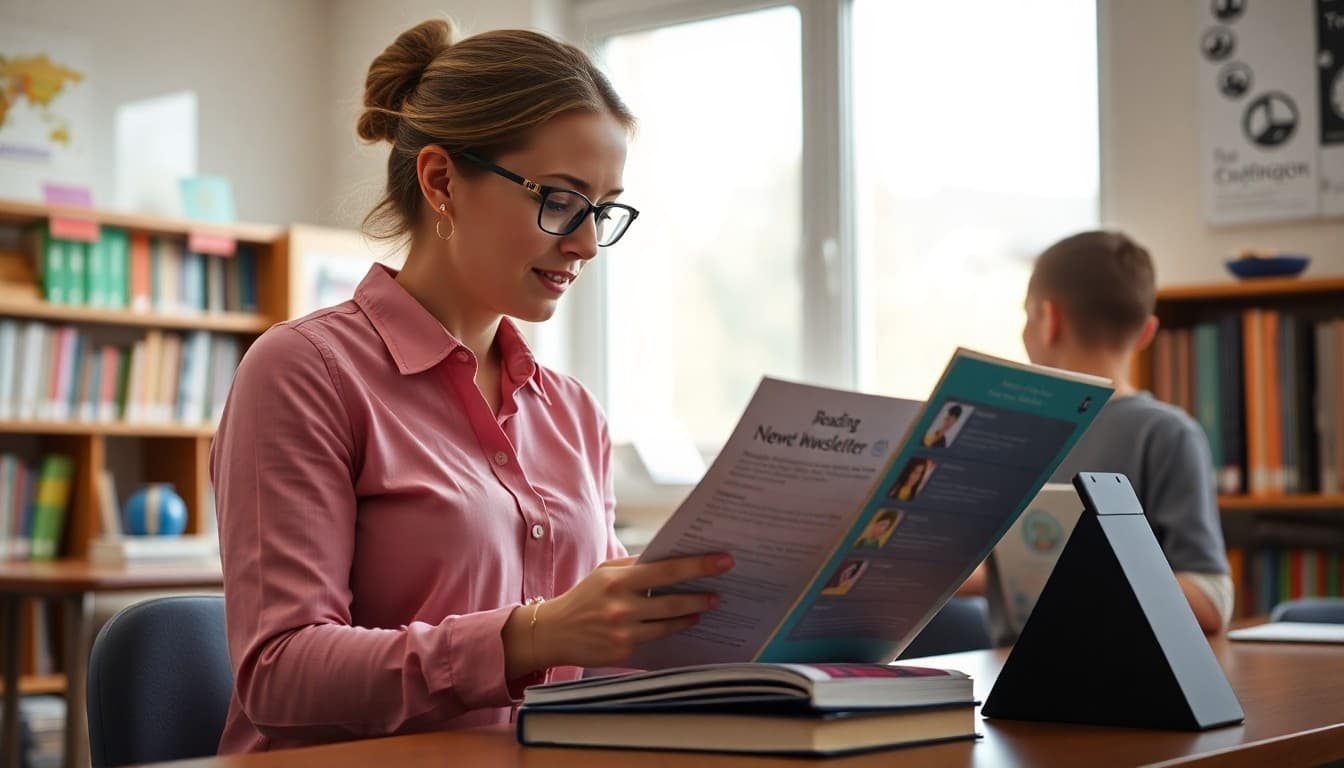
A photo of students engaged in independent reading, a book club discussion, or a read-aloud session makes the newsletter come alive for families. Parents are curious about what their child's classroom actually looks and feels like, and a reading-time photo answers that question while showcasing the learning environment. Daystage makes it easy to include photos in a visually clean format that looks professional and loads quickly on mobile devices.
Building the Reading-Home Connection
A reading update does not need to be long or complicated. Three or four paragraphs covering what students are reading, what skill they are developing, and how families can help at home is enough to meaningfully activate parent engagement. Sent consistently every month or biweekly, it becomes one of the most valued parts of the newsletter for families who want to genuinely support their child's reading development.
Get one newsletter idea every week.
Free. For teachers. No spam.
Frequently asked questions
What should a reading update in a classroom newsletter include?
What genre or type of reading students are currently working on, what reading strategy or skill is the current focus, two or three ways families can support reading at home, and any titles students are reading independently or as a class.
How do you communicate reading levels without alarming parents?
Focus on growth and the specific skills being developed rather than grade-level comparisons. If a student is below grade level, that conversation belongs in a parent conference, not a newsletter. The newsletter is for class-wide updates, not individual progress reports.
What at-home reading tips actually work for elementary families?
Reading aloud together even after children can read independently, asking about what happened in the book and what the child thinks will happen next, and visiting the library or using a school reading platform regularly all have strong research support. Keep suggestions specific and doable.
How do you make a reading newsletter update engaging for parents?
Include a title recommendation families can find at the library, mention a specific author students are excited about, or include a brief quote from a class read-aloud that sparked discussion. Connecting the newsletter to something students are already talking about at home makes parents feel included in the classroom experience.
What tool works best for reading newsletters?
Daystage makes it easy to include book cover images, student reading photos, and recommended titles in a format that displays well on mobile. It handles distribution so the newsletter reaches all families, including those who might miss a flyer sent home in a backpack.

Adi Ackerman
Author
Adi Ackerman is a former classroom teacher and curriculum writer with 8 years in K-8 schools. She writes about school communication, parent engagement, and what actually works in real classrooms.
More for Professional Development
Ready to send your first newsletter?
3 newsletters free. No credit card. First one ready in under 5 minutes.
Get started free