
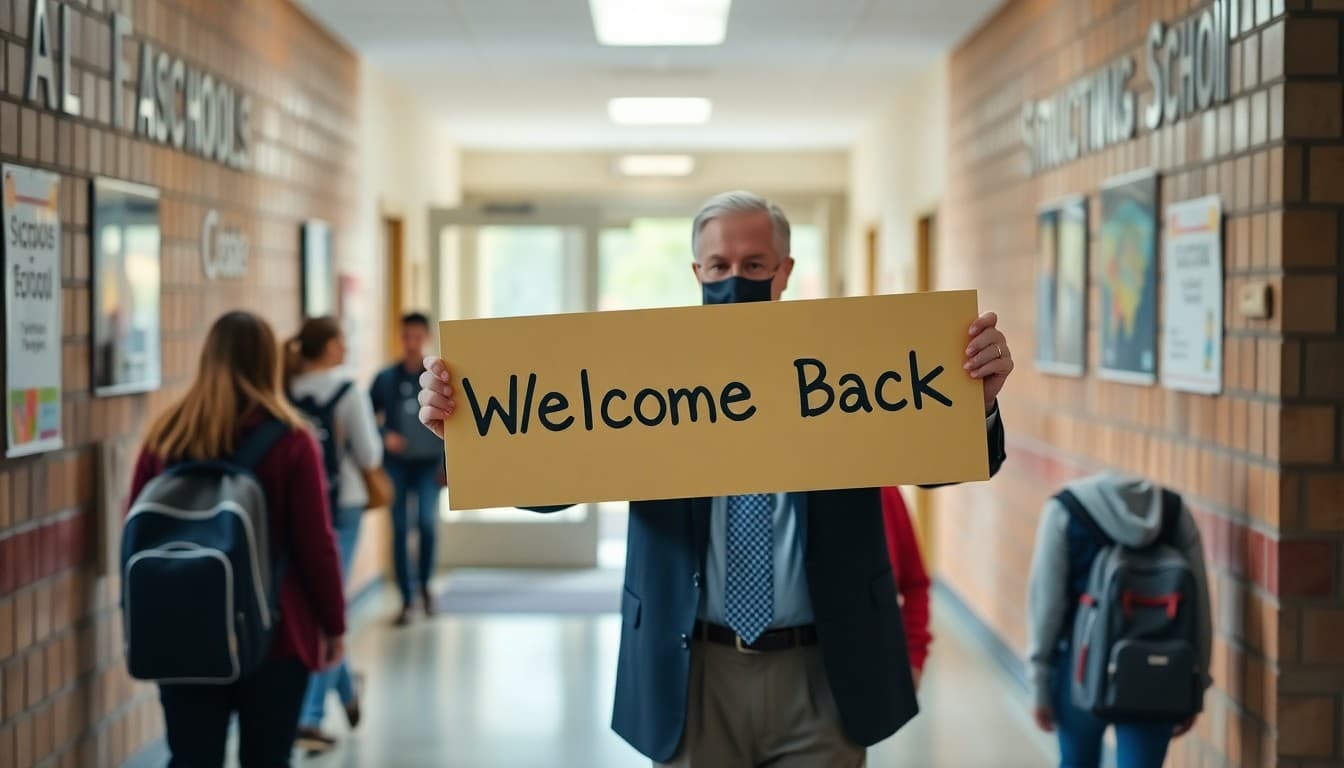
School Newsletter Welcome Back Template: What to Include and Why

The welcome back newsletter is the most-opened newsletter of the school year. Families are paying attention, students are both excited and anxious, and the school community is restarting after a long summer. The principal who uses this communication window well sets up an entire year of stronger family engagement.
When to send it
The primary welcome back newsletter should go out one to two weeks before the first day of school. Early enough that families can use the information to prepare. Late enough that it does not feel premature or get forgotten by the time school starts.
A brief second message three days before the first day covers the immediate logistics. These two messages together serve the full orientation function.
Section structure for the welcome back newsletter
Unlike a regular monthly newsletter, the welcome back edition carries more sections because there is more ground to cover:
- Principal message. Personal, specific, forward-looking. Not a list of priorities. A message from a person.
- New staff introductions. Every new hire with a brief human description. If you have a photo, include it.
- What is new this year. Policy changes, new programs, facility updates, anything different from last year.
- First-week schedule. Any schedule differences in the opening week, early dismissal days, orientation events.
- Key dates for the first month. Back-to-school night, first progress report, any early events families need to calendar.
- How to reach us. Office number, principal email, and how to reach specific offices (attendance, counseling).
- Resources for new families. A brief section for first-time school families with the three to four things they most need to know.
Principal message: what to actually say
Most welcome back messages open with 'We are so excited to welcome you back for another wonderful year!' That sentence means nothing and signals that the rest of the newsletter will be similar.
Try this approach instead: Tell families one thing you did over the summer to get ready for this year. Then name one specific thing you are going to do differently this year. Then name one thing about the school that you are genuinely proud of going into September.
Three paragraphs. Real content. No corporate language. The families who read it will feel like they heard from a person, not an institution.
New staff introductions: more than job titles
'Ms. Jackson joins us as our new fourth-grade math teacher. She comes from [District] with eight years of experience.'
That is better than nothing. This is better:
'Ms. Jackson joins us as our new fourth-grade math teacher. She spent the last eight years at [School] and is moving here to be closer to family. She told me in her interview that she loves the moment a student understands fractions for the first time. I believe her. Your fourth-graders are going to have a good year.'
Keep the logistics section scannable
Dates, times, addresses, and procedures belong in a bulleted or numbered format, not in paragraphs. Families who need the arrival time do not want to read three sentences to find it. Put each logistics item on its own line with the key information first.
Daystage makes the welcome back newsletter formatting straightforward. Build the structure once, populate the sections each year, and send to the full family list with one click.
Get one newsletter idea every week.
Free. For teachers. No spam.
Frequently asked questions
What is the purpose of a welcome back school newsletter?
It has two purposes: orient families for the start of the year and re-establish the principal's communication voice after a summer absence. Families who have not heard from the school since June need both practical information and a reminder that the principal is a specific person who runs this school, not a generic institutional sender.
How long should a welcome back newsletter be?
Longer than your typical monthly newsletter. The welcome back edition carries more logistics than usual because there is more to orient families to. Five to seven sections is reasonable. But each section should still be short and scannable. Families will read all of it if it is organized clearly. They will abandon it if it is a wall of text.
What should the welcome back principal message say?
Something personal and specific about the new year. What you did to prepare over the summer. What you are most looking forward to. One honest acknowledgment of a challenge you are committed to addressing. Not 'We are so excited!' Not a list of school priorities. A real message from the person who runs the building.
Should I introduce new staff in the welcome back newsletter?
Yes, always. New staff members are strangers to families until you give them context. A sentence or two per new hire, including name, role, and one human detail, is the minimum. Families who know a new teacher's name and something about them before the first day are more comfortable and less anxious.
What tool helps principals send newsletters efficiently?
Daystage makes it easy to build the welcome back newsletter with multiple sections, new staff photos, and event details in a single formatted email that delivers inline to family inboxes. The welcome back edition is the most important newsletter of the year. It is worth sending it through a tool that makes it look right.

Adi Ackerman
Author
Adi Ackerman is a former classroom teacher and curriculum writer with 8 years in K-8 schools. She writes about school communication, parent engagement, and what actually works in real classrooms.
More for Principals
Ready to send your first newsletter?
3 newsletters free. No credit card. First one ready in under 5 minutes.
Get started free