
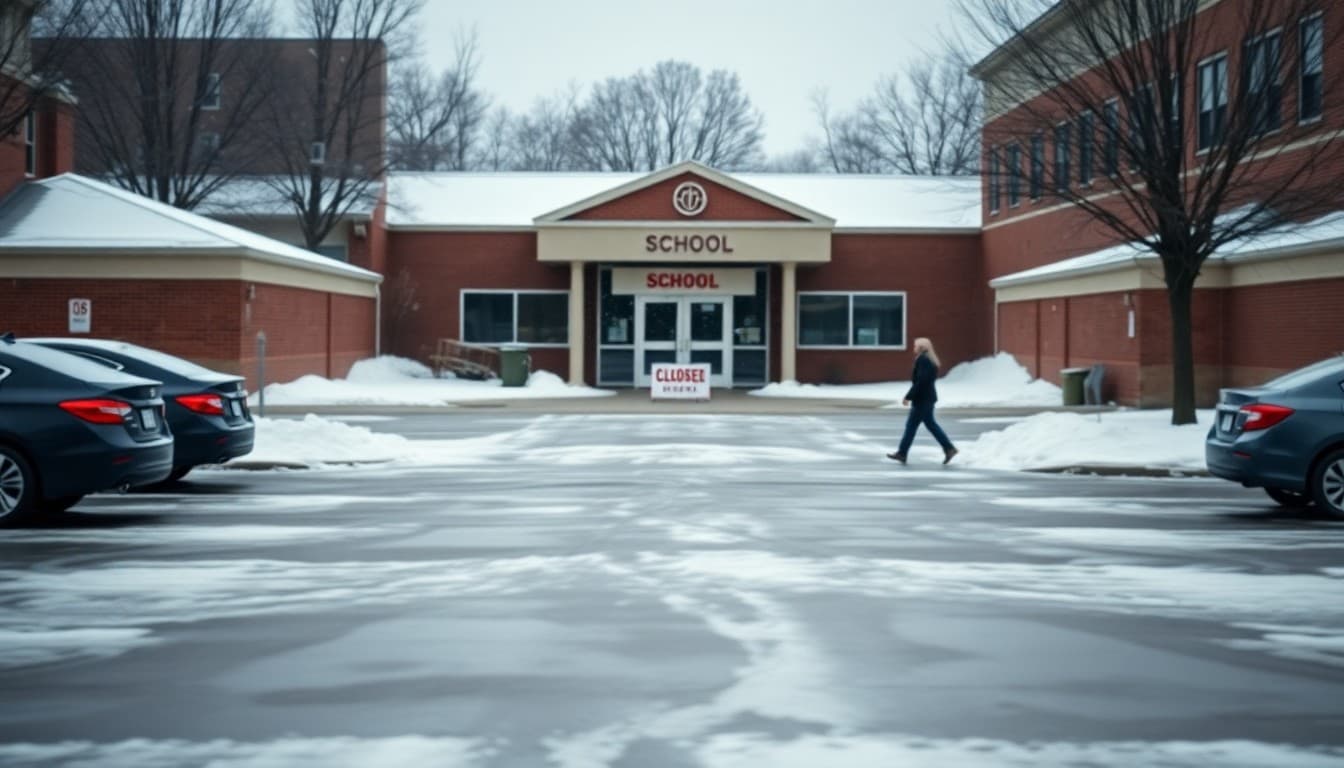
Weather Emergency Communication in Your Principal Newsletter

Weather emergencies test your communication infrastructure more than almost anything else. The message needs to go out fast, reach every family, and contain only the information they actually need. Anything unclear causes a cascade of phone calls you do not have time to answer. Get the format right before the storm, and execution becomes straightforward.
Lead With the Decision, Not the Context
"Due to the forecast of six to ten inches of snow overnight and resulting unsafe road conditions, Hillcrest Elementary will be closed on Thursday, January 15." That sentence tells families everything urgent. The reason is one clause -- it is there for transparency, not explanation. Do not open with a weather forecast summary or a discussion of the decision process. Lead with the outcome.
Cover the Immediate Practical Questions
After the status (closed or delayed), families need to know: Are after-school activities cancelled? Will buses run on a delay schedule? Is there a remote learning requirement? When will the next update come? Each of these can be answered in a single sentence. Keep the full newsletter under 200 words for a weather closure. Families are reading it at 5:30 AM on their phone. Brevity is kindness.
Delayed Start Needs Its Own Clear Format
A two-hour delay communicates differently than a closure. Make the status impossible to miss. "2-HOUR DELAY: School opens at 9:45 AM on Friday, January 16. Buses will run on the 2-hour delay schedule. Breakfast will not be served. If you are unsure about your bus time on a delay schedule, contact the transportation office at (555) 800-1234." That is the entire message. Short, complete, actionable.
A Template Closure Newsletter
Here is a full weather closure newsletter that works:
"SCHOOL CLOSED -- Thursday, January 15. Due to the storm forecast and unsafe road conditions, all district schools will be closed. No remote learning is required. This day will be made up on the schedule communicated at the start of the year. After-school activities and evening events are also cancelled. Staff will receive a separate communication. Updates for the following school day will come by 6:00 AM Friday. Stay safe."
That is 73 words. Everything a family needs. Nothing they do not.
Build Your Template Before the Season Starts
Every principal in a snow-prone region should have a closure newsletter template drafted and saved before November. The template has placeholder fields for the date, the reason, and the specific status. When the decision is made at 4:30 AM, you fill in three fields and send. You are not writing from scratch while half-asleep. You are deploying a system that already works.
Address Makeup Days in the Original Notification
If your district has pre-planned makeup days at the end of the calendar, note them. "This day will be made up on June 18, per the district calendar." Families who know that the closure has a plan feel less anxious about lost instructional time. If makeup days are not yet determined, say that clearly and give a timeframe for when families will know.
Follow Up After Extended Closures
If school is closed for two or more consecutive days, families need a return-to-school newsletter before the first day back. Cover what to expect: is there a make-up schedule, any adjusted programming, any resources for students who missed significant instruction? A brief, confident "here is how we are getting back on track" message sets the right tone for the return.
Use the Non-Emergency Time to Prepare Families
Send a weather communication plan newsletter in October -- before any closure has happened. Explain how families will receive closure notifications, what your delay schedule looks like, and what to do if they have questions during an emergency. Families who have read this newsletter navigate weather emergencies with far less panic than those encountering the system for the first time at 5:00 AM in January.
Get one newsletter idea every week.
Free. For teachers. No spam.
Frequently asked questions
What should a principal newsletter say about a weather emergency or school closure?
Be direct and immediate: school is closed, here is why, here is what will happen next. Include the date, the reason in one sentence, and whether it is a closure or a delay. If remote learning is required, state that clearly. If makeup days are planned, mention when you will know more. Leave nothing ambiguous.
When should the weather closure newsletter go out?
As early as possible -- ideally before 6:00 AM for a same-day closure so families have time to arrange childcare. The faster you send it, the more useful it is. If the decision is made the night before, send it by 8:00 PM. For delayed starts, send as soon as the decision is made so families do not leave home at the normal time.
How do I communicate a delayed start versus a full closure?
State it in the subject line or opening sentence, not mid-paragraph. 'School is CLOSED tomorrow, Thursday January 15' and '2-HOUR DELAY: Friday January 16' should be the first words families see. The details can follow, but the most critical information needs to be impossible to miss on a quick scan.
Should the principal newsletter address emergency procedures like lockdowns and evacuations?
The newsletter is not the place for in-the-moment lockdown communication -- that requires direct emergency systems (phone trees, automated calls, school safety apps). The newsletter is right for proactive communication: explaining your procedures before an event, what families should and should not do during a lockdown, and post-incident follow-up.
What tool helps send urgent school closure newsletters quickly?
Daystage lets you draft and send a newsletter in minutes, which is exactly what you need when a snow day decision comes at 5:00 AM. Having a template pre-built for weather closures means you only need to fill in the date and reason.

Adi Ackerman
Author
Adi Ackerman is a former classroom teacher and curriculum writer with 8 years in K-8 schools. She writes about school communication, parent engagement, and what actually works in real classrooms.
More for Principals
Ready to send your first newsletter?
3 newsletters free. No credit card. First one ready in under 5 minutes.
Get started free