

Highlighting Your STEM Program in the Principal Newsletter
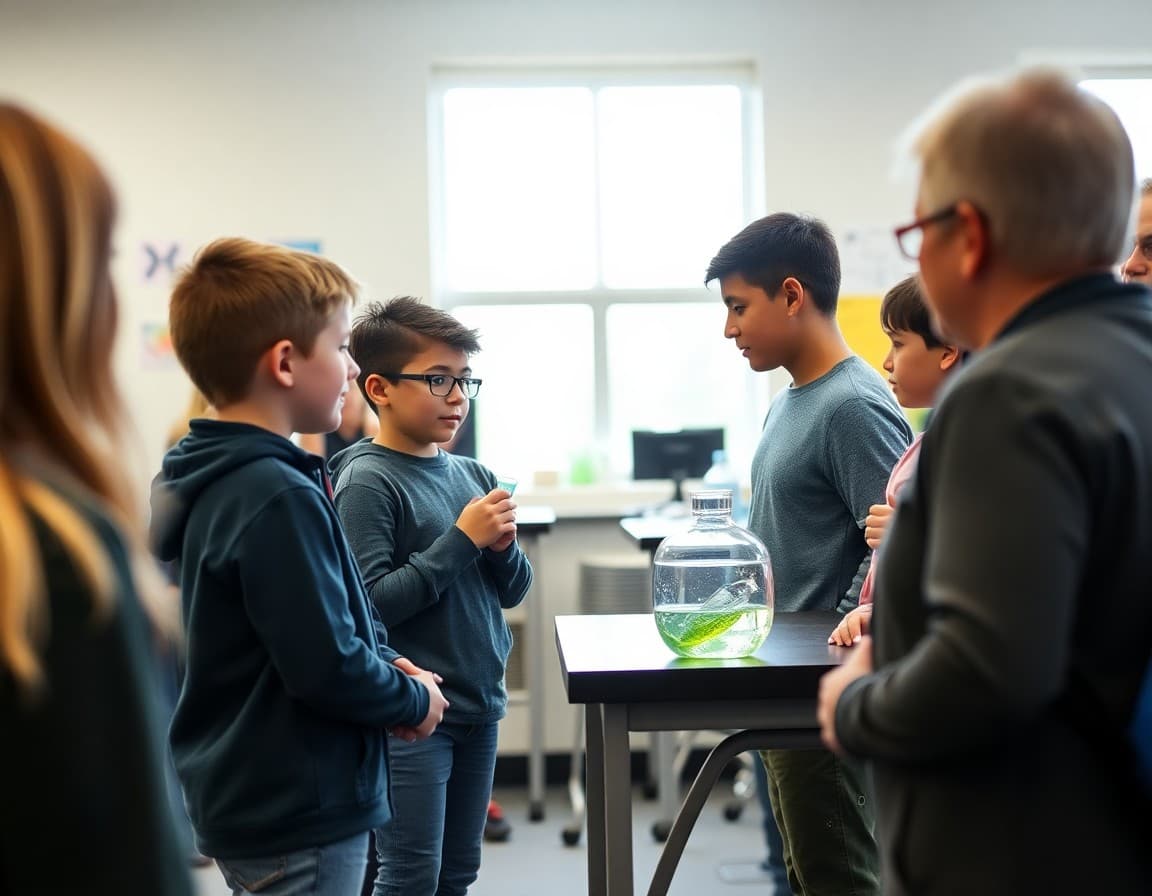
STEM program newsletters often read like grant reports -- full of acronyms, standards citations, and program names that mean nothing to a parent trying to understand what their child did in school today. The most effective STEM newsletters skip the jargon entirely and go straight to the work students are doing and why it matters for their future.
Start With What Students Are Building or Solving
The most engaging STEM newsletter entry starts with a specific project. "Third graders spent the last three weeks designing, building, and testing model water filtration systems. They started with a problem: what materials filter the most sediment at the lowest cost? Each team chose different materials, ran their test, and graphed the results." That is a description of learning. It is also a story a parent will ask their child about at dinner.
Translate Technical Content Into Real-World Language
Not every family knows what "design thinking" or "engineering practices" means. Translate it. "Design thinking is the process engineers and architects use when they have a problem to solve: understand the problem, brainstorm solutions, build a prototype, test it, improve it, test again. Your child is doing that this semester." That explanation takes 40 words and unlocks the terminology for every family who reads it.
Name the Career Connection
Families often ask: why is my child doing this? The most satisfying answer connects school work to real careers. "The skills students are practicing in our robotics club -- programming logic, iterative testing, troubleshooting -- are directly used in manufacturing, engineering, game development, and medical device design." That connection makes the program feel worth understanding and worth supporting.
A Template STEM Update Section
Here is a section that works for a semester STEM update:
"Our STEM lab has been running full tilt this fall. Fifth graders designed and launched water bottle rockets as part of their physics unit -- the longest flight was 14 meters. Fourth graders built functioning circuits to light up models of city blocks, then analyzed which design used the least energy. Third graders are mid-unit on food systems, growing hydroponically in the classroom and tracking the data. Our STEM showcase night is December 11 at 6:30 PM. Families are invited to see every project."
Highlight Student Leadership Within the Program
STEM programs often have student volunteers, club leaders, and peer tutors. Naming them in the newsletter celebrates their effort and models the kind of engagement you want to see. "Six seventh graders from our Coding Club visited our fourth-grade classrooms last month to teach basic Scratch programming. Every fourth grader walked away with a working animation." That kind of inter-grade connection is worth highlighting.
Share Competition Results
If your students compete -- Science Olympiad, robotics, Mathcounts, Science Fair -- the newsletter is the right place to share results. Name the students who competed, the event, and the outcome. You do not need to have won to make this worth publishing. "Our Science Olympiad team competed at the regional invitational for the first time this year. They placed sixth out of 24 schools and are already preparing for the spring qualifier." That is a story worth telling.
Use the Newsletter to Build Program Support
STEM programs often need things families can provide: recycled materials, professional volunteers, chaperones for field experiences, supplies on a classroom wish list. The newsletter is the most efficient place to make those asks. "Our fourth-grade engineering unit needs cardboard tubes and foam pieces. If you have any at home, drop them at the main office anytime." Small asks in the newsletter generate real results.
Preview What Is Coming
Families invest more when they know what is ahead. End your STEM update with a look forward: "In the spring, we are adding a new maker space to the library available to all grades during enrichment time. We will share more details after the winter break." That forward-facing note creates anticipation and signals that the program is growing.
Get one newsletter idea every week.
Free. For teachers. No spam.
Frequently asked questions
What should a principal newsletter cover about the school STEM program?
Focus on what students are actually doing, not program names or grant titles. Describe projects, materials, and learning goals in plain language. Mention teacher names. Connect activities to career pathways or real-world applications. The more specific and concrete the update, the more families will engage with it.
How do I write about STEM for families who are not technical?
Translate everything into outcomes and experience. Instead of 'students are practicing computational thinking,' write 'students are learning to break a big problem into smaller steps -- the same skill a software engineer uses every day.' Analogies to real jobs and daily life make technical content accessible and relevant.
How do I showcase student STEM work in the principal newsletter?
Include a specific student project. Name the problem students were solving, what they built or designed, and what they learned from the result. A brief photo caption -- 'Room 11 students tested three bridge designs to find the one that could hold the most weight' -- is worth more than a paragraph of program description.
How often should STEM updates appear in the principal newsletter?
Once or twice a semester for program-level updates. Individual project highlights can appear more frequently as short newsletter sections. For major milestones -- a grant award, a competition win, a new equipment purchase -- send a standalone newsletter.
What communication tool helps include STEM event announcements and updates together?
Daystage lets you combine a STEM program update with an event block for the upcoming STEM showcase or competition night. Families get the story and the invitation in one newsletter.

Adi Ackerman
Author
Adi Ackerman is a former classroom teacher and curriculum writer with 8 years in K-8 schools. She writes about school communication, parent engagement, and what actually works in real classrooms.
More for Principals
Ready to send your first newsletter?
3 newsletters free. No credit card. First one ready in under 5 minutes.
Get started free