
Running a School Food Drive: The Newsletter Strategy That Gets Results
A well-run school food drive does three things at once: it generates real donations for families in need, it builds a sense of community purpose, and it teaches students that their school cares about the world outside its walls. The newsletter is what separates a food drive that hits its goal from one that collects a few dozen cans and calls it done.
The announcement newsletter: make the goal visible
The first newsletter is the most important one. It should include:
- A specific goal.'Our school is aiming to collect 1,000 items by November 22nd.' Families are more motivated by a concrete target they can contribute toward than a vague donation request.
- The beneficiary. Name the food bank or organization that will receive the donations. Include one sentence about who they serve. Families give more generously when the recipient is real and specific.
- What to donate. A specific list of needed items from your partner organization, not a generic request. Peanut butter, canned vegetables, pasta, cereal. Be direct.
- How to donate. Where to drop off items, which classrooms or grades are competing, and whether financial contributions are accepted.
The mid-drive update: show the momentum
Midway through the collection period, send a short update. Include the current total, the goal, and which class or grade is leading. Keep it brief, but make the progress visible. Families who missed the first announcement will contribute when they see the drive is active and close to a goal. Families who already contributed will share the update with neighbors or extended family.
If you are behind the goal at the midpoint, acknowledge it honestly. 'We are at 350 items with one week left. We need your help to get to 1,000.' Honest gap-acknowledgment works better than pretending the drive is going great.
The final call: urgency without guilt
Three days before the deadline, send a short final message. This is your shortest newsletter in the sequence, maybe four to six sentences. The current total. The deadline. The drop-off location. One sentence of thanks to families who have already contributed. The call to action for families who have not.
Make it a class competition without making it about wealth
Class competitions drive participation, but they can go wrong if the metric is total items donated. A high-income class with 20 students who each bring 10 items will always beat a lower-income class with 30 students who each bring one item, even though the second class had higher participation.
Track and celebrate participation rate instead: the class with the highest percentage of families who contributed wins. This is equitable, it is measurable, and it produces better outcomes because it motivates the classes that would otherwise not try to win.
The post-drive newsletter: document the outcome
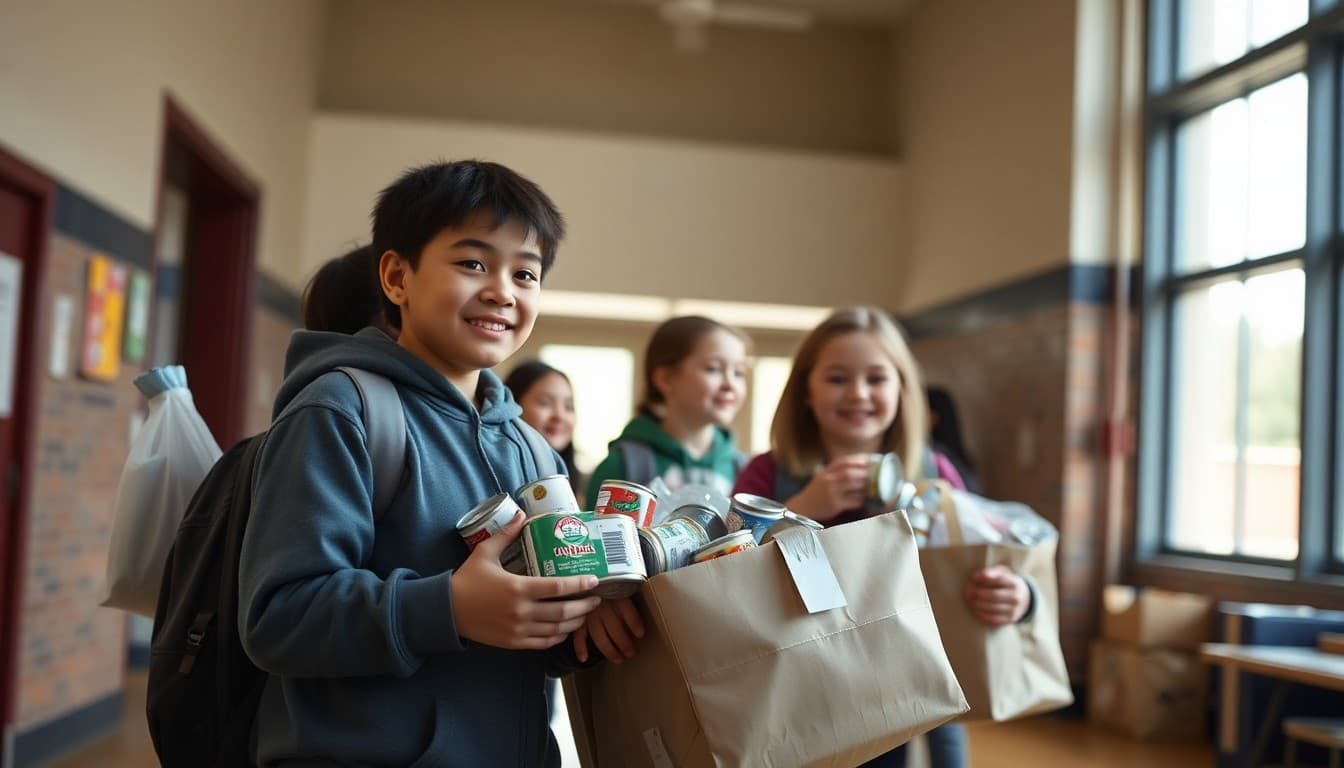
After the drive closes, send a final newsletter with the total collected, a thank-you to families who contributed, and the delivery date to the partner organization. If you have a photo of the donated items, include it. This follow-through closes the loop and makes families feel their contribution was real, documented, and appreciated.
Daystage handles the full communication sequence for any school drive. Draft all three newsletters in advance, schedule the send dates, and focus your energy on the drive itself rather than the communication logistics.
Get one newsletter idea every week.
Free. For teachers. No spam.
Frequently asked questions
When should I announce the food drive in the newsletter?
Announce it two weeks before collections start, send a mid-drive update with progress toward the goal, and send a final call three days before the deadline. Three newsletters per food drive is a standard communication cadence. The mid-drive update is particularly powerful because it shows momentum and creates urgency without pressure.
What items should I ask families to donate?
Be specific. Generic requests for 'non-perishable food items' produce whatever families find at the back of their cupboards. Specific requests produce the items food banks actually need. Contact your local food bank or partner organization before the drive and ask for a list of highest-need items. Then put that list in the newsletter.
How do I make a food drive competitive between classes without it becoming exclusionary?
Set a participation goal alongside a quantity goal. Classes compete on percentage of families who contributed, not total items donated. This approach is equitable because a class with high participation but modest donations can still win, and no family feels judged for the size of their contribution.
How do I handle families who want to contribute financially instead of with items?
Accept it. Financial contributions often let food banks buy more efficiently than individual item donations. In your newsletter, mention both paths: 'Bring canned goods to the front office, or donate online at [link] where $10 feeds a family for two days.' Giving families options increases total participation.
What tool helps principals send newsletters efficiently?
Daystage makes it easy to run a three-email communication sequence for any event or drive. The first newsletter, the update, and the final call can all be drafted in advance and sent on schedule, so the drive runs smoothly without requiring daily attention from the principal.

Adi Ackerman
Author
Adi Ackerman is a former classroom teacher and curriculum writer with 8 years in K-8 schools. She writes about school communication, parent engagement, and what actually works in real classrooms.
More for Principals
Ready to send your first newsletter?
3 newsletters free. No credit card. First one ready in under 5 minutes.
Get started free