
Middle School Principal Newsletter: What to Send in October

October is a month of early data at the middle school level. Interim grades are out or coming out, parent-teacher conferences are being scheduled, attendance patterns for the quarter are becoming visible, and the fall sports season is approaching its playoff stretch. Your October newsletter does not need to be the most inspiring communication you send all year. It needs to be the most useful one.
Families of middle schoolers are less likely to attend every school event than elementary families, but they are paying close attention to academic performance and social adjustment. Give them information they can act on.
Interim grades and progress reports: set the right context
October interim grades are a tool, not a verdict. When you communicate them in the newsletter, frame them that way. Tell families when to expect the interim, how to access it, and what the number actually means for the remainder of the quarter. A family who receives a C on an interim in October and knows there are four weeks left to improve is in a very different position than a family who receives the same grade with no context.
Include a note about who families should contact if they have concerns. Not a general "reach out to us" statement, but a specific direction: contact the teacher first, then the counselor if you need further guidance on academic support options. Middle school families who know the right path are more likely to use it.
Parent-teacher conference scheduling: make it easy
If conference sign-ups are open, give families the direct link or the process to book a time. Middle school conferences work differently from elementary ones: many schools use a rotation format where families move between teachers in timed intervals, or they offer a sign-up system where families select specific teachers.
Whatever your system, explain it briefly and give the booking window and deadline. Conference slots fill up fast, especially for teachers of core subjects. Families who receive the scheduling information late often get the leftover times or miss the opportunity entirely. Do not let the newsletter be the bottleneck.
Red Ribbon Week: what is happening and what families can expect
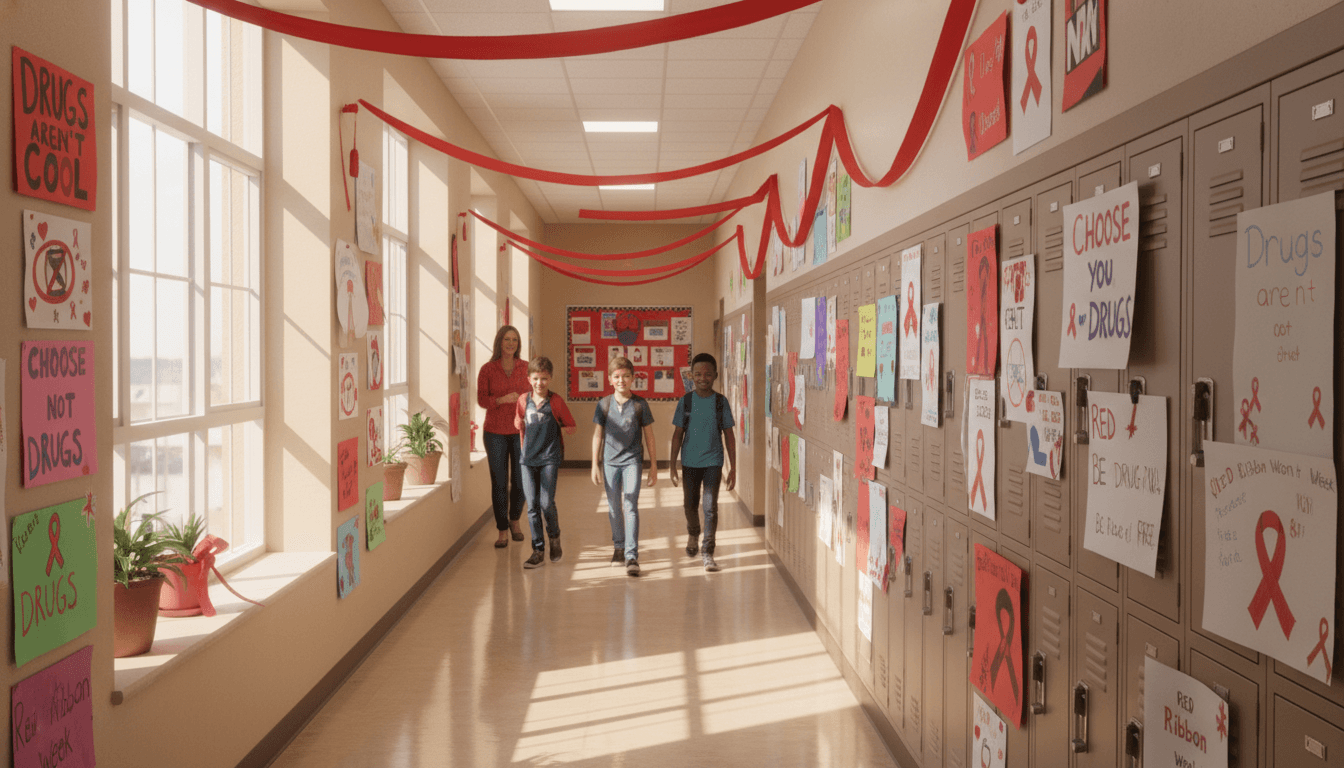
Red Ribbon Week runs in late October and gives middle schools a formal structure to address substance prevention with students. The October newsletter is the right place to tell families what the school has planned, which advisory activities, assemblies, or dress-up days are coming, so they can have relevant conversations at home.
Middle school is the age when substance use conversations matter most. Families who know their child heard a specific message at school can reinforce it at home. A brief preview in the newsletter makes that conversation easier to start.
Halloween school policy: brief and clear
Middle schools have more variation in Halloween policy than elementary schools. Some have in-school activities, some do not. Some allow costumes, some have restrictions. Whatever your school's policy, state it plainly in two or three sentences. Families of sixth graders in particular, who may be new to middle school culture, appreciate knowing what is expected.
If your school has no special activities planned for Halloween, say that too. "Our school day will follow the normal schedule on October 31st" is useful information that prevents confusion.

8th grade high school course selection: the first mention
Families of eighth graders benefit from knowing in October that the high school course selection process is on the horizon. You do not need the full details yet. A paragraph that says the process begins in January, that there will be an 8th grade information night at the high school in November or December, and that course selection materials will go home in January gives families enough to mark their calendars and start asking questions.
Families who are surprised by the process in January sometimes make reactive decisions. Families who have been aware of it since October have time to research options, talk to older siblings or neighbors, and prepare thoughtful questions for the information night.
Fall sports playoffs and attendance update
If fall sports teams are entering the playoff season, a brief mention shows the school recognizes and celebrates athletic achievement. Name the sports and teams involved. It takes two sentences and communicates that the principal is paying attention to the full life of the school, not just academic indicators.
October is also when first-quarter attendance data becomes meaningful. If you are seeing elevated absence rates, the newsletter is a reasonable place to address it at the community level without calling out individual families. Something like "We have seen an uptick in absences in the first quarter. Each day a student misses is learning they cannot fully make up. If your student has missed four or more days already, please reach out to the office so we can identify any barriers." That is direct and constructive without being punitive.
Closing October with the right tone for middle school families
Middle school newsletters do not need the same warmth dial as elementary newsletters. Families of middle schoolers appreciate directness and practicality. They want to know their child is known in the building, that the school has systems in place for when things go sideways, and that the principal has a clear view of how the year is going.
A closing paragraph that names one academic or community observation from October, something specific and true rather than a generic "great quarter" statement, earns more trust than a polished but hollow sign-off. Trust is what brings middle school families back to read November's newsletter.
Get one newsletter idea every week.
Free. For teachers. No spam.
Frequently asked questions
What are the most important topics for an October middle school newsletter?
October brings interim grades or progress reports, parent-teacher conference scheduling, Red Ribbon Week, and the first mention of 8th grade high school course selection for families of eighth graders. These four items are all action-oriented: families need to check grades, book conference times, participate in Red Ribbon Week activities with their student, and understand the high school timeline. Lead with what requires a response.
How should a middle school principal communicate interim grades in October?
Tell families when interims will be available and how to access them, whether through a parent portal, a mailed report, or a teacher communication. Acknowledge that interims are a checkpoint, not a final grade, and that the purpose is to catch concerns early enough to address them before the quarter ends. A sentence pointing families to the right person to contact if they have questions prevents a large volume of calls with no clear direction.
How do you handle Halloween communication at the middle school level?
Middle schoolers are at an age where Halloween policy creates more complexity than at the elementary level. If your school has a policy on costumes, in-school celebrations, or off-campus events after school hours, state it briefly and matter-of-factly in the newsletter. You are not lecturing. You are informing. Keep it to two or three sentences and move on.
Should the October newsletter mention 8th grade high school course selection?
Yes, but only as a preview. Families of eighth graders benefit from knowing that the course selection process is coming even if it does not begin until January or February. A brief paragraph that names the timeline and says what families should do to prepare, like attending the high school info night or reviewing the course catalog when it is published, builds awareness without pressure. Families who are surprised by the process in January often feel the school did not communicate it.
How does Daystage help middle school principals send the October newsletter?
Daystage is particularly useful in October because the newsletter needs to cover several different audiences at once: families of all grades get the conference and attendance updates, but families of eighth graders specifically need the high school preview. Using separate content sections in Daystage lets you organize the newsletter so different families can find what is relevant to them without wading through content that does not apply.

Adi Ackerman
Author
Adi Ackerman is a former classroom teacher and curriculum writer with 8 years in K-8 schools. She writes about school communication, parent engagement, and what actually works in real classrooms.
More for Principals
Middle School Principal Newsletter Guide: Communication Strategies for Grades 6-8
Principals · 8 min read
The Principal's Monthly Newsletter: A Practical Guide for Every Month of the School Year
Principals · 9 min read
How Principals Can Use Newsletters to Improve Parent Engagement
Principals · 7 min read
Ready to send your first newsletter?
3 newsletters free. No credit card. First one ready in under 5 minutes.
Get started free