

Middle School Principal Newsletter Guide: Communication Strategies for Grades 6-8
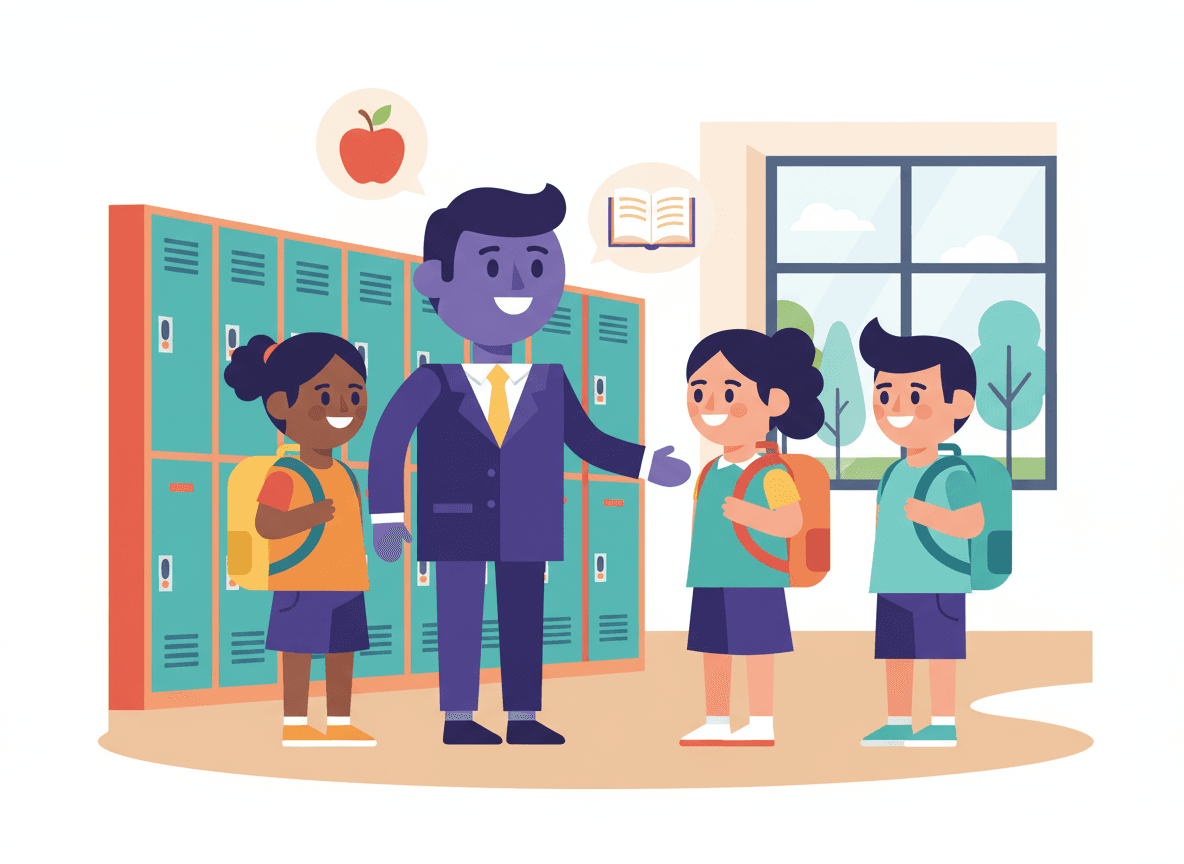
Somewhere between fifth and sixth grade, many families go from highly engaged to barely connected. The same parents who volunteered in the elementary classroom every week are suddenly difficult to reach, coming to fewer school events, and relying entirely on their child for information about what is happening at school.
This is not because families stop caring. It is because middle school sends signals, intentionally or not, that families should step back. Students themselves push for independence. The school's communication becomes less frequent, less personal, and harder to understand. Families who feel like the school does not need them eventually act like it.
A principal newsletter is one of the most effective tools for reversing that drift. This guide covers what makes middle school family communication different and how to run a newsletter that actually keeps families connected during grades 6 through 8.
Why middle school family communication is harder
Elementary schools communicate constantly: folder fridays, classroom newsletters, room parents, teacher notes, weekly update emails. By the time a student hits sixth grade, that scaffolding largely disappears. Families get less information, not more, during the years when the academic and social pressures are increasing.
Students in middle school are also less likely to relay information accurately. Ask a sixth grader what happened in school today and you may get "nothing" or a five-second summary that omits everything relevant. Families who relied on their child to bring home important information in elementary school increasingly find that system failing in middle school.
The developmental reality of early adolescence also means more is happening at school that families need to know about: first serious academic struggles, first social conflicts, first experiences with bullying, first encounters with peer pressure. Families who are not connected to school communication during this period are the last to know when something needs their attention.
What middle school families actually want from the principal newsletter
Middle school families want four things from principal communication. Talking to families and reviewing communication patterns consistently shows these same priorities:
- Practical logistics and deadlines. Unlike elementary where the teacher sends weekly folders, middle school logistics often fall through the cracks. When is the state test? When do grade reports come out? When is the spring elective sign-up deadline? Families who miss these dates feel like they are constantly behind, and they often blame the school for not communicating clearly.
- An honest picture of what is happening in the school. Families want to know if there are social issues, academic pressures, or behavioral trends happening at the grade level. They do not expect you to share individual situations, but they want to know the school is paying attention to the landscape their child is navigating.
- Direct acknowledgment that middle school is hard. Families are anxious about middle school. A principal who names that reality, who says "we know seventh grade is a particularly challenging year for most students and here is what we are doing about it," is a principal families trust.
- A clear way to connect with the school when something is wrong. Middle school families often feel like they are bothering the school when they reach out. The newsletter should make the pathway to contact feel easy and normal, not like an escalation.
Frequency and format for middle school newsletters
Biweekly is the most effective cadence for most middle schools. Weekly newsletters at the elementary rate feel like too much to many middle school families, who have adjusted to lower communication volume. Monthly is not enough: two to three weeks is too long between touchpoints for families who are navigating an increasingly complex school environment.
Keep the newsletter under a six-minute read. Middle school parents are busy, and the students who need them engaged at this age are the students whose parents do not have a lot of margin in their day. A concise newsletter that respects that reality is more likely to be read than an exhaustive one.
Use clear section headers that allow scanning. Middle school families are not going to read every word. Design the newsletter so a family who has two minutes can find the upcoming test date and whether there is anything pressing, and a family who has six minutes can read the full principal note and the grade-level update.
Grade-level segmentation: when it is worth it
If your middle school has significant differences across sixth, seventh, and eighth grade in terms of curriculum, testing, and social experience, grade-level segmentation in the newsletter is worth the extra effort.
This does not mean three separate newsletters. It means a main newsletter with a short grade-specific section at the bottom. Sixth-grade families get the transition to middle school context. Seventh-grade families get the "this is the hardest year academically, here is what we are doing" message. Eighth-grade families get the high school transition information.
Daystage's subscriber management lets you segment families by grade level and send targeted versions of the newsletter to each group. Set this up once at the start of the year by importing your parent list with grade-level tags. The shared content goes to everyone; the grade-specific section reaches only the relevant families.
Topics that matter more in middle school newsletters
Some newsletter content that matters less in elementary matters significantly more in middle school:
- Social and emotional learning updates. What is the school doing about bullying, social conflict, and digital behavior? Middle school families are worried about these things. A newsletter that never addresses them implies the school is not thinking about them.
- Academic support resources. Tutoring, study groups, office hours, homework help resources, learning support services: middle school families often do not know what is available until their child is already struggling. The newsletter is where they find out.
- Technology and device policies. Phone policies, online safety, chromebook expectations, acceptable use: this is middle school territory where families need specific guidance on what the school expects and how they can reinforce it at home.
- High school planning information. For eighth-grade families, any information about high school course placement, course selection, or the high school transition process belongs in the newsletter early. Families who find out about these processes late feel like they missed something important.
Including student voice in middle school communication
One of the most effective elements you can add to a middle school principal newsletter is student voice. A brief student essay, a quote from student council, a summary of what students said in an advisory discussion: these give families a window into what their child's peers are actually thinking and experiencing.
Student voice also does something subtle: it signals to families that the school takes students seriously as contributors to the school community, not just recipients of instruction. That signal matters enormously in middle school, where students are pushing for recognition as young adults.
The middle school newsletter as a retention tool
Schools that run strong family communication programs during middle school see higher family engagement in high school. The habits and relationships built during grades 6 through 8 carry over. A family who feels like the middle school principal communicated with them honestly and consistently is a family that arrives at high school predisposed to trust the school's leadership.
The newsletter is not the only way to build that relationship. But it is the most consistent, scalable, and low-friction way to stay connected with hundreds of families who are all navigating the same challenging years of adolescence.
Get one newsletter idea every week.
Free. For teachers. No spam.
Frequently asked questions
When should a middle school principal send family newsletters?
Biweekly is the most effective cadence for grades 6 through 8. Weekly feels like too much to families who have adjusted to lower communication volume since elementary school. Monthly leaves too long a gap during years when social and academic pressures are rising fast. Every two weeks gives families consistent contact without overwhelming them.
What should a middle school principal include in family communication?
Middle school families consistently want four things: upcoming deadlines and logistics, an honest picture of what is happening in the school, direct acknowledgment that middle school is hard, and a clear way to reach the school when something is wrong. Address all four and families feel like the school is paying attention to their child's reality.
How long should a middle school principal newsletter be?
Under a six-minute read. Middle school parents are managing more than elementary parents and often have less time. Design the newsletter so a parent with two minutes can scan headers and find the critical information, while a parent with six minutes can read the full principal note. Clear section headers are not optional at this level.
What mistakes should middle school principals avoid in family communication?
The biggest mistake is treating middle school communication the same way as elementary. Families have stepped back, and they need a different approach: less cheerleading, more honest context about what the school sees socially and academically. A newsletter that never acknowledges the difficulty of early adolescence reads as tone-deaf to families living it.
What is the best tool for middle school principals to manage grade-level newsletter segmentation?
Daystage's subscriber management lets you import your parent list with grade-level tags and send targeted newsletter versions to each group. The shared content goes to everyone and the grade-specific section reaches only the relevant families, which matters significantly for sixth-grade transition families versus eighth-grade high school prep families.

Adi Ackerman
Author
Adi Ackerman is a former classroom teacher and curriculum writer with 8 years in K-8 schools. She writes about school communication, parent engagement, and what actually works in real classrooms.
More for Principals
Ready to send your first newsletter?
3 newsletters free. No credit card. First one ready in under 5 minutes.
Get started free