
Middle School Principal Newsletter: What to Send in November

November is a pivotal month at the middle school level. First-quarter report cards come out, the holiday attendance challenge begins, and for families of eighth graders, the high school planning timeline is starting to feel real. Your November newsletter needs to address all of this without becoming a list of warnings. The goal is to keep families informed and engaged, not to lecture them about what they should have done differently in October.
First-quarter report cards: the full communication
Report cards are the headline event of November communication. Families have been watching gradebooks all quarter, and the official report is still significant because it carries a formal record and often a narrative that online portals do not. Tell families exactly when to expect report cards, how they will receive them, and what to do if something seems incorrect.
If your school uses a parent portal, include the direct link and remind families of the login. Many middle school families set up portal access at the start of the year and have since forgotten the password. A brief note about how to reset it reduces help desk volume.
Also include a contact point for follow-up. Report cards often generate conversations families want to have but do not know how to start. "If you have questions about your child's first-quarter grades, please reach out to the teacher directly or contact the main office to schedule time with a counselor" is more useful than a general invitation to get in touch.
Thanksgiving break and attendance before the holiday
The week before Thanksgiving is routinely one of the highest-absence periods of the middle school year. Families plan early travel, students know the holiday is close, and motivation drops for everyone. Address this directly in the newsletter.
Tell families the exact dates of Thanksgiving break and confirm that school runs on its normal schedule through the last day before break. State your absence policy for the pre-holiday period. Be specific about what is excused and what is not. Families who know the policy in writing are less likely to call to dispute a consequence later.
Also acknowledge the holiday itself. A brief, inclusive acknowledgment of Thanksgiving as a time for family and reflection is appropriate. Keep it warm and universal rather than culturally specific, since middle school communities are often more diverse than a single tradition can represent.
Attendance: the honest mid-year message
November is a good time to address chronic absenteeism at the community level if you are seeing elevated numbers. Research consistently shows that students who miss 10 percent or more of the school year face significant academic consequences, and middle school is the stage where absence patterns often accelerate.
You do not need to shame anyone in the newsletter. A statement like "Data from the first quarter shows that more than 15 percent of our students have already missed five or more days. If your student has frequent absences, please contact the office to talk about what barriers we can help address" is direct, action-oriented, and positions the school as a resource rather than a disciplinary body.
8th grade high school information night
If the high school information night for eighth grade families is happening in November or December, announce it here with full details: date, time, location, who should attend, and what will be covered. This is one of the highest-stakes events of the middle school year for eighth grade families, and families who miss it often feel behind on course selection.
If the information night is in December, a November newsletter is still the right time for the announcement because it gives families enough notice to arrange the evening. Middle school parents tend to have complicated schedules. Four to six weeks of lead time is not excessive.

Winter sports preview
Fall sports are winding down and winter sports are beginning or about to begin. If tryouts are scheduled or registration has opened, give families the dates and who to contact for more information. If your school requires physicals, proof of academic eligibility, or forms to participate, mention where to find them.
A brief note celebrating fall sports outcomes is also appropriate. If a team had a successful season, a team reached playoffs, or individual athletes earned recognition, name it. Acknowledgment from the principal in the community newsletter carries more weight than a line in a weekly sports update.
Food drive and community service
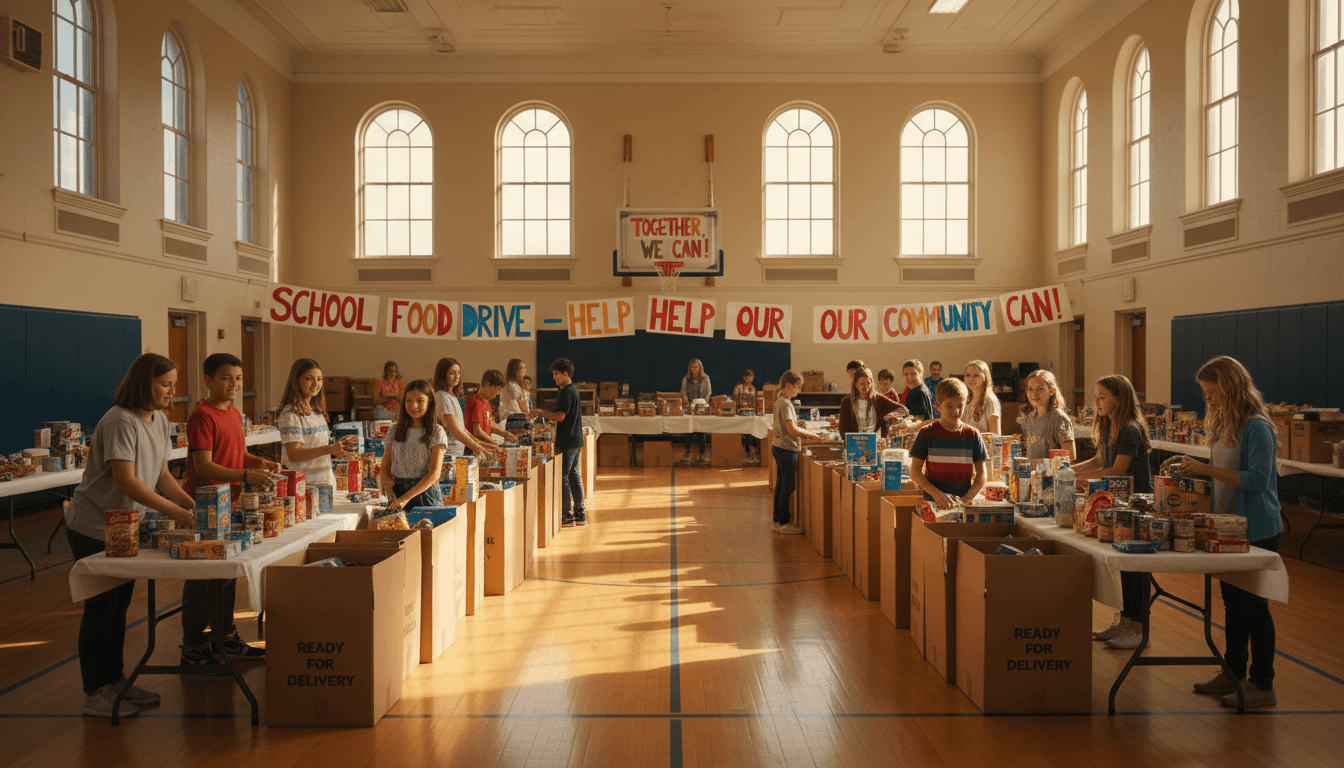
Many middle schools run food drives or community service projects in November. If yours does, give families the what, the when, and the specific items needed. Specificity drives participation. "We are collecting canned goods through November 22nd" is less effective than "We are collecting canned proteins, soup, and pasta through November 22nd. Each advisory class is competing for the most contributions."
Community service at the middle school level is also worth framing as a developmental opportunity, not just a charitable act. Students who participate in structured community service in middle school develop a sense of civic identity that tends to persist. That is worth saying out loud.
Closing the November newsletter
End with something grounded and specific. November can feel heavy at the middle school level: attendance concerns, first-quarter grades, the beginning of winter, and the compressed schedule around the holiday can all weigh on the tone of communication. A closing paragraph that names one specific thing the school community did well in October or early November, not a vague positive, but a real moment, balances the logistics and data with the humanity that keeps families engaged.
Get one newsletter idea every week.
Free. For teachers. No spam.
Frequently asked questions
What is the most important communication priority in a November middle school newsletter?
Report cards are the centerpiece of November communication. Families have been waiting for first-quarter grades since September. Tell them when report cards are available, how to access them, and who to contact if they have questions. If your school mails them, give the expected delivery date. If they are posted in a parent portal, remind families of the login process and who to call if they have access issues. Follow-up after report cards is also when counselors tend to see a spike in family outreach, so routing families to the right support channel in the newsletter saves time for everyone.
How do you address pre-Thanksgiving attendance in the newsletter?
Be direct. The week before Thanksgiving is one of the highest-absence periods of the year at the middle school level, and instruction does not stop just because the holiday is close. Tell families clearly that the full school calendar runs through the last scheduled day before break, that any early dismissals or absences are unexcused unless there is a documented reason, and that missing days before a break compounds quickly. Middle school families generally respond to a straightforward statement better than a soft suggestion.
Should the November newsletter mention the 8th grade high school information night?
Absolutely. If the information night is in November or December, the November newsletter is where you make that announcement. Give families the date, location, what will be covered, and whether students are expected to attend with their parents. Families of eighth graders who miss the information night often feel behind on the course selection process. A clear, early announcement with good lead time helps attendance.
How do you handle Veterans Day recognition in a middle school newsletter?
A brief acknowledgment and a description of what the school did or is doing to recognize Veterans Day communicates that the school takes civic education seriously. If students participated in a service project, a letter-writing campaign to veterans, an assembly, or a moment of silence, mention it. One or two sentences is enough. Middle schoolers at this age are developing their civic identity, and the newsletter is a place to reinforce that the school is paying attention.
How does Daystage help middle school principals manage the November newsletter?
Daystage helps you organize a newsletter that covers multiple audiences. In November, some content is for every family, like report cards and Thanksgiving break, while other content is specifically for eighth grade families, like the high school info night. Using Daystage's content blocks lets you structure the newsletter clearly so families can navigate to what is relevant to their student without reading everything. The delivery tracking also helps you identify which families have not opened the report card communication.

Adi Ackerman
Author
Adi Ackerman is a former classroom teacher and curriculum writer with 8 years in K-8 schools. She writes about school communication, parent engagement, and what actually works in real classrooms.
More for Principals
Middle School Principal Newsletter Guide: Communication Strategies for Grades 6-8
Principals · 8 min read
The Principal's Monthly Newsletter: A Practical Guide for Every Month of the School Year
Principals · 9 min read
How Principals Can Use Newsletters to Improve Parent Engagement
Principals · 7 min read
Ready to send your first newsletter?
3 newsletters free. No credit card. First one ready in under 5 minutes.
Get started free