

June Academic Progress Update Newsletter: Closing the Year Right
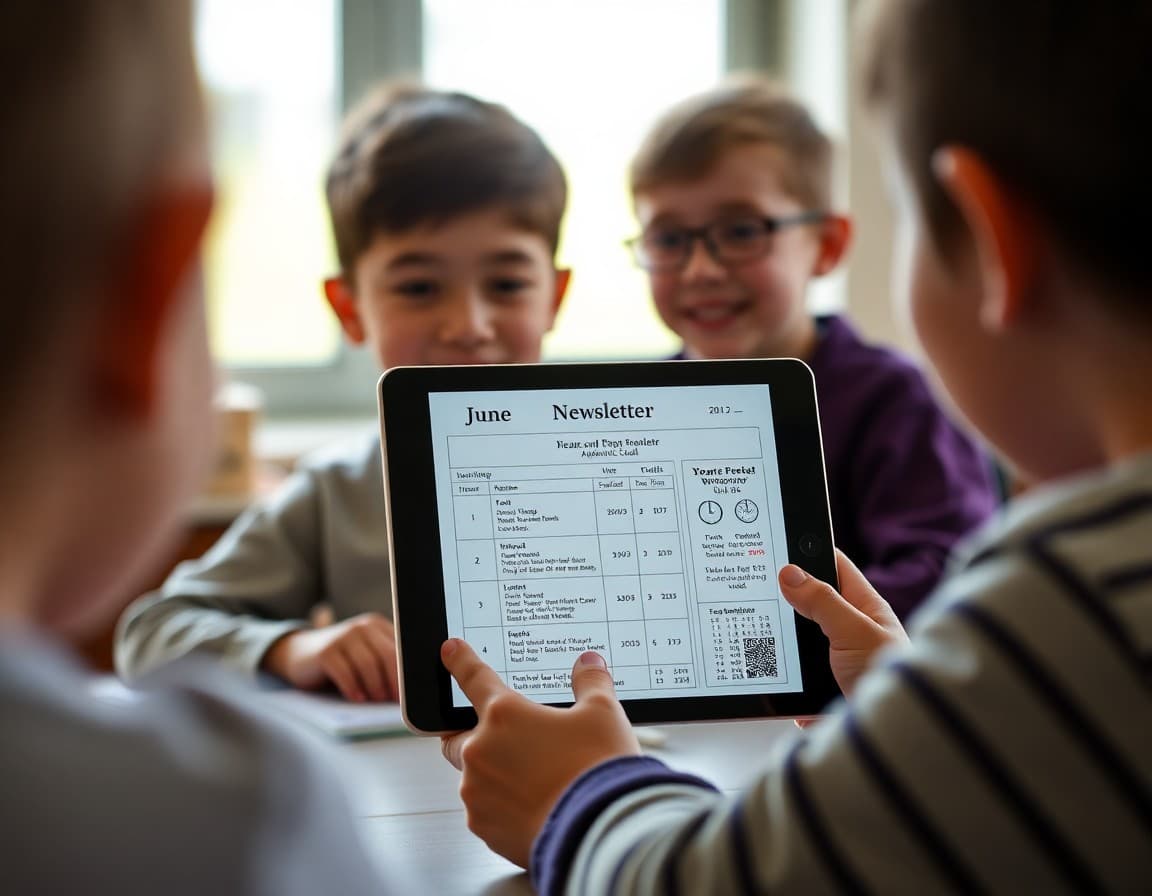
The June academic update is the final chapter in your year of family communication. It needs to close things out clearly, acknowledge what the year produced academically, and set families up for a summer that keeps students connected to learning. Done well, it is one of the most valuable newsletters you send all year. Done poorly, or not at all, it leaves families with unanswered questions that become September's problems.
Share Year-End Academic Outcomes
June is the moment for honest year-end data. Even if state assessment results have not arrived yet, you have end-of-year classroom data, report card trends, benchmark outcomes, and promotion statistics. Share what you have. "This year, 74 percent of our students ended the year at or above grade level in reading, up from 68 percent in September. Math showed improvement in grades 3 and 5 but a slight decline in grade 4, which we are addressing in our fall planning." That kind of honest summary builds far more trust than a generic "it was a great year."
Describe Report Card Distribution
Families need to know exactly when and how they will receive report cards. Include the date, the format (paper, portal, mailed), and what to do if they do not receive it. For schools where report cards go out with students on the last day, mention that. For schools where cards are mailed or posted to a parent portal, give families the access instructions before the last day so there are no technical issues.
Acknowledge What the Year Required
A brief reflection on what the year demanded, academically and personally, earns genuine goodwill: "This was not an easy year to teach or to learn in. We dealt with a staffing gap in January, a challenging cohort transition in 6th grade, and assessment pressure that was higher than usual. Our teachers and students met it. I am proud of how this school handles hard things." Specificity and honesty in a year-end message stick with families.
Give Summer Learning Recommendations
Summer slide is real, and families want to know how to prevent it without over-scheduling their kids. Give grade-level recommendations: "For K-2 families: 15 minutes of reading aloud together each day is the single most effective summer activity. For grades 3-5: a library reading challenge log and 20 minutes of independent reading. For grades 6-8: a summer journal or one choice reading book per month." Concrete, achievable, non-prescriptive.
A Template Excerpt for June
"This is our final academic update for the school year. Report cards will be distributed on June 13 via the parent portal. If you do not have portal access, contact our front office before June 10. For families whose children will attend summer school, your invitation letter was sent in May. Summer school runs June 24 through July 19. Registration closes June 16. For everyone else: enjoy the break, read something you choose, and we will see you on September 4."
Preview Next Year Briefly
Families appreciate a glimpse of what is coming in September. A sentence or two about curriculum changes, new programs, or school-wide initiatives communicates that you are already planning: "Next year, we are piloting a new math curriculum in grades 3-5 based on what we learned from this year's data. We will share more details at our August back-to-school night."
Close with Genuine Gratitude
The closing of your June academic update is the last communication many families will receive until August. Make it count: something specific, honest, and warm about what the community accomplished together. Not a generic "it has been a wonderful year." One real detail that could only come from your school.
A June academic newsletter that shares honest outcomes, practical summer guidance, and a genuine year-end reflection closes the year on a high note and begins the relationship with families that you will need again in September.
Get one newsletter idea every week.
Free. For teachers. No spam.
Frequently asked questions
What academic content belongs in a June newsletter?
June is the natural place to share year-end academic highlights, promotion and retention outcomes at a school level, report card distribution details, state assessment timing, and summer learning recommendations. It is also the right place to give families a sense of what next year will look like academically, even at a high level.
Should I share year-end academic data in a June newsletter?
Share school-level trends, not individual data. If your overall reading proficiency improved over the year, say so and name the number. If there is an area that needs work next year, acknowledge it briefly. Families respect a principal who shares real data, even when it is mixed. End-of-year newsletters that are only cheerful read as evasive.
How do I communicate about students who were retained?
Retention decisions should be communicated individually before the year ends. In the newsletter, a brief line covers the policy level: "Families of students whose promotion status required additional review have been contacted individually." No names, no details. The mass communication covers the policy; the individual conversation covers the child.
Should a June academic newsletter include next-year information?
Yes, briefly. A sentence about the first day of school, registration windows for fall, and any curriculum changes expected next year is appropriate. Families are thinking about fall even in June. Giving them a small preview reduces the anxiety gap between now and September.
What newsletter tool helps principals send a polished end-of-year academic update?
Daystage is well-suited for end-of-year newsletters. You can include year-end academic highlights, summer learning resources, and a clean end-of-year message in one layout. Many principals save a template from their June newsletter to use as a starting point for August, since the structure often carries over.

Adi Ackerman
Author
Adi Ackerman is a former classroom teacher and curriculum writer with 8 years in K-8 schools. She writes about school communication, parent engagement, and what actually works in real classrooms.
More for Principals
Ready to send your first newsletter?
3 newsletters free. No credit card. First one ready in under 5 minutes.
Get started free