
June Community Message Newsletter for Families: End-of-Year Guide

The June community message newsletter is the one families remember. Not because it is the most informative, but because it is the last. It carries the weight of the whole year and lands in inboxes when emotions are already running high: graduations, last days, transitions, and the bittersweet end of a chapter. A principal who writes this message well closes the year with community trust intact. A principal who sends a generic one leaves families with a hollow feeling that carries into September.
Open with the Year as It Actually Was
Do not open your June community message with "It has been a wonderful year." Every school newsletter in America says that. Open with something true and specific to your year: "This was a year that asked a lot from all of us. We started September without three teachers fully in place. We navigated two building closures. We lost a member of our community in February. And through all of that, our families showed up and our students kept learning." Real years have texture. Honor it.
Celebrate the Community, Not Just the Students
End-of-year newsletters often focus entirely on student accomplishments. But the community that surrounds students matters too. Name the volunteers who came back every week. Acknowledge the PTA leadership team by name. Thank the family who organized the spring fundraiser. These acknowledgments matter enormously to the people receiving them and model for families what genuine school community looks like.
Reflect on One Thing You Are Most Proud Of
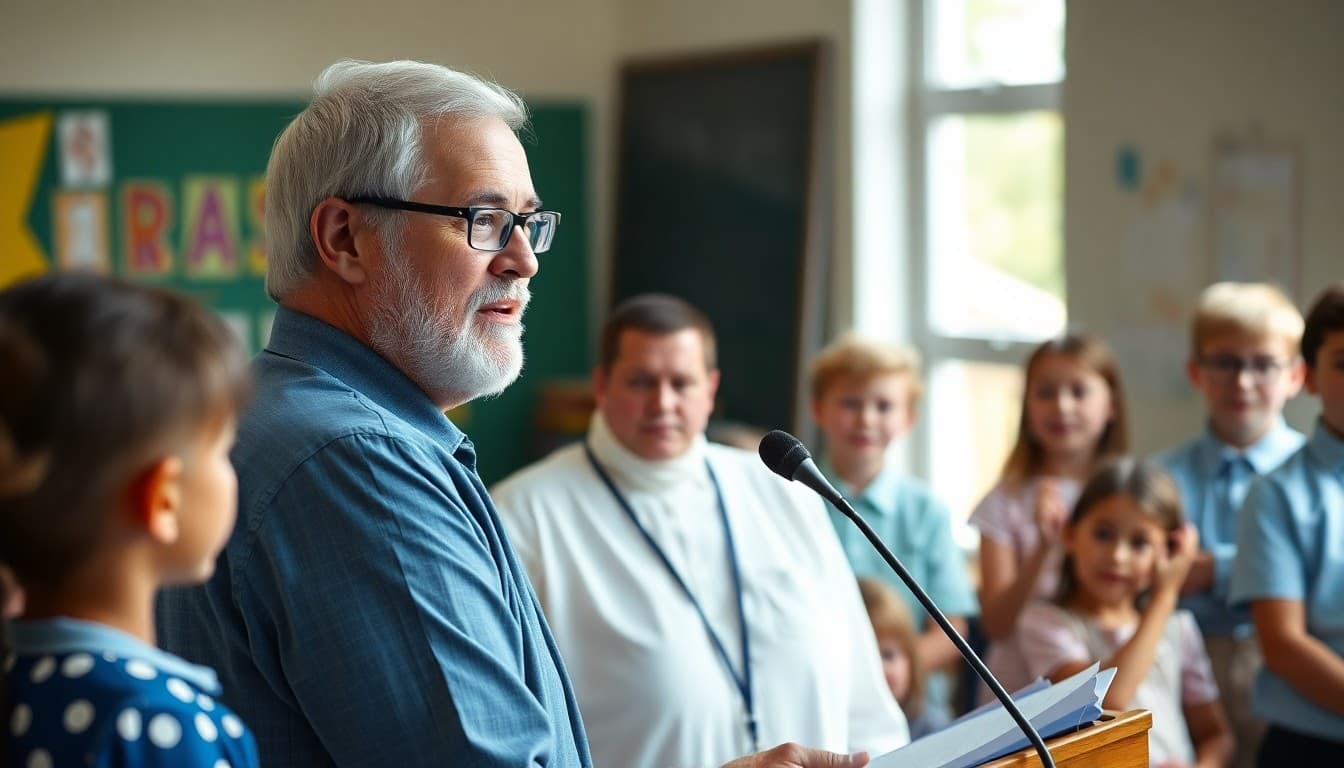
As the principal, your June message is a moment to share your perspective with the school community. One paragraph about what you are most proud of this year, written in first person and grounded in a specific moment, is one of the most powerful paragraphs you will write all year. It does not need to be about test scores. It can be about a student who overcame something, a teacher who tried something new and it worked, or a moment in your building that reminded you why you do this work.
Cover the Final Week Logistics
Even in an emotional June message, families still need the logistics: last day date and time, dismissal procedure, how report cards are distributed, and what to do if they have questions after the year ends. Put these in a clear bulleted list so families can find them quickly. The emotional content of the newsletter earns their attention; the logistics earn their trust.
A Template Excerpt for a June Closing Message
"Our last day is June 13. Dismissal is at noon. Report cards will be posted to the parent portal that afternoon. If you do not have portal access, call the front office by June 10 and we will help. Now, the thing I actually want to say: this community showed up this year. Not just for the fun things, but for the hard ones. Thank you for trusting us with your children. It is the greatest responsibility I know, and I do not take a single day of it for granted. Have a real summer. We will see you in September."
Name What Is Coming Next Year
One forward-looking sentence plants the seed for September: "Back-to-school information will go out in August. First day is September 4." That is all you need. Families who know when to expect the next communication are less likely to call the office in late July wondering if the school forgot to send something.
Say Something Only a Principal of Your School Can Say
The best June community messages are the ones that could not have been sent by anyone else at any other school. One detail that is specific to your building, your community, your year, your students makes the whole message land differently. Find that detail and put it in your message. It is the difference between a newsletter and a letter.
The June community message newsletter is not just a logistical closeout. It is the last impression your school makes on families until August. Make it count.
Get one newsletter idea every week.
Free. For teachers. No spam.
Frequently asked questions
What should a June community message newsletter cover?
June is the culminating community message of the year. Cover the final week logistics, graduation or promotion ceremony details, a genuine year-end reflection from you as the principal, thank-you acknowledgments, and any forward-looking notes about next year. It should feel like a closing chapter, not an administrative memo.
How do I write a June message that feels genuinely warm without being saccharine?
Ground every warm sentiment in a specific detail. Instead of "this year was amazing," say "this year, 94 of our students read more than 20 books, our new science lab hosted 14 family open nights, and our school counselor ran 11 different student support groups. That is the year we had." Specifics carry emotional weight that generalities never do.
Should the June newsletter address the incoming school year at all?
Briefly. A sentence about when families will hear back-to-school details and the first day of school is appropriate. Families are already thinking about fall even in June. Acknowledging it, without dwelling on it, shows that you are thinking about continuity. Save the detailed fall communication for August.
How do I thank families in a June newsletter without it sounding formulaic?
Be specific about what families actually did: volunteered on specific events, responded to surveys, attended conferences, showed up to evening programs, supported classroom fundraisers. A list of specific contributions is more meaningful than "we could not do it without you." Name what they did.
What newsletter tool helps principals send a beautiful year-end community message?
Daystage is designed for exactly this kind of communication. A June community newsletter built in Daystage can include photos from the year, a warm message from the principal, event details, and a forward-looking note about next year in one clean layout. It looks professional on every device and reaches families who prefer email over printed letters.

Adi Ackerman
Author
Adi Ackerman is a former classroom teacher and curriculum writer with 8 years in K-8 schools. She writes about school communication, parent engagement, and what actually works in real classrooms.
More for Principals
Ready to send your first newsletter?
3 newsletters free. No credit card. First one ready in under 5 minutes.
Get started free