
How to Write a Sequencing Unit Newsletter to PreK Parents
Sequencing is one of those foundational cognitive skills that appears in almost every domain of learning: literacy, math, science, self-care, and social behavior. Your sequencing unit newsletter is a chance to help families see why putting pictures in order or retelling a story is genuinely important preparation, and how they can build sequential thinking at home during everyday moments.
What Sequencing Is and Why It Appears Everywhere
Start your sequencing unit newsletter by explaining the breadth of the skill. Sequencing is the cognitive ability to recognize and reproduce order: what comes first, what comes next, what comes last, and what would come after that. This ability is fundamental to story comprehension (following a plot requires tracking what happened in what order), mathematical procedures (the steps in a counting or measuring activity have a sequence), self-care routines (first socks, then shoes, not the other way around), and scientific process (first observe, then predict, then test). When children develop strong sequencing skills in Pre-K, they are building a cognitive framework that applies in every subject area throughout school.
Sequencing Language: The Words That Organize Time
One of the most important things your sequencing unit builds is temporal language: the words that describe order and time. First, next, then, last, before, after, previously, finally. These words appear constantly in stories, instructions, and explanations, and children who do not have them miss meaning that more vocabulary-rich peers catch easily. Your newsletter can give families a short list of sequencing words to use naturally this week: “first we wash hands, then we eat,” “what happened before the wolf arrived?” “after bath comes pajamas.” The accumulation of this language through conversation is the best way to build it.
Story Retelling as Sequencing Practice
Retelling a story in order is one of the richest sequencing activities available to Pre-K children, and it requires no special materials beyond books you are already reading. After finishing a book together, ask your child to tell you what happened. The quality of the retelling reveals a lot about where their sequencing development is: does the retelling jump around or follow the story's timeline? Do they include a beginning, middle, and end? Are the events in the right order? Your newsletter can walk families through this activity and give them prompts: “what happened at the very beginning? What came next? What happened at the end?”
A Sample Newsletter Excerpt to Copy
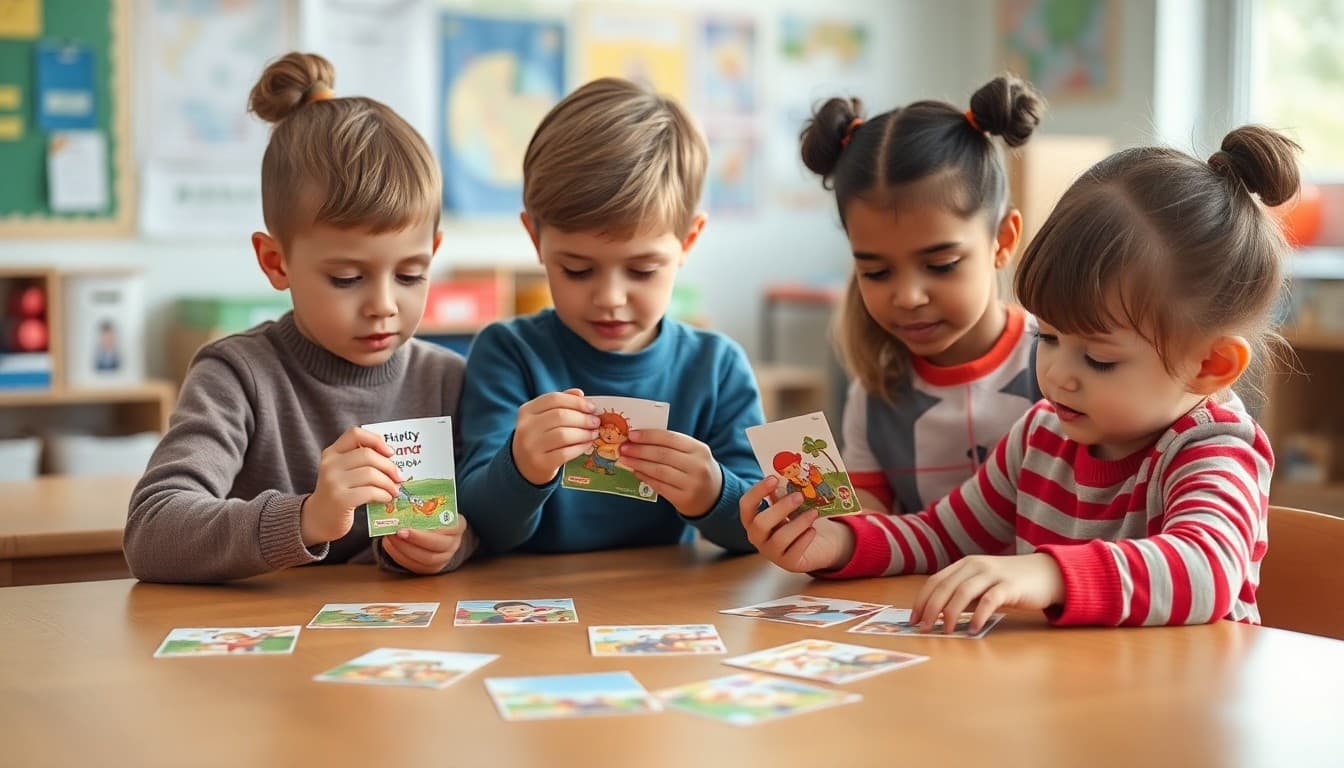
“This week we worked on sequencing: putting events in the right order. We used three-picture sequence cards to tell the story of familiar events: a seed growing into a flower, a caterpillar becoming a butterfly, making a sandwich. The children arranged the cards, then used sequencing words to tell the story: first, next, then, finally. At home this week: after reading a book together, take away the book and ask your child to tell you what happened. First what? Then what? How did it end? The sequencing they use to reconstruct the story is one of the most important reading comprehension skills we build in Pre-K.”
Routine Sequencing and Self-Regulation
One of the most practical sequencing benefits families can see directly is in self-care and routine management. Children who understand the sequence of their morning routine (wake, bathroom, dress, eat, shoes, backpack) can follow it with greater independence because they have a mental map of what comes next. When the sequence is clear and predictable, transitions are easier because the child already knows what is coming. Your newsletter can connect sequencing work to the self-regulation benefits families want: a child who knows the order of their day can handle it with less adult prompting.
Procedural Sequencing in Science and Cooking
Procedural sequencing, following the steps of a process in order, is a domain worth highlighting specifically. Science experiments, cooking recipes, and art projects all have steps that must happen in a particular order to work. When children help cook, narrate the steps, and explain why the order matters (we crack the egg before we mix, not after), they are building procedural sequential thinking that carries into science labs and math procedures in later grades. Encourage families to narrate cooking steps with their child: “first we measure the flour, then we add it to the bowl, then we stir.” That language builds both vocabulary and sequential process understanding.
Predictive Sequencing: What Comes Next?
A more sophisticated form of sequencing is prediction: given what has happened so far, what will happen next? This is not just recalling a known order but inferring a likely continuation based on a pattern or logic. In stories, this is called making predictions, and it is a key reading comprehension strategy. In daily life, it is the ability to anticipate: if we always go to the grocery store on the way home from school, what do you think we are doing today? Predictive sequencing builds the forward-looking mental model that supports both academic and social-emotional planning.
Sending Your Sequencing Unit Newsletter With Daystage
Daystage makes it easy to send a sequencing update with a classroom photo, a brief explanation of the specific sequencing skill being built, and one take-home activity. When families understand that retelling stories in order is reading comprehension preparation rather than just a fun activity, they do it more intentionally and more often. That frequency of practice is what builds lasting sequential thinking, and your newsletter is what produces that understanding in the family.
Get one newsletter idea every week.
Free. For teachers. No spam.
Frequently asked questions
What is sequencing and why does it matter in Pre-K?
Sequencing is the ability to understand that events, steps, and items occur in a predictable, logical order, and to recognize, reproduce, and predict that order. It underlies story comprehension (what happened first, next, last), mathematical routines (the steps in a counting procedure), self-care tasks (first socks, then shoes), and procedural following (the steps of a science experiment). It also supports self-regulation by helping children anticipate what comes next and prepare for transitions.
What sequencing skills are Pre-K children working on?
Pre-K sequencing skills include: temporal sequencing (first, next, last, before, after), story retelling in order (beginning, middle, end), routine sequencing (the steps in getting ready for school), procedural sequencing (the steps in a recipe or science activity), and ordinal language (first, second, third). Each of these domains applies sequential thinking to a different context and builds a different aspect of the underlying cognitive skill.
What at-home activities build sequencing skills for Pre-K children?
Retelling the plot of a book in order is a highly effective sequencing activity. Narrating the steps of a family routine (what do we do first when we get home?) builds procedural sequencing. Cooking together and naming each step sequentially builds both sequencing and vocabulary. Three-picture sequence cards are simple to make from magazine cut-outs. Asking 'what do you think will happen next?' during a story builds predictive sequencing. All of these can happen during moments families are already sharing.
How does sequencing support early literacy development?
Story comprehension depends almost entirely on temporal sequencing: understanding what happened before what, what caused what, and what the likely next event is. Children who cannot sequence story events struggle with reading comprehension even after they decode words successfully. Early sequencing practice in Pre-K, through retelling, picture sequencing, and predictive questioning, builds the narrative structure understanding that reading comprehension requires.
How does Daystage help teachers send sequencing unit newsletters to families?
Daystage makes it easy to send a sequencing unit newsletter with a classroom photo of children working with story sequence cards, a brief explanation of the skill being built, and one take-home activity. Families receive it on their phones and can try the sequence activity that evening during a book read-aloud or bedtime routine.

Adi Ackerman
Author
Adi Ackerman is a former classroom teacher and curriculum writer with 8 years in K-8 schools. She writes about school communication, parent engagement, and what actually works in real classrooms.
More for Pre-K
Ready to send your first newsletter?
3 newsletters free. No credit card. First one ready in under 5 minutes.
Get started free