

How to Write a Pattern Unit Newsletter to PreK Parents
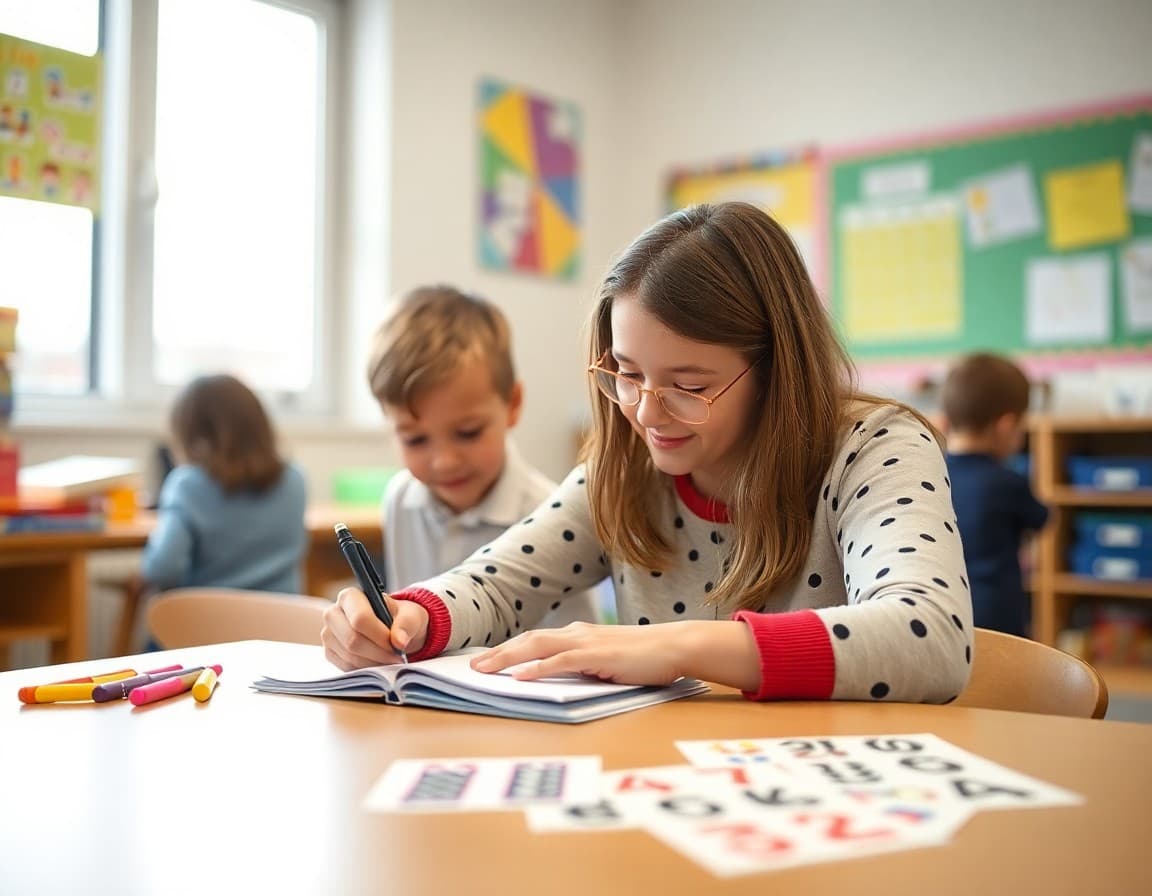
Patterning is one of those Pre-K skills that looks simple on the surface and contains enormous mathematical depth underneath. Your pattern unit newsletter is a chance to help families see why alternating colored blocks or clapping rhythms is genuine algebraic preparation, and to give them simple ways to extend pattern thinking into everyday life at home.
Why Patterns Are Mathematical, Not Just Decorative
Start your pattern unit newsletter by making the connection to mathematics explicit. Patterns are the foundation of algebraic thinking: the ability to identify a rule, predict what comes next based on that rule, and generalize the rule to new situations. When a child recognizes that a sequence goes red-blue-red-blue and says “the next one is red,” they are doing the same cognitive work as a student who identifies that a sequence goes 2, 4, 6, 8 and predicts that the next number is 10. The thinking is structurally identical. Patterning in Pre-K is not decoration. It is early algebra.
From AB Patterns to More Complex Sequences
Your newsletter can walk families through the progression of patterning instruction in your classroom. Most Pre-K programs begin with AB patterns (two alternating elements: red-blue-red-blue or clap-stomp-clap-stomp). Once children can reliably identify, extend, and create AB patterns, instruction moves to more complex sequences: AAB (red-red-blue), ABB (red-blue-blue), ABC (three different elements), and AABB. Each increase in complexity requires children to track more variables and hold the rule in working memory for longer. Describing this progression in your newsletter helps families understand where their child is in the sequence and what comes next.
Pattern Rules: The Key Skill to Build
The most sophisticated patterning skill you are building in Pre-K is the ability to describe the rule of a pattern rather than just reproduce it. A child who can say “it goes big-small-big-small” or “every third one is red” has extracted an abstract rule from a concrete example. This is the heart of algebraic thinking. Your newsletter can describe specific activities that target rule-stating: asking children to explain a pattern to a friend, asking them to describe the rule before extending a pattern, asking them to make a pattern with the same rule using different materials (the same AB rule but with sounds instead of colors). These translation activities are the most powerful pattern practice.
A Sample Newsletter Excerpt to Copy
“This week we worked on translating patterns: taking a pattern in one form and creating the same rule in a completely different form. For example, a red-blue-red-blue pattern becomes clap-stomp-clap-stomp. The children had to identify the rule (two-element alternating) and apply it to something new. This is the hardest patterning skill we work on, and several children were genuinely surprised when they realized the same rule could work in so many ways. At home this week: clap a simple pattern and ask your child to walk it. Or snap it. The translation challenge is where the real thinking happens.”
Patterns in the Natural World
Extend your pattern unit newsletter by connecting patterns to the environment families can observe together. Patterns are everywhere in nature: the repeating segments of a caterpillar, the alternating leaves on a branch, the stripes on a bee, the petals of a flower arranged in a regular sequence. Patterns appear in human-made environments too: tiles on a floor, bricks in a wall, windows on a building, buttons on a shirt. A walk around the neighborhood or a look through a picture book can become a pattern hunt. When families point out naturally occurring patterns and ask “can you find the rule?” they are reinforcing patterning thinking in a rich, contextual way.
Sound and Movement Patterns
One of the most effective and often overlooked patterning activities is sound and movement patterns. Clapping rhythms, marching in sequences, and call-and-response chants all involve pattern recognition and prediction in an auditory and kinesthetic form. Children who struggle with visual patterns sometimes grasp the concept through movement first, which is why body-based pattern activities are valuable in your classroom. Your newsletter can give families a specific sound pattern to try at home: clap-clap-snap-clap-clap-snap. “What comes next? Can you add the next part? Can you make your own?”
When Pattern Making Becomes Pattern Understanding
Close your newsletter by helping families understand the distinction between a child who can copy a pattern and a child who truly understands it. The test is threefold: can they extend the pattern (what comes next?), describe the rule (what is the rule for this pattern?), and translate the pattern to a different form (same rule, different materials). If a child can do all three, they have a real understanding of patterning that will carry directly into the number pattern work of kindergarten and the function tables of later grades.
Sending Your Pattern Unit Newsletter With Daystage
Daystage makes it easy to include a classroom photo of children building or extending patterns alongside a brief explanation of the algebraic thinking behind the activity and one take-home activity. Families who understand that patterning is early algebra engage with it differently than families who think it is craft time. The newsletter is what makes that distinction clear and turns a Pre-K unit into a family math conversation.
Get one newsletter idea every week.
Free. For teachers. No spam.
Frequently asked questions
Why is patterning a math skill? It seems more like an art activity.
Patterning is one of the foundational skills for algebraic thinking, which is the branch of mathematics that deals with identifying relationships, predicting what comes next, and generalizing rules. When a child identifies that a pattern goes red-blue-red-blue and predicts the next color, they are doing the same cognitive work as a student who identifies that a number pattern goes 2, 4, 6, 8 and predicts the next number. The structural thinking is identical. Your newsletter can explain this connection so families understand why block patterns are serious math preparation.
What types of patterns do Pre-K children work with?
Pre-K patterning instruction typically starts with AB patterns (two-element alternating sequences like red-blue-red-blue), then moves to AAB, ABB, ABC, and AABB patterns. Beyond color and shape, patterns can involve sound (clap-stomp-clap-stomp), movement (jump-turn-jump-turn), size (big-small-big-small), and texture. The goal is not just to recognize and extend patterns but to describe the rule, which requires language and abstract thinking.
What at-home activities build patterning skills for Pre-K children?
Many household activities naturally involve patterns: arranging silverware in alternating order, setting a table with alternating napkin colors, stringing beads or pasta in a repeating sequence, clapping a rhythmic pattern and asking your child to continue it, and looking for patterns in floor tiles, fabric, and wallpaper. The key is naming the rule out loud: 'this goes big-small-big-small. What comes next?' The verbalization is as important as the visual recognition.
What does it look like when a Pre-K child truly understands a pattern vs just copying one?
A child who truly understands a pattern can extend it (add what comes next), describe the rule (it goes red-blue-red-blue), and translate it to a different medium (the same pattern in claps or jumps). A child who is only copying can reproduce the visual sequence but cannot predict, describe, or transfer it. Your newsletter can give families this distinction so they ask the right questions: 'what comes next?' and 'can you clap that pattern?' rather than just 'can you make that pattern with the blocks?'
How does Daystage help teachers send pattern unit newsletters to Pre-K families?
Daystage makes it easy to send a pattern unit newsletter with a classroom photo of children working with pattern strips or manipulatives, a brief explanation of the algebraic thinking behind patterning, and one take-home activity. Families receive it on their phones and can try the pattern activity that evening using household materials.

Adi Ackerman
Author
Adi Ackerman is a former classroom teacher and curriculum writer with 8 years in K-8 schools. She writes about school communication, parent engagement, and what actually works in real classrooms.
More for Pre-K
Ready to send your first newsletter?
3 newsletters free. No credit card. First one ready in under 5 minutes.
Get started free