

How to Explain Sensory Play to PreK Parents in Your Newsletter
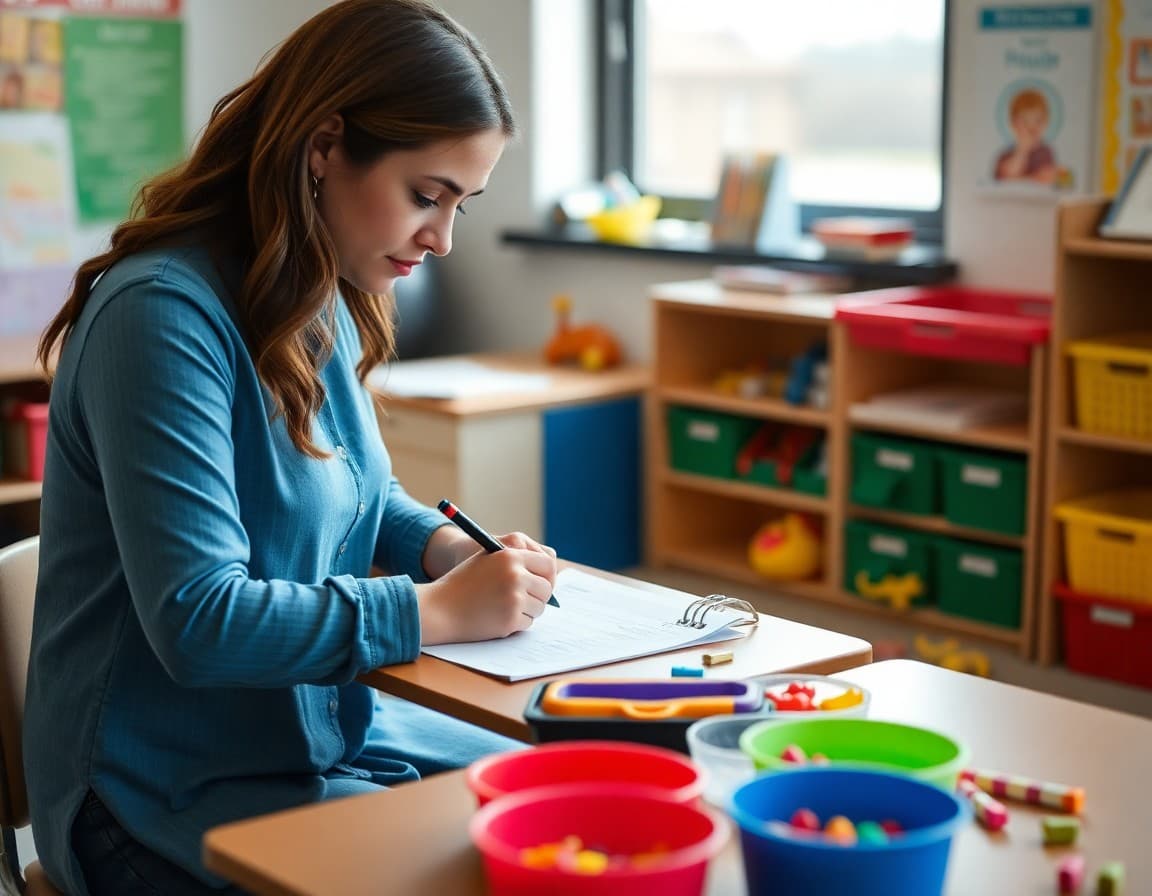
Sensory play is one of the most educational activities in your Pre-K classroom, and one of the hardest sells to families who associate learning with neatness. Your sensory play newsletter needs to do two things: explain what the mess is actually producing developmentally, and give families manageable ways to provide sensory experiences at home without dreading the cleanup.
What the Mess Is Actually Doing
Start your sensory play newsletter by addressing the elephant in the room: yes, sensory play is messy, and the mess is doing real work. Fine motor development requires material resistance. Hands that squeeze, pinch, scoop, and pour are building the same grip and control that pencil writing requires later. Descriptive language, the vocabulary for textures, temperatures, weights, and consistencies, emerges fastest when children are physically engaged with the material they are describing. The neural pathways engaged during sensory exploration are linked to memory and learning in ways that clean, abstract activities do not access. The mess is the method.
Sensory Play as Scientific Exploration
Sensory play is not separate from science. It is science in its most basic form: observation, experimentation, and description. A child who fills a cup with sand, dumps it, fills it with water, dumps it, and then tries to stack the wet sand is conducting an informal experiment. A child who smells two different playdough colors and notices they smell the same is observing and reporting. A child who describes the slime as “slippery but also a little sticky” is making a precise scientific observation. Your newsletter can frame sensory play as the lab component of your early science curriculum, because it is.
Math Concepts Inside Sensory Play
Sensory play is also rich with math. Volume and capacity emerge when children fill and pour containers of different sizes. Weight comparison happens when children pick up a full cup vs an empty one. Measurement language (how many scoops does it take to fill the big cup?) builds proportional reasoning. Counting and grouping happen naturally when children sort small objects in a sensory bin. The math in sensory play is not imposed by an adult. It emerges from the child's natural impulse to figure out how things work. Your newsletter can name what math is happening in this week's sensory setup.
A Sample Newsletter Excerpt to Copy
“This week our sensory table had moon sand: a mixture of fine sand and a small amount of oil that sticks together when squeezed but crumbles when released. The children were fascinated. They made mountains, pressed in handprints, filled molds, and spent a long time figuring out how much to squeeze to make the sand hold its shape. That was fine motor work, cause-and-effect reasoning, and descriptive science all at once. At home this week: fill a baking dish with dry oatmeal or rice and hide a few small objects inside. Let your child scoop, pour, and hunt. Put the dish on a towel if you are worried about spills. The learning is worth the towel.”
Addressing Mess Concerns Without Dismissing Them
Your newsletter can acknowledge the mess concern directly rather than brushing past it. Sensory play is genuinely messy, and that is a legitimate challenge in a home with limited space or a caregiver who is already stretched. Offer practical workarounds: take it outside whenever weather permits, use a plastic storage bin to contain the mess, put a tablecloth or shower curtain under the activity, and choose dry materials (rice, beans, oatmeal) on days when wet cleanup is not feasible. Bath time is also a natural sensory play window: cups, containers, and a little water make a fully contained sensory experience with no extra cleanup.
Sensory Play and Self-Regulation
One of the less obvious benefits of sensory play is its regulatory function for children with sensory integration differences. Many children find controlled, predictable sensory input organizing and calming for their nervous system. A child who runs their hands through dry rice or squeezes playdough is often regulating their arousal level, bringing themselves into a calmer, more focused state. This is why sensory play is frequently used as part of occupational therapy for children with sensory processing challenges, and why providing sensory experiences at home can help children arrive at high-demand situations (like family dinners or long car trips) in a more regulated state.
Sending Your Sensory Play Newsletter With Daystage
Daystage makes it easy to send a sensory play newsletter with a classroom photo of children absorbed in a sensory activity, a brief explanation of what is being built, and one simple home setup idea. When families see the photo and read your explanation, many respond with “I had no idea that was so educational.” That shift in understanding is the whole point. It turns sensory play from something parents tolerate to something they actively provide, and that makes a real difference in how much sensory learning children get between school days.
Get one newsletter idea every week.
Free. For teachers. No spam.
Frequently asked questions
What does sensory play build beyond stimulation?
Sensory play builds fine motor control (scooping, pouring, squeezing, pinching), descriptive language (vocabulary for textures, weights, temperatures, and consistencies), scientific observation habits (noticing, comparing, describing, predicting), math concepts (volume, capacity, weight, measurement), and neural pathway development in areas linked to learning and memory. It also builds self-regulation for children with sensory integration differences by providing controlled sensory input that is calming and organizing for the nervous system.
How do I explain sensory play to parents who are concerned about the mess?
Acknowledge the concern directly rather than dismissing it. Then explain what the mess is doing. Sensory play engages neural pathways that clean play does not. Fine motor development requires material resistance. Descriptive language emerges fastest when children are genuinely interested and physically engaged. Offer a practical suggestion: a shower curtain liner under the activity, or taking the sensory play outside, which makes the mess manageable without eliminating the learning.
What are safe, easy sensory play setups for Pre-K families at home?
Water play in a tub with cups and spoons takes five minutes to set up and zero minutes to clean up at bath time. A tray of dry oatmeal, rice, or beans with spoons and small cups is a dry sensory bin with no cleanup issues. Playdough with simple tools (rolling pins, cookie cutters, craft sticks) is rich sensory play. Kinetic sand in a storage container with a lid is clean, reusable, and deeply engaging. None of these require a special purchase or preparation.
How do I handle it when a child in my class resists sensory play?
Sensory avoidance is real and valid. Some children have nervous systems that find certain textures overwhelming rather than engaging. Forcing participation creates anxiety without learning. Your newsletter can normalize this for families: a child who observes from the edge of the sensory bin, or who uses a tool instead of their hands, is still learning through observation. Gradual, voluntary exposure over time is the right approach. If sensory avoidance is extreme and persistent across many sensory types, it may be worth mentioning to the family as something to discuss with their pediatrician.
How does Daystage help teachers communicate sensory play learning to Pre-K families?
Daystage makes it easy to send a sensory play newsletter with a classroom photo of children fully absorbed in a sensory activity, a brief explanation of what is being built, and one simple take-home setup. Families who see the photo and read the explanation often respond with 'I had no idea that was learning.' That shift in understanding is what turns sensory play from something parents tolerate to something they actively provide.

Adi Ackerman
Author
Adi Ackerman is a former classroom teacher and curriculum writer with 8 years in K-8 schools. She writes about school communication, parent engagement, and what actually works in real classrooms.
More for Pre-K
Ready to send your first newsletter?
3 newsletters free. No credit card. First one ready in under 5 minutes.
Get started free