
How to Write a Colors Unit Newsletter to PreK Parents

A colors unit looks simple from the outside: learn the names of colors. But what you are actually building in a Pre-K colors unit is significantly more complex, and your newsletter is the right place to explain the full scope of learning to families who may assume color identification is where the unit begins and ends.
What Color Learning Actually Involves at Pre-K Age
Color learning in Pre-K covers several distinct skills. The first is color recognition and naming: identifying red, blue, yellow, green, orange, purple, brown, black, white. The second is sorting and classification: grouping objects by color, which builds the mathematical skill of categorization. The third is color mixing: observing what happens when two colors combine, which builds early scientific prediction and experimentation. The fourth is descriptive color language: light blue vs dark blue, the difference between orange and red-orange. Your newsletter can frame the full scope of the unit at the start so families know what to look for throughout.
Color Sorting as a Mathematics Skill
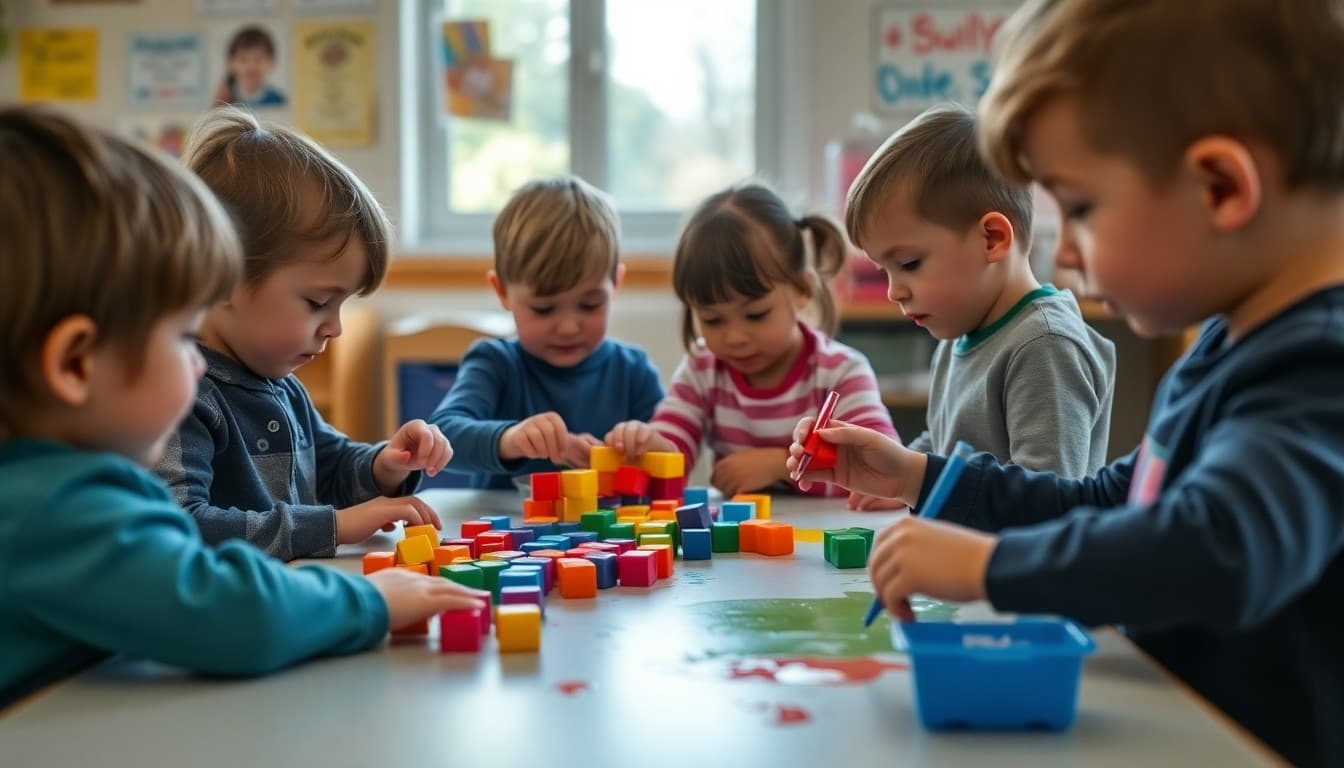
Sorting by color is one of the first classification activities children encounter, and classification is foundational to mathematical thinking. When children group objects by color, they are making decisions about what belongs together based on a shared attribute. This is the same cognitive process that underlies sorting numbers by value, sorting shapes by type, and sorting data into categories in later math. Your newsletter can explain this connection so families see color sorting as math practice rather than just a color game.
Color Mixing as Science Exploration
Color mixing is one of the richest inquiry experiences available to Pre-K children. When red and yellow combine to make orange, something genuinely surprising happens. Children who experience this firsthand and are asked “what do you think will happen?” before mixing are practicing the scientific method: forming a hypothesis, testing it, and observing the result. Your newsletter can describe this explicitly so families understand that the painting and water-mixing activities in your classroom are science work. A home activity to suggest: give your child three cups of water with red, yellow, and blue food coloring, and a dropper or spoon. Let them mix and observe. It costs almost nothing and produces genuine scientific excitement.
A Sample Newsletter Excerpt to Copy
“This week we explored color mixing. Each child predicted what color they would get by combining two primary colors, then tested their prediction with paint. Some children were confident, some were surprised. A few predicted something that did not happen and immediately wanted to try again. That persistence after a wrong prediction is one of the most important scientific behaviors we can build. At home this week: try mixing colors with food coloring in glasses of water. Ask your child to predict first, then test. The conversation that follows is worth more than any worksheet.”
Colors in Nature and Science
A colors unit is also an opportunity to connect color to the natural world. Why are leaves green in summer and orange in fall? Why does the sky look blue? Why do some flowers have bright colors and others are pale? These questions are genuinely interesting to 4-year-olds and open the door to real science conversations. Your newsletter can include one nature-color observation for families to make together during the unit: look at the colors of leaves on a walk, observe the color of the sky at different times of day, or collect natural objects and sort them by color. The outdoor component extends the unit beyond the classroom in an accessible, low-cost way.
Descriptive Color Language
One of the most useful language skills your colors unit builds is precise color description. Light blue and dark blue are different. Sky blue and navy are different. Describing a sunset requires more words than “orange.” This precision in descriptive language connects to writing, reading comprehension, and art vocabulary throughout school. Your newsletter can highlight the specific color vocabulary you are building this week and encourage families to use it naturally at home. When children have more words for what they see, they describe more precisely, and precise description is a writing skill that pays dividends all the way through school.
Addressing Color Vision Differences With Care
A brief note in your colors unit newsletter is worth including about color vision variation. About 8 percent of males have some form of color blindness, most commonly difficulty distinguishing red from green. Children with this condition often compensate without realizing it, and many reach Pre-K without it being identified. If you observe a child consistently struggling with specific color distinctions despite instruction, a gentle mention to the family to consult a pediatrician is appropriate. Framing this as information rather than concern keeps it from alarming parents while still ensuring they have the context to follow up.
Sending Your Colors Unit Newsletter With Daystage
Daystage makes it easy to include a classroom photo of children sorting, painting, or mixing alongside your colors unit newsletter. The photo makes the activity real for families who only hear “we learned about colors today.” With a brief explanation of what was being built and one take-home activity, you turn a single classroom experience into a family conversation that continues into the evening. That is the kind of reinforcement that makes a unit stick.
Get one newsletter idea every week.
Free. For teachers. No spam.
Frequently asked questions
What does a colors unit teach beyond color names?
A Pre-K colors unit teaches sorting and classification (grouping objects by color), mixing and combining (what happens when you mix blue and yellow), color in nature and science (why leaves change color, why the sky is blue), descriptive language (light blue vs dark blue, the color of a sunset), and color as a property for mathematical comparison. Color recognition is the entry point, but the unit extends into science thinking, art vocabulary, and categorization skills.
At what age should children know all basic colors?
Most children can name basic colors reliably by age 4. However, there is significant variation, and color blindness affects about 8 percent of males and 0.5 percent of females. If a child consistently struggles to distinguish certain colors, particularly reds and greens, a color vision check may be worth mentioning to the family. Otherwise, variation in color knowledge at Pre-K age is normal and responsive to instruction.
What are good at-home activities for a Pre-K colors unit?
Color sorting with household objects builds classification. Mixing food coloring in water cups builds color mixing observation and prediction. Going outside to observe colors in nature builds descriptive language. Sorting laundry by color turns a chore into a learning activity. Creating a color scavenger hunt (find five red things in the house) builds color recognition and attention. All of these use materials families already have.
How do I explain color mixing and why it matters developmentally?
Color mixing is a child's first experience of cause-and-effect experimentation: two known quantities combine to create a new, surprising result. The predictive reasoning involved, 'what do you think will happen when we mix these?', is early scientific thinking. Your newsletter can describe color mixing as science exploration rather than art activity so families understand the developmental purpose beyond making pretty colors.
How does Daystage help teachers communicate colors unit content to families?
Daystage lets you send a colors unit newsletter with a classroom photo of children mixing colors or sorting by hue, a brief explanation of what the activity is building, and one simple take-home activity. Families receive it directly on their phones and can reinforce the color concepts that same evening at home.

Adi Ackerman
Author
Adi Ackerman is a former classroom teacher and curriculum writer with 8 years in K-8 schools. She writes about school communication, parent engagement, and what actually works in real classrooms.
More for Pre-K
Ready to send your first newsletter?
3 newsletters free. No credit card. First one ready in under 5 minutes.
Get started free