
Preschool Music and Movement Newsletter: What Families Should Know About Learning Through Song
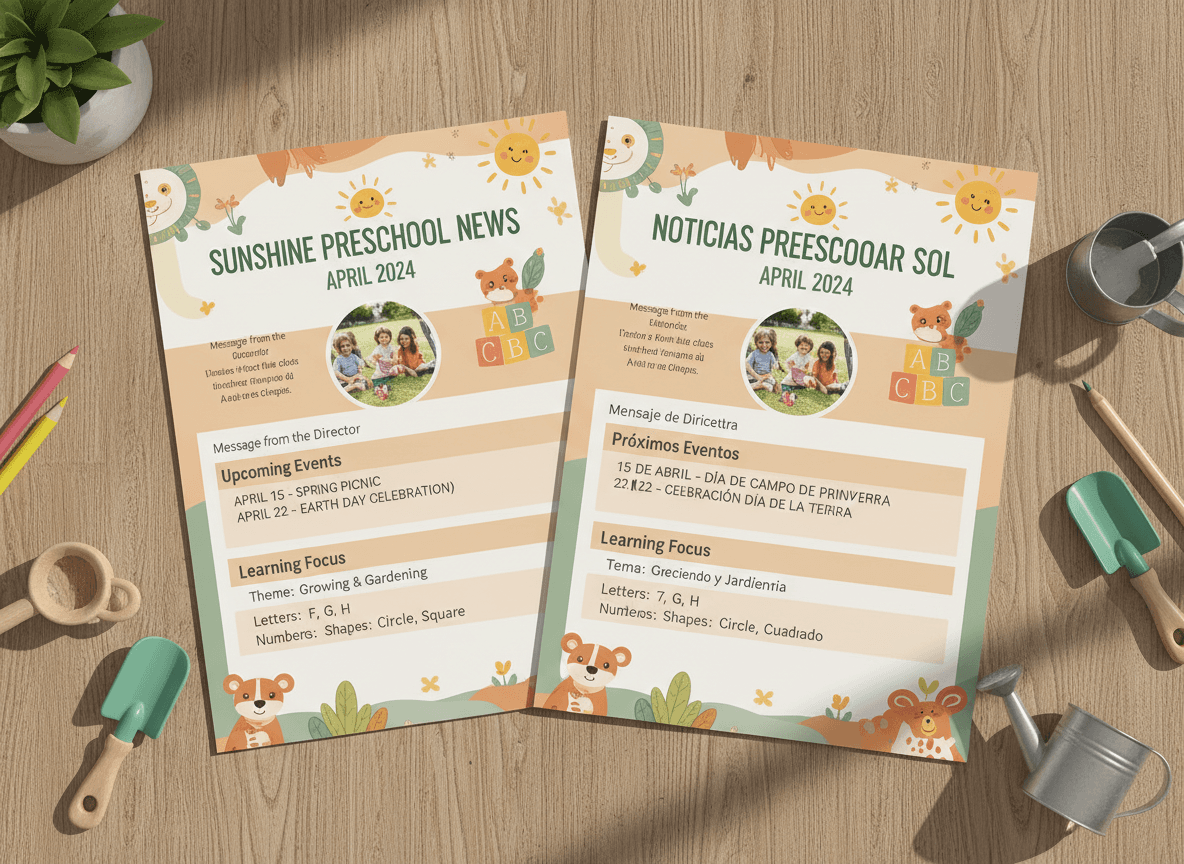
Music and movement are not the fun part of preschool that fills time between learning activities. They are central learning experiences that build the cognitive, physical, and social foundations that academic readiness depends on. A newsletter that helps families understand this connection transforms daily singing and dancing from entertainment into an intentional partnership between school and home.
What Music Does for the Developing Brain
When young children sing, their brains are doing multiple things at once: processing language sounds, tracking rhythm and pattern, holding words in working memory, and connecting sound to meaning. This is exactly the neural work that underlies reading. Children who have rich early experiences with songs, rhymes, and chants arrive at phonics instruction with brains that are already tuned to sound patterns in language.
Your newsletter should describe this connection in plain terms. When your family sings "Down by the Bay" for the tenth time tonight, you are not just keeping your child entertained. You are building the phonological awareness that their kindergarten teacher will build on next year.
What Movement Does for Learning Readiness
Preschoolers learn through their bodies before they learn through sitting still. Gross motor activities build the core strength and postural control that sitting at a table requires. Fine motor skills that support writing develop from the same neural pathways as large movement. And movement activates the brain's attentional and executive function systems in ways that sitting passively does not.
Describe for families what movement activities look like in your classroom: obstacle courses, action songs, dancing, yoga poses, balance challenges, rhythm activities, and outdoor movement time. When families see these as purposeful learning activities rather than play breaks, they are more likely to incorporate similar activities at home and less likely to ask why the children are not sitting at desks more.
Songs From Our Classroom This Month
Include two or three specific songs or rhymes from the current classroom repertoire. Write out the lyrics simply and describe the accompanying movements or clapping patterns. When families hear these songs at home, children experience a powerful connection between school and family life that builds belonging and enthusiasm for school.
Choose songs that reinforce current learning themes. A song that repeats the days of the week, a rhyme that practices beginning sounds, or a chant that reinforces a counting pattern all serve double duty: they are engaging for children and they build skills families can see developing. When a child sings a counting song at dinner, the family witnesses learning happening in real time.
Home Movement Activities That Take Five Minutes
Give families a specific movement activity to try this week. Keep it simple enough that a family can do it in a kitchen or living room with no equipment: a freeze dance to a song the child loves, a yoga pose challenge where each person tries to balance on one foot, a mirroring game where the parent copies everything the child does and then the child copies the parent, or a slow-motion walk from one room to another.
Frame these as connection activities, not curriculum. The developmental benefit is real, but the primary experience for the family should be fun. Children who associate learning with enjoyment with their parent are building positive associations with school and with challenge that will serve them for years.
What to Expect as the Year Progresses
Children who have consistent music and movement experience across the preschool year arrive at kindergarten with stronger phonological awareness, better listening skills, more developed body awareness, and a richer emotional vocabulary from songs and stories. Let families know what you will be building on across the year.
Daystage makes it easy to send a regular newsletter that includes the week's songs, this month's movement focus, and a simple home activity families can try together. When families receive this kind of specific, joyful communication, they see the classroom as an extension of family life rather than a separate world their child inhabits during the day.
Get one newsletter idea every week.
Free. For teachers. No spam.
Frequently asked questions
Why is music and movement important in preschool?
Music and movement build phonological awareness (a key predictor of reading success), gross motor coordination, listening skills, memory, and social connection. Singing together develops turn-taking and shared attention. Movement activities build body awareness and coordination. These are not extras. They are foundational developmental experiences.
What songs should preschool newsletters share with families?
Share the specific songs and chants used in the classroom that week. When families hear the same songs at home, children practice phonological patterns in a new context and feel connected to school through a familiar experience. Choose songs that reinforce current classroom themes, letter sounds, counting, or social concepts.
How much movement do preschoolers need?
National guidelines recommend at least 60 minutes of structured physical activity and several hours of unstructured active play per day for preschool-age children. Movement is not a break from learning. It is learning. Gross motor development supports fine motor skills, and both support academic readiness.
How can families do music and movement at home without instruments or space?
Body percussion (clapping, stomping, patting), singing during routines like getting dressed or making breakfast, freeze dance with any music, action songs that involve bending, reaching, or balancing, and simple rhythm games with household objects as instruments all work in a kitchen or living room. Equipment and space are not required.
Can Daystage help preschool teachers share music and movement activities with families?
Daystage lets preschool teachers send weekly or monthly newsletters with specific songs, rhymes, and movement activities that families can use at home, keeping classroom learning connected to family life.

Adi Ackerman
Author
Adi Ackerman is a former classroom teacher and curriculum writer with 8 years in K-8 schools. She writes about school communication, parent engagement, and what actually works in real classrooms.
More for Pre-K
Ready to send your first newsletter?
3 newsletters free. No credit card. First one ready in under 5 minutes.
Get started free