

Pre-K Winter Clothing Newsletter: Dressing for the Weather
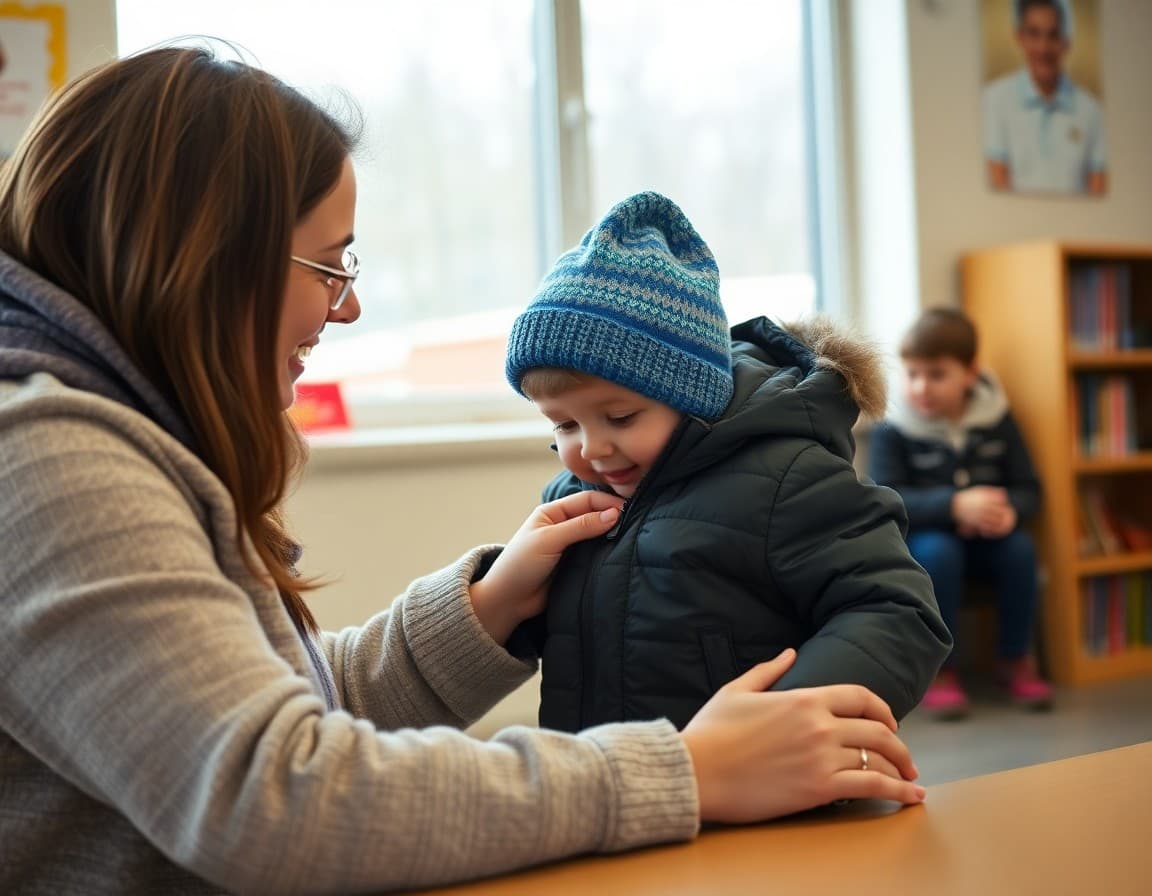
The winter clothing newsletter is one of the most practical documents a pre-K teacher sends all year. When it is clear and specific, outdoor play runs smoothly through January and February. When it is vague or never sent, teachers spend 15 minutes before every outdoor period improvising solutions for children who arrived in sneakers and a light hoodie when the temperature is 28 degrees.
Our Outdoor Play Policy in Cold Weather
We go outside whenever the temperature plus wind chill is above 20 degrees Fahrenheit. This policy is firm because the developmental and health benefits of outdoor play do not stop in December. Children who play outside in winter show stronger immune function, better mood regulation, and deeper sleep at night than children who are kept indoors for months at a time.
Outdoor play is modified when temperatures drop below 20 degrees with wind chill, when there is significant icing that creates fall hazards, or when there is lightning or severe weather. On days when outdoor play is canceled, we substitute indoor movement breaks and the lesson plan shifts accordingly. These exceptions are rare in most winters. Our goal is to be outside every day that safety allows.
The Three-Layer System for Pre-K Children
Layer one is a moisture-wicking base layer worn against the skin. Avoid cotton, which holds moisture from sweat and makes children colder. Thin wool or synthetic base layers work best. Layer two is an insulating layer: fleece, wool sweater, or a lightweight puffy vest. This layer traps warm air close to the body. Layer three is the outer shell: a wind-resistant, water-resistant coat that blocks the wind and keeps moisture out during snow play.
For temperatures above 35 degrees with sun, many active pre-K children do not need all three layers. A fleece and outer coat often suffice. The base layer matters most for temperatures below 30 degrees and for extended snow play. Let the child's activity level guide you: an actively running child generates more heat than one who is standing watching peers. Pre-K children are typically in the running category.
Mittens Versus Gloves for 3-5 Year Olds
Mittens keep fingers warmer than gloves because fingers share heat when they are together rather than separated. For preschoolers who are still developing fine motor control, mittens are also easier to put on independently. The trade-off is that mittens make fine motor tasks (picking up small objects, opening zippers) more difficult. For our outdoor play purposes, mittens are almost always the better choice. Keep one pair at school in the cubby and one pair in the backpack so there is always a dry pair available.
Waterproof mittens are worth the additional cost if your child plays in snow. Fabric mittens that absorb water become cold within 10 minutes of snow play, and a child with cold wet hands will stop engaging with outdoor activities and start asking to go in. A waterproof mitten that costs $14 prevents 30 days of outdoor play disruption.
A Template You Can Send to Families in October
This section is ready to adapt and send as your annual winter preparation newsletter:
"Cold weather outdoor play begins [date range]. Please make sure your child arrives each day with: a warm coat that zips or buttons (no toggle closures, which children cannot manage independently), a hat that covers their ears, mittens or gloves (we recommend mittens), and winter boots that go up at least to the ankle. A spare pair of socks and mittens should stay in your child's cubby all winter. Label every item with your child's first and last name. We will go outside as long as it is above 20 degrees with wind chill. Please send appropriate gear every day from [start date] through [end date]."
The Labeling Problem and How to Solve It
A pre-K classroom at the end of January has a lost-and-found pile that tells a story of hope and forgetfulness. Every year, approximately a third of the hats and mittens in the pile are unlabeled and go unclaimed. Every year, multiple families report that their child's coat disappeared.
Iron-on labels from services like mabelslabels.com or staticlifekids.com cost about $25 for a set that labels everything a child owns through kindergarten. A permanent Sharpie on the inside of the tag costs nothing. The method does not matter. What matters is that every single item has both the child's first and last name, because six children named Emma have coats in our classroom this year and four of their coats are the same shade of blue.
What to Do When a Child Does Not Have Adequate Winter Clothing
Some families face financial barriers to purchasing winter gear. Teachers should know about community resources before the first cold weather day, not after. Local nonprofits, clothing pantries, and school social workers often have winter clothing available. The newsletter can include a discreet line about resources: "If your family needs support with winter clothing, please contact [name] at [email/phone]. We have community resources available."
The goal is to make this information available without stigma. A child who spends January watching peers play in the snow because they lack appropriate gear loses developmental experience and the social connection that outdoor play provides. That loss is preventable with the right community support in place.
Independence with Winter Clothing
A significant part of the pre-K winter clothing conversation is about independence. Children this age are developmentally ready to manage most of their own dressing with appropriate gear. A 4-year-old can put on mittens, pull on a hat, and zip a jacket with a zipper pull if the gear is designed for independence. Toggle closures, buttons, and snap closures require adult assistance that teachers cannot provide for 18 children at once. When shopping for winter gear, try it on in the store and have your child practice putting it on independently before the first cold day.
Get one newsletter idea every week.
Free. For teachers. No spam.
Frequently asked questions
What is the minimum temperature for pre-K outdoor play in winter?
Most early childhood programs follow guidelines that allow outdoor play down to 20 degrees Fahrenheit with appropriate clothing, and some programs go lower with adequate gear. The key factor is wind chill rather than air temperature, as wind chill determines the rate at which the body loses heat. Programs should publish their specific cold weather policy in writing so families know exactly when outdoor play will be modified or moved indoors. Unpredictable policies create frustration and under-preparation.
How many layers do preschoolers need for winter outdoor play?
Three layers are the standard recommendation for children playing actively in cold weather: a moisture-wicking base layer, an insulating middle layer (fleece or wool), and a wind and water-resistant outer layer. For temperatures above 30 degrees with moderate activity, many children do fine with two layers. The key is that the outer layer must be easy for the child to manage independently, since teachers cannot zip and button 18 jackets every time the class goes outside. Velcro, zippers, and elastic waistbands beat buttons and ties every time.
How should families label winter clothing items?
Label every single item with the child's first and last name using permanent marker on the tag or an iron-on label. This includes coats, snow pants, mittens, hats, boots, and any extra items in the backpack. Pre-K children regularly remove hats and mittens during play and cannot reliably track them. A lost mitten without a name label is simply gone. Programs that see the most lost clothing are those where labeling is treated as optional rather than required.
What winter clothing items should always stay at school as backup?
Every pre-K child should have a spare set of clothing in their cubby year-round, but winter adds specific needs: at minimum, one extra pair of socks (wet socks are the most common winter discomfort complaint) and a spare pair of mittens or gloves. If your program does snow play, a spare pair of snow pants or waterproof outer pants is extremely useful. A child who comes in from outdoor play with wet clothing and no backup spends the rest of the day uncomfortable, which affects both behavior and learning.
How does the pre-K newsletter communicate winter clothing reminders?
We send a winter preparation newsletter each October through Daystage with the specific items children need, our cold weather outdoor policy, and a printable checklist families can use to make sure each item is labeled. Mid-winter we send a brief reminder when temperatures drop significantly or when families have been sending children in inadequate clothing. The reminder is always specific and solution-focused rather than critical, because most under-preparation is a resource or information problem, not a lack of concern.

Adi Ackerman
Author
Adi Ackerman is a former classroom teacher and curriculum writer with 8 years in K-8 schools. She writes about school communication, parent engagement, and what actually works in real classrooms.
More for Pre-K
Ready to send your first newsletter?
3 newsletters free. No credit card. First one ready in under 5 minutes.
Get started free