

Preschool Back to School Newsletter: Setting Expectations Before Day One
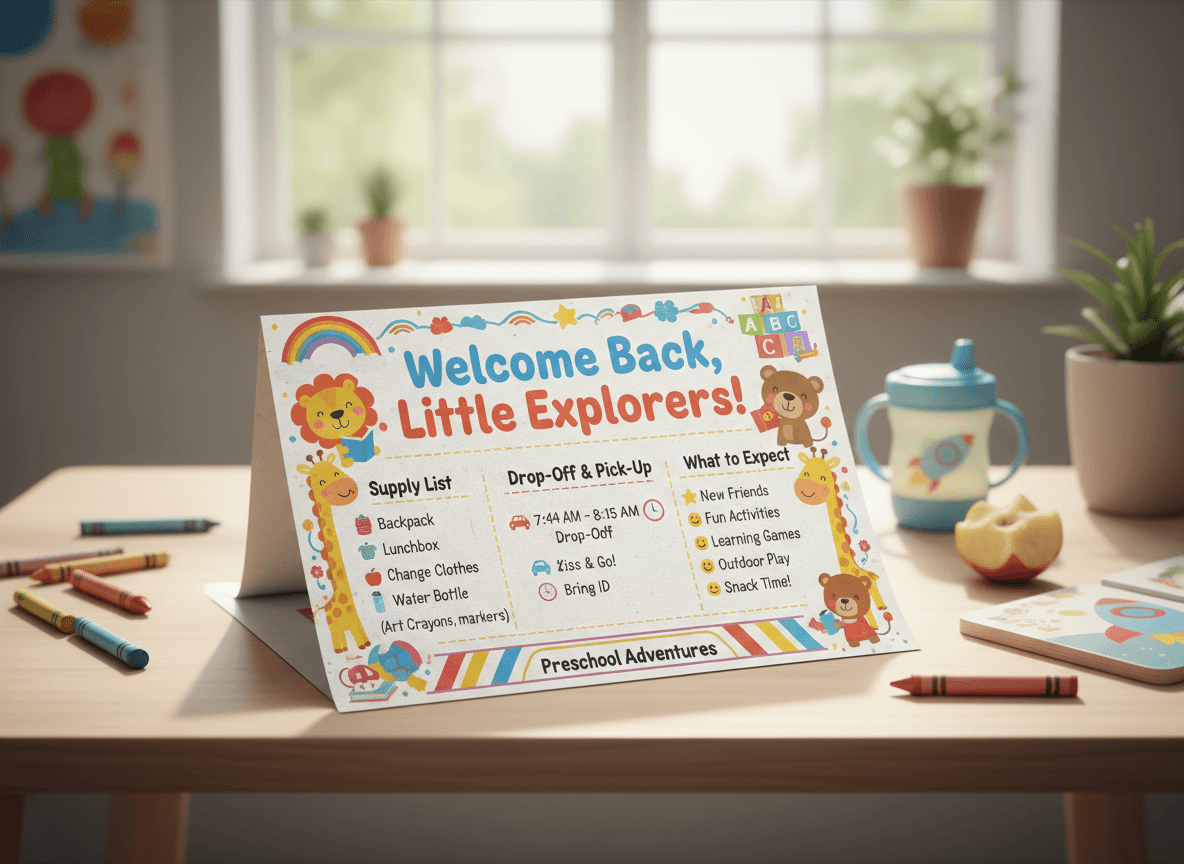
The first day of preschool is one of the most emotionally loaded moments in a family's early years of parenting. For children entering school for the first time, it is their first experience of a structured world that exists without their parents in it. For parents, it is the first time they hand that responsibility to someone else.
A well-written back-to-school newsletter, sent before the first day, does not eliminate that anxiety. But it addresses it with information and specificity, and that matters more than reassurance. Families who know exactly what to expect on day one arrive calmer. Children whose parents arrive calmer tend to have easier separations. This is a practical document, not a marketing one, and it should read that way.
When to Send It
Send this newsletter five to seven days before school starts. That is the right window: close enough to be relevant, but far enough that families have time to read it, act on anything it requests, and ask follow-up questions before the first day arrives.
Sending two or three weeks early means it gets buried in an inbox and families forget the details by the time they need them. Sending the night before means parents are already in first-day logistics mode and may not read carefully. The week before is the target.
Drop-Off Procedures: More Detail Than You Think You Need
Describe the drop-off process as if you are explaining it to someone who has never been to your school before. Because for new preschool families, that is exactly what you are doing.
Include: where to park, where to enter the building, whether parents walk children to the classroom or hand off at the door, what time the doors open and close, who greets children at arrival, and what to do if you are running late. Write it as a sequence of steps rather than a paragraph of information.
Also address what happens during the first week specifically. Many programs do a staggered start or a shorter first day. If yours does, explain the schedule clearly, because parents who show up at the wrong time on the first day have a much harder morning than parents who knew exactly when to arrive.
What to Bring (and What to Label)
Be specific. "A backpack, a water bottle, a change of clothes, and a comfort item if needed" is more useful than "please pack appropriate supplies." For the first day, parents are often anxious enough that vague guidance creates unnecessary stress.
Tell them which items need to be labeled with the child's name. Tell them whether food is provided or whether they need to send lunch. If there is a specific bag or container size that works better in your cubbies, say so. If certain items should stay home, say that too.
These logistics feel small, but they are the kind of details that first-time preschool parents obsess over because they are the only part of the first day that feels within their control. Give them clear answers and they can stop worrying about the backpack and focus on the bigger emotional piece.
Addressing Separation Anxiety: For Parents, Not Just Children
Separation anxiety at preschool drop-off is frequently more intense for parents than it is for children. Children who cry at drop-off often settle within minutes of a parent leaving. Parents who drove away during a tearful goodbye can spend the next two hours wondering if their child is okay.
Your newsletter should address this directly and practically. Tell parents that crying at drop-off is common and normal, especially in the first two to four weeks. Tell them what you do when a child is upset. Tell them that research on preschool separation consistently shows that prolonged goodbyes are harder on children than clean, confident ones. And give them a specific mechanism to check in during the first week: whether that is a text, a quick email, or a call to the office.
Include a note about goodbye rituals: a quick hug and a specific phrase ("I'll be here at pickup, have a great day") tends to work better than an open-ended "are you okay?" or a goodbye that gets extended every time the child protests.
What Parents of New Preschoolers Specifically Need to Know
There are a few things that are genuinely specific to families entering preschool for the first time that experienced school parents already know:
- Children often seem tired or emotional after school in the first weeks.Managing a new environment and new relationships is genuinely exhausting at this age. This is normal and typically settles after the first month.
- Children may not be able to tell you much about their day. "I don't know" and "played" are common answers. Specific questions work better than open-ended ones: "Who did you sit next to at snack?" gets more than "What did you do today?"
- Regression can happen. Some children who have been fully potty trained have accidents in the first weeks of school due to the new environment. This is normal and does not mean something is wrong.
- Friendships take time. Most children do not come home with a best friend in September. Social bonds at this age develop slowly and through proximity and repetition.
What to Say About the School Year Ahead
End with a brief, honest note about what the year will look like. Not a list of every unit or a curriculum overview, but one paragraph about the rhythm of the classroom and what children will be doing. Give parents something to be genuinely interested in, and a specific thing they can look forward to.
Example: "This year we will spend a lot of time outside, building, making things, and figuring out how to navigate the world with other people. We will read together every day. By spring, most children in our program can recognize their name in print, hold a pencil with real control, and manage a disagreement with words instead of a meltdown. Those skills are not dramatic, but they matter a great deal, and they take all year to develop well."
That kind of closing tells parents what they are actually signing up for and why it matters. It is a better use of the final paragraph than "We are so excited to meet your family!"
Tools That Make This Easier
A back-to-school newsletter for preschool works best when it arrives directly in the parent's inbox as a formatted email, not as a PDF or a link to a separate page. Daystage is built for exactly this: you put together the newsletter once using blocks for each section, add your classroom photos or a welcome image, and send it directly to your family mailing list. No formatting headaches, no PDFs that get missed. Just a clear email that parents can read on their phone the morning they receive it.
Get one newsletter idea every week.
Free. For teachers. No spam.
Frequently asked questions
When should preschool teachers send the back-to-school newsletter?
Send the back-to-school newsletter five to seven days before the first day so families have time to read it without still being in summer mode. Sending it the week before school starts hits the window when parents are beginning to mentally shift toward the school year and are most likely to read carefully.
What should a preschool back-to-school newsletter include?
Include drop-off and pickup logistics with specific times and locations, what to expect during the first week including how separation is typically handled, what to pack and label, and a warm note about what the class will explore in the first weeks. Address the emotional side of starting school directly so parents feel the teacher has thought about what they are carrying.
How should preschool teachers address separation anxiety in back-to-school communication?
Name the experience directly and normalize it for both children and parents. Describe the specific steps you take when a child is upset at drop-off, what a parent should do versus not do, and how long separation distress typically lasts. Parents who have a script for drop-off handle it more calmly, and calmer drop-offs make the whole morning easier.
What are common mistakes in preschool back-to-school communication?
Sending so much logistical information that the important parts get buried is the most common problem. A back-to-school newsletter that runs more than one page will lose parents before they finish it. A second mistake is focusing exclusively on procedures without acknowledging that starting preschool is emotionally significant for the whole family, not just the child.
Is there a tool that helps preschool teachers create first-day-of-school communication?
Daystage is built for early childhood teachers and includes templates for back-to-school communication that cover the essentials without requiring teachers to write from scratch each fall.

Adi Ackerman
Author
Adi Ackerman is a former classroom teacher and curriculum writer with 8 years in K-8 schools. She writes about school communication, parent engagement, and what actually works in real classrooms.
More for Pre-K
Ready to send your first newsletter?
3 newsletters free. No credit card. First one ready in under 5 minutes.
Get started free