

Pre-K Outdoor Play Newsletter: Recess and Movement at School
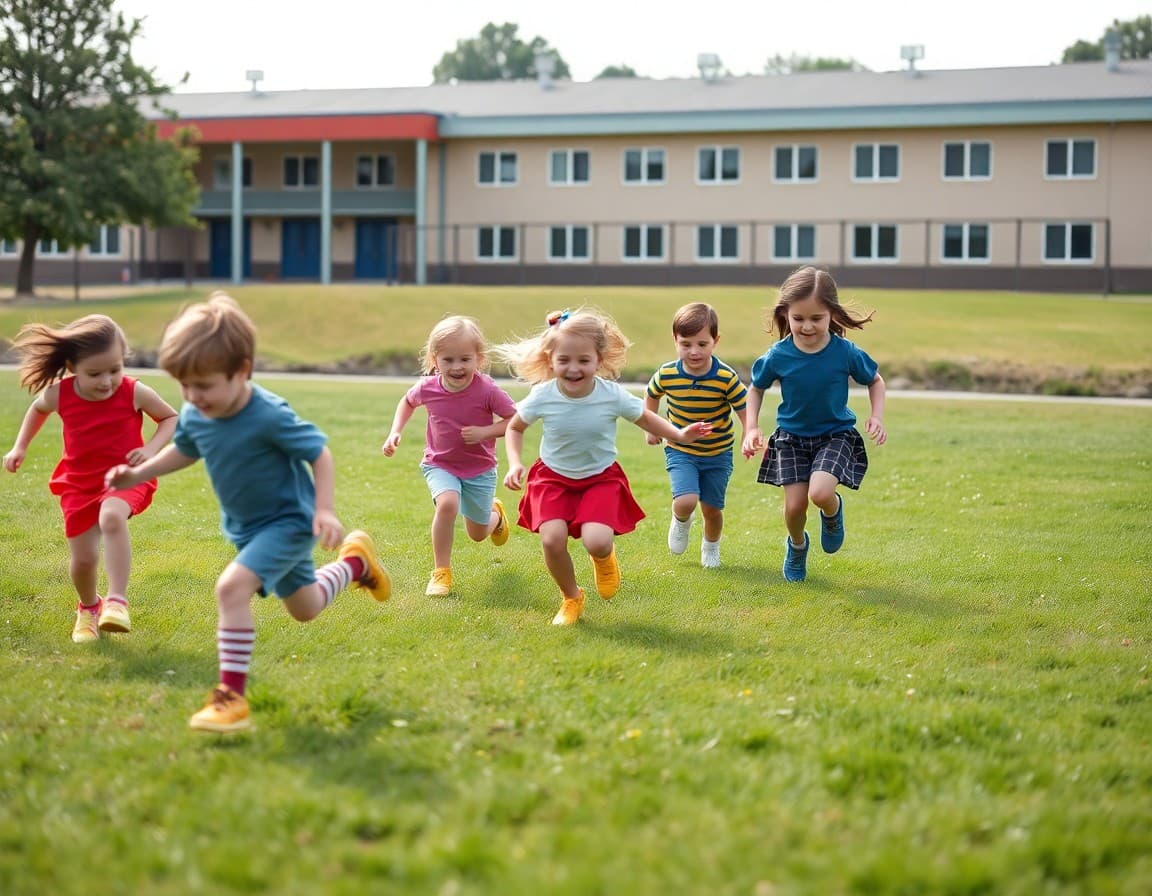
A pre-K outdoor play newsletter does something that many educators underestimate: it makes the case to families that the time their child spends running around outside is not wasted time. It is some of the most valuable developmental time in the school day, and families benefit from understanding why.
Why Outdoor Play Is Not a Break from Learning
In pre-K, the brain and the body learn together. A child who has just run for 10 minutes returns to the classroom with increased oxygen flow to the prefrontal cortex, the part of the brain responsible for attention, impulse control, and working memory. Those are exactly the capacities that academic learning requires. Schools that cut outdoor time to add academic instruction often find that behavior problems increase and attention decreases, which costs more instructional time than the outdoor play would have used.
Beyond the neurological case, outdoor play builds physical skills that transfer directly to classroom readiness. Core strength from climbing is the same core strength children need to sit in a chair for 20 minutes. Finger strength from digging and gripping is the same finger strength that controls a pencil. The body is not separate from the brain in early childhood. They develop together or not at all.
What Our Outdoor Play Program Looks Like
Our pre-K program schedules two outdoor periods daily: a 30-minute morning outdoor play period and a shorter 15-minute afternoon movement break. During morning outdoor play, children have access to the climbing structure, open grass area, sandbox, and a wheeled-toy path. Teachers rotate among these zones, observing children, facilitating peer problem-solving, and watching for safety without over-directing play.
We do not organize outdoor time into structured games unless specifically working on a motor skill that needs direct instruction. Free, child-directed outdoor play produces different and equally important developmental outcomes than teacher-directed physical activity. Children need both, and our schedule provides both through movement breaks and outdoor free play.
The Case for Risky Play
Many families are understandably nervous when they see a 4-year-old climbing to the top of a structure or jumping from a height. Current research on risky play shows that allowing children to take manageable physical risks builds executive function, confidence, and accurate risk assessment. Children who are over-protected from physical risk do not learn to gauge their own limits. They either become overly cautious or, later, take risks without the experience to judge them accurately.
Our teachers follow a "watch before you intervene" approach. We give children a moment to problem-solve a physical challenge before stepping in. If a child is in genuine danger, we act immediately. If a child is nervous about a challenge, we offer encouragement and stay close. The goal is support without removal of the challenge.
A Template for Outdoor Play Newsletter Communication
Share this language with families when transitioning to a new season of outdoor play:
"This month we are focusing on balance and coordination during outdoor play. Children are practicing balancing on the low beam, hopping on one foot, and navigating our new obstacle course. At home, try these three activities: (1) Walk heel-to-toe along a line of tape on the floor. (2) Hop on one foot while counting to five on each side. (3) Set up sofa cushions as stepping stones and time how fast your child can cross without falling. These activities build the same vestibular and coordination skills we are developing at school."
Specific home activities tied to the school focus give families something immediate and fun to do while reinforcing the developmental work happening at school.
Dressing for Outdoor Play: A Practical Guide
Outdoor play requires appropriate clothing. Children who are dressed for outdoor play engage fully. Children who are worried about keeping their clothes clean hold back from activities that would benefit them most. Our recommendation is simple: send children in clothes that can get dirty, shoes with good grip, and layers that are easy to remove independently. A zip-up rather than a pullover sweater allows children to manage their own temperature without teacher help.
In cooler months, we go outside as long as it is above 20 degrees Fahrenheit with adequate clothing. Mittens should be warm enough that children do not want to take them off within five minutes. Waterproof boots allow children to investigate puddles rather than avoiding them. Mud is washable. Developmental experience is not.
Movement at Home: Simple Ideas That Work
Families do not need a playground to provide rich physical development opportunities. A 20-minute walk that includes jumping over cracks, carrying a grocery bag, balancing on a curb, and running to the corner covers multiple motor skills in a realistic time frame. Rainy day movement in the living room can include animal walks (bear crawl, crab walk, frog jump), freeze dance, and simple yoga poses from children's yoga videos.
The key is volume and variety. Children need many different types of movement, not a lot of any single one. Swinging builds different skills than running. Climbing builds different skills than throwing. A child who has access to diverse movement experiences across the week is building a more complete physical foundation than one who does only one type of activity.
When Outdoor Play Gets Skipped
On days when outdoor play is shortened or eliminated due to weather or schedule, we use indoor movement breaks. These include 3-5 minute structured movement sequences between learning blocks, dance, yoga, or a quick obstacle course. We do not skip movement entirely because the cognitive benefits of regular physical activity are too significant to lose even on difficult days. Families can support this by building some form of movement into the evening routine, especially on days when children have been largely sedentary.
Get one newsletter idea every week.
Free. For teachers. No spam.
Frequently asked questions
How much outdoor play do preschool children need each day?
The National Association for Sport and Physical Education recommends that preschool children get at least 60 minutes of structured physical activity and at least 60 minutes of unstructured free play outdoors daily. Most pre-K classrooms provide 30-45 minutes of outdoor time during the school day. The remainder should come from home and community settings. Children who meet these physical activity guidelines show better attention, self-regulation, and academic readiness than children with sedentary routines.
What are the developmental benefits of playground equipment for 3-5 year olds?
Different playground structures build different skills. Climbing equipment develops upper body strength and spatial courage. Slides teach children to judge when it is safe to go. Swings build vestibular development, which is the sensory system that supports reading and writing readiness. Sandbox and digging areas build fine motor strength. Open grass areas for running develop cardiovascular endurance and coordination. A good playground is not a break from learning; it is a learning environment with different tools than the classroom.
Should pre-K children be allowed to take physical risks on the playground?
Yes, within reason. Research on risky play consistently shows that children who are allowed age-appropriate physical challenges develop better risk assessment, confidence, and self-regulation than children who are over-protected on playgrounds. Pre-K children benefit from climbing to their natural comfort level, jumping from low heights, running at full speed, and engaging in rough-and-tumble play with peers. Teachers distinguish between risky play that builds skills and genuinely dangerous situations that require intervention.
How can families support physical development at home?
Regular outdoor time is the most important thing. Even a 20-minute walk that includes jumping in puddles, balancing on curbs, and carrying something provides significant developmental input. Avoid strollers for children who can walk. Resist the urge to carry a 4-year-old who is tired but mobile. Obstacle courses built from cushions and furniture in a living room are surprisingly effective fine motor and gross motor builders on rainy days when outdoor play is not possible.
What movement activities does the pre-K classroom do indoors?
When outdoor play is not possible due to weather, we use movement breaks, dance, yoga poses, and obstacle courses inside the classroom. Brain breaks of 3-5 minutes of movement between activities improve focus and behavior significantly. Some classrooms use Daystage newsletters to share the week's movement break routines so families can try them at home and children feel the pride of teaching a family member something from school.

Adi Ackerman
Author
Adi Ackerman is a former classroom teacher and curriculum writer with 8 years in K-8 schools. She writes about school communication, parent engagement, and what actually works in real classrooms.
More for Pre-K
Ready to send your first newsletter?
3 newsletters free. No credit card. First one ready in under 5 minutes.
Get started free