
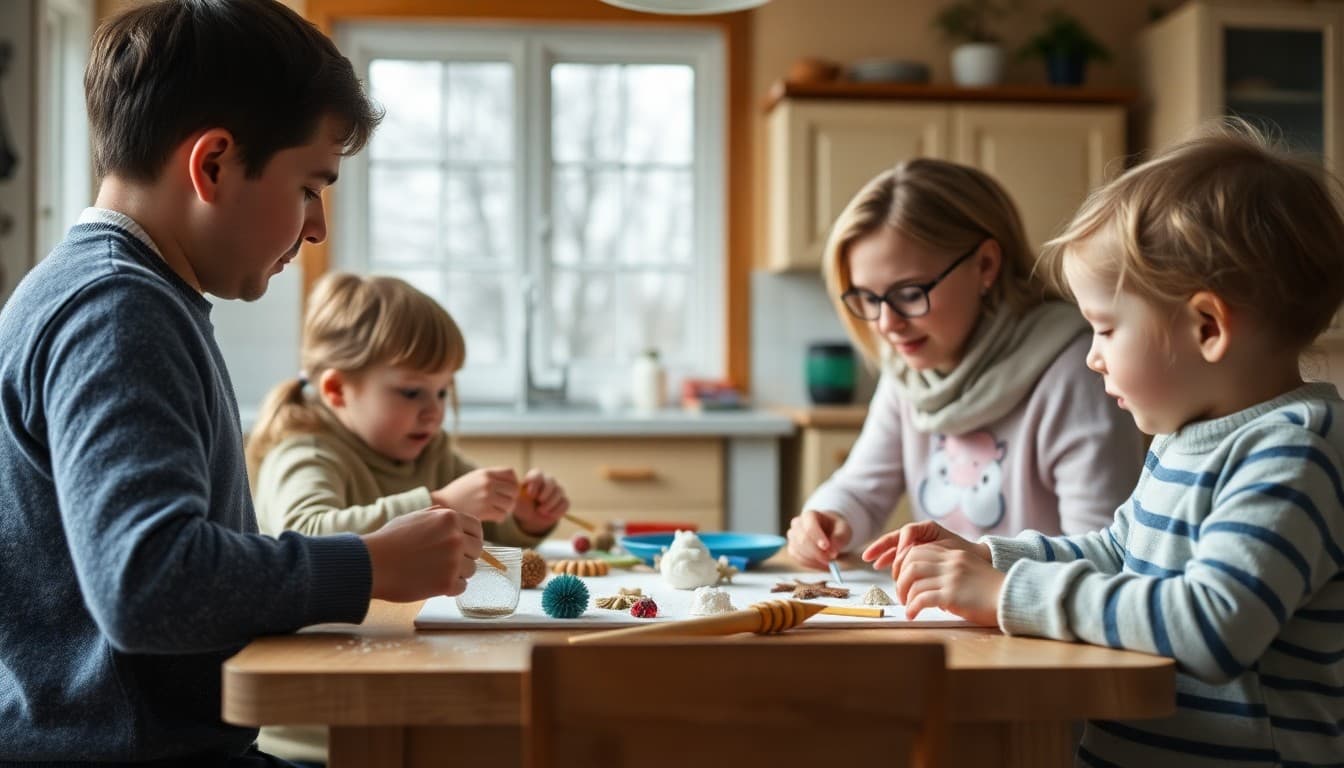
Pre-K Winter Break Newsletter: Activities to Do at Home
A winter break newsletter sent the week before school ends does more than wish families happy holidays. It gives families something specific and playful to do with their preschooler across two or three weeks that maintains developmental momentum without feeling like school. The key is making the activities concrete enough that a tired parent can actually do them.
Why Winter Break Learning Activities Matter
A two-to-three week break from the structured pre-K environment can produce meaningful regression in skills that were still consolidating. Attention spans that have been trained by daily group activities can drift. Sleep schedules that anchor learning often shift during holiday travel. Vocabulary that was being actively practiced in classroom conversations goes dormant. None of this is catastrophic, but it does mean that January can feel like starting over.
Winter break activities that maintain a reading routine, sustain conversational language practice, and provide daily unstructured play reduce that regression significantly. The goal is not to replicate school at home. It is to keep the developmental engine running on low for a few weeks rather than turning it off entirely.
Ten Specific Activities for Pre-K Children During Winter Break
Each of these takes 15-30 minutes, requires no purchased materials, and builds a specific pre-K skill. One: Read one picture book together every day. Pick something the child has not heard before. Let them choose from the library. Two: Make playdough from flour, salt, cream of tartar, water, and oil. The making is as educational as the playing. Three: Sort a drawer of socks by color, pattern, and size. Then put them away. Four: Take a walk and collect five different things from the ground. Sort them by size, color, or texture when you get home. Five: Cook one simple recipe together. Pancakes, soup, or muffins all involve measuring, mixing, and sequencing.
Six: Build the tallest tower possible from recycled materials. Measure it with a ruler or string. Seven: Draw and dictate a story about your winter break. Ask the child what happens next at each stage. Eight: Call a relative and have the child tell them about one thing they did this week. Nine: Find shapes in your home: a circle plate, a rectangular door, a triangular roof on a drawing. Count how many of each. Ten: Do a puzzle together that is slightly harder than the child could do independently in September.
Maintaining the Reading Routine
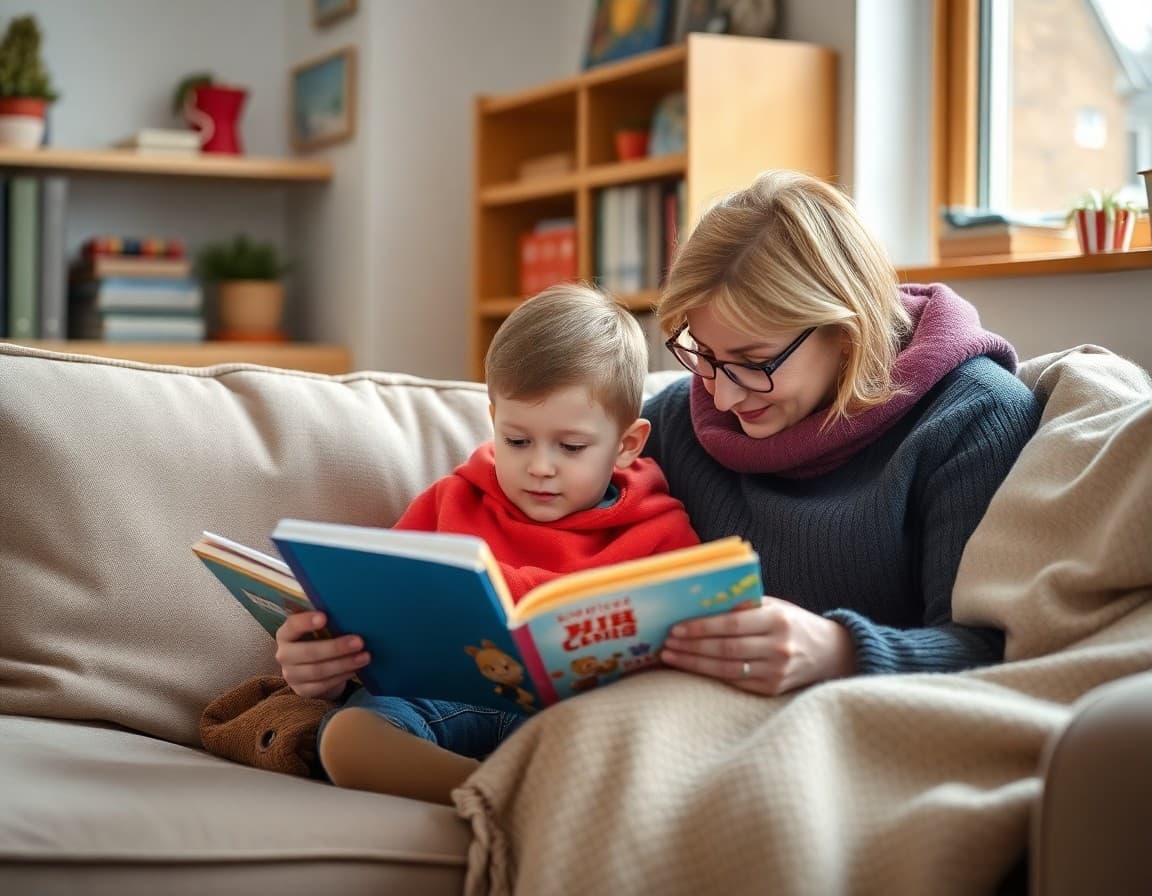
Of all the winter break recommendations, daily reading is the one that makes the largest difference. Children who read aloud with an adult every day during winter break return to school with stronger vocabulary, better comprehension, and longer attention spans than those who stop reading entirely over the break. The books do not have to be new or educational. Library books, old favorites, and even holiday-themed picture books all count.
For families who struggle with the reading routine during busy holiday periods, tie reading to an already-established daily anchor: read one book before breakfast, one book at bedtime, or one book during the afternoon quiet time. Attaching the habit to an existing routine prevents it from getting lost in the schedule disruption of holiday travel and family gatherings.
A Template for Your Winter Break Newsletter
This section is ready to send the last week of school before winter break:
"We are so proud of how much your child has grown since September. Before you head into winter break, here are a few easy activities to keep the learning fun during the break. You do not need to do all of these, or any specific number. Pick one or two that feel right for your family this week and leave the rest. What matters most during winter break is that your child feels loved, rested, and cared for. Learning will happen naturally as part of that. School resumes on [date]. We cannot wait to hear about your adventures in January."
Managing the Return to School
The newsletter should also include one paragraph about transition back to school. For many pre-K children, returning after a long break involves some version of the September separation anxiety all over again. This is normal and usually resolves faster the second time. Families can reduce post-break transition difficulty by returning to the regular sleep schedule two days before school resumes, talking about going back to school positively and matter-of-factly, and giving the child something specific to look forward to: "On Monday you are going back to school. Your teacher will want to hear about what you did over break."
Avoid dwelling on how much you will miss the child or how hard drop-off might be. Children pick up and amplify parental ambivalence. A parent who approaches the return to school with calm confidence usually produces a child who does the same.
Celebrating Cultural Diversity During Winter Break
Winter break coincides with a remarkable number of different cultural and religious celebrations. A newsletter that acknowledges this diversity without centering any single celebration communicates to all families that their experience is seen and valued. A brief section that says "Whether your family celebrates Christmas, Hanukkah, Kwanzaa, Eid, Diwali, the winter solstice, or simply enjoys the quieter pace of winter, we hope this time brings rest, connection, and joy" does this without requiring teachers to have detailed knowledge of every tradition. Simple acknowledgment matters more than comprehensive coverage.
When Families Have Different Resources During Break
Winter break is financially and logistically harder for some families than others. Families with limited income face the challenge of childcare without school and holidays without resources. Families without extended family or support networks spend two-to-three weeks managing a preschooler with no breaks. The newsletter can acknowledge these realities without dwelling on them: "We know winter break looks different for every family. Whatever your break looks like, the most important thing your child needs is you, present and engaged. Even 15 minutes of focused reading or play together is enough to maintain the connection that makes our program work."
Get one newsletter idea every week.
Free. For teachers. No spam.
Frequently asked questions
How much screen time is appropriate for preschoolers during winter break?
The American Academy of Pediatrics recommends no more than one hour of high-quality programming per day for children ages 2-5, and that recommendation does not change during school breaks. Extended screen time during breaks often produces a regression in attention, sleep, and self-regulation that takes two to three weeks of school routine to resolve. If screens are going to be used, co-viewing and discussing what the child is watching produces significantly better outcomes than passive solo viewing.
How can families maintain routine during a multi-week winter break?
Children ages 3-5 thrive on predictability. A loose daily structure that maintains consistent wake time, meals, rest time, and bedtime prevents the sleep disruption and behavioral regression that often accompany breaks. The schedule does not need to be rigid, but the anchor points of the day should stay consistent. A child who wakes at the same time, naps at the same time, and goes to bed at the same time during break returns to school ready to engage, while a child whose sleep schedule has drifted significantly often needs a week or more to re-regulate.
What are the best winter break activities for building pre-K skills at home?
Activities that build pre-K skills without feeling like schoolwork include: cooking and baking together (math, science, following directions), building with blocks or recycled materials (spatial reasoning, engineering), reading aloud together every day (language, vocabulary, comprehension), nature walks with observation challenges (science, vocabulary, sensory development), and unstructured play with minimal adult direction (creativity, self-regulation, problem-solving). The best activities are ones the child initiates or co-plans, because engagement and motivation are highest when children have agency.
How can families manage relatives who disagree about screen time and learning during break?
The holiday season often involves extended family with different beliefs about children's development and appropriate activities. The clearest approach is to come to any family gathering with a specific, concrete set of activities already planned: a puzzle to build together, a book to read, a recipe to cook. When children are occupied with specific activities, there is less opportunity for the passive screen time or the 'just let them watch TV' intervention from well-meaning relatives. Framing it as 'here is what we brought to do together' rather than 'our rules are' reduces conflict.
How does the pre-K teacher stay connected with families over winter break?
We send one winter break newsletter through Daystage before break begins that includes specific activity ideas, a recommended book list, and a note about when school resumes. We do not expect families to check in during break, but we do encourage them to take photos of their winter activities to share when we return. The first week back in January, we dedicate morning meeting to sharing winter break experiences, which builds oral language, community connection, and the transition back into school routine simultaneously.

Adi Ackerman
Author
Adi Ackerman is a former classroom teacher and curriculum writer with 8 years in K-8 schools. She writes about school communication, parent engagement, and what actually works in real classrooms.
More for Pre-K
Ready to send your first newsletter?
3 newsletters free. No credit card. First one ready in under 5 minutes.
Get started free