
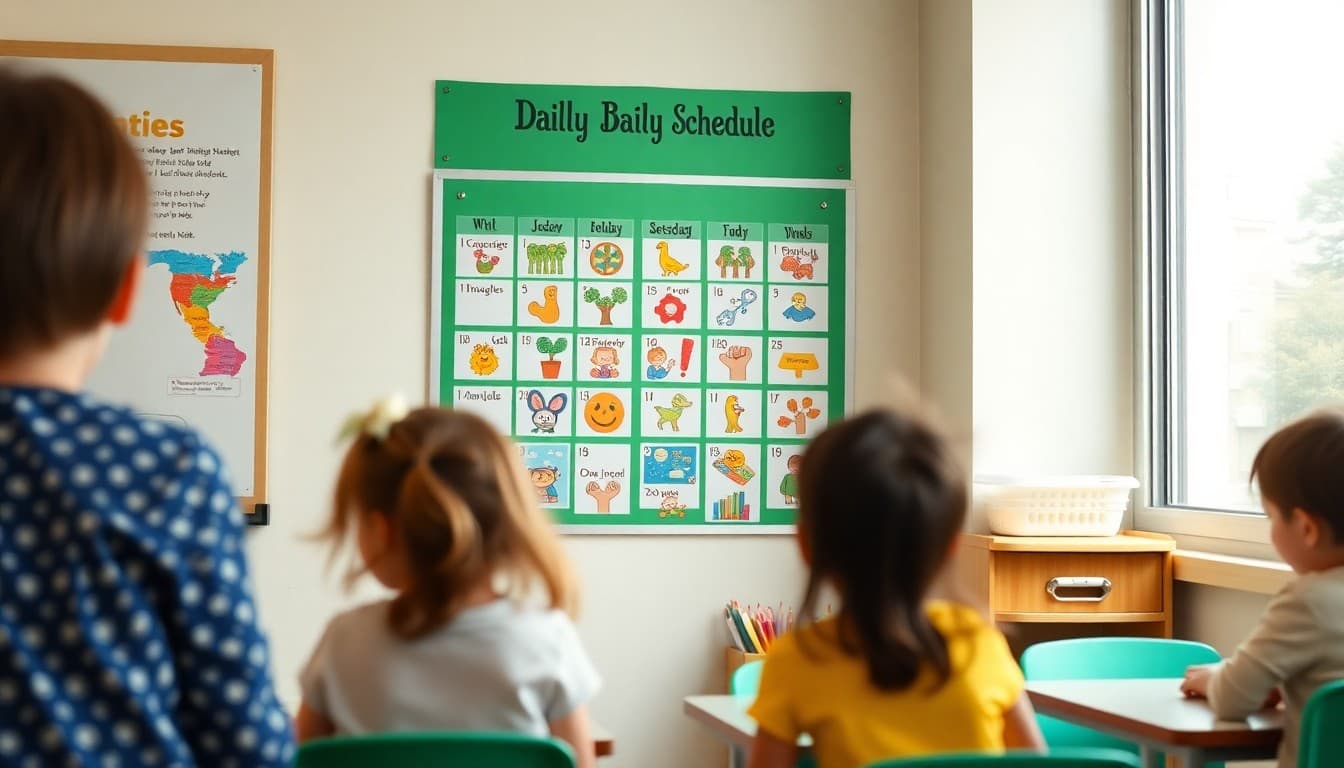
Pre-K Daily Schedule Newsletter: What Your Child Does All Day

One of the most common questions pre-K families have is deceptively simple: what does my child actually do all day? A daily schedule newsletter answers that question in a way that serves both families and children. Parents feel informed, and children benefit when the adults in their lives understand their daily experience well enough to ask about specific parts of it.
Why Schedule Transparency Matters
Families who know the daily schedule can have better conversations with their children at pickup. "How was school?" produces a shrug from most 4-year-olds. "Did you get to build in the block center today?" or "What book did your teacher read at rest time?" produces an actual answer. That difference in conversation quality matters for attachment, for language development, and for the information families need to support their child's experience at school.
Schedule transparency also reduces anxiety for children who struggle with transitions. When a parent knows that outdoor play ends at 10:45, they can say at drop-off, "You are going to have morning meeting, then center time, then outdoor play. After outdoor play is snack, and then I will pick you up." That preview of the day provides the predictability that nervous children need.
A Sample Pre-K Daily Schedule
Times vary by program, but this structure reflects best practices for a half-day pre-K program:
7:45-8:00 AM: Arrival and self-directed center choice while teachers greet families. 8:00-8:20 AM: Morning meeting, including calendar, weather, a sharing circle, and the day's read-aloud plan. 8:20-9:10 AM: Learning center time, during which teachers rotate among centers to support, document, and extend play. 9:10-9:30 AM: Cleanup, handwashing, and transition to outdoor play. 9:30-10:00 AM: Outdoor play. 10:00-10:20 AM: Rest time with quiet music and a second read-aloud. 10:20-10:40 AM: Snack time with conversation. 10:40-11:10 AM: Small group activities focused on specific skill areas. 11:10-11:30 AM: Closing meeting, dismissal preparation, and goodbye song.
What Transitions Look Like in Practice
Transitions between schedule blocks are among the most challenging parts of the pre-K day. The shift from engaged center play to cleanup is a common flashpoint. Our approach involves two signals: a verbal five-minute warning followed by a cleanup song that children have rehearsed. The song both signals the transition and makes it feel familiar and manageable rather than abrupt.
Children who have a transition role (the song leader, the light switcher, the door holder) move through transitions with significantly less resistance than children who are passive in the process. We rotate leadership roles weekly so every child experiences being in charge of a classroom transition. That experience builds both social confidence and prosocial behavior.
The Purpose of Morning Meeting
Morning meeting might look like social time to an observer, but it serves specific developmental and academic functions. Calendar work builds number sequence understanding and introduces concepts of time. Weather observation is daily science inquiry. The sharing circle builds listening skills and oral language. The preview of the day gives children agency by letting them know what is coming and, in some classrooms, where they want to spend center time first.
Children who feel genuinely welcomed into the group at the start of every day show stronger engagement throughout the day than those who arrive and go directly to an activity without a community gathering. The 15-20 minutes of morning meeting is among the highest-return investments in the pre-K schedule.
A Template for Sharing the Daily Schedule in Your Newsletter
"Here is what your child's day looks like from arrival to dismissal. We have designed the schedule so that active times alternate with quieter ones, giving developing nervous systems time to regulate between stimulating experiences. Morning center time is our longest block because sustained, self-directed play is where the deepest learning happens at this age. Rest time with a read-aloud gives children a moment of sensory calm before the afternoon activities. If you notice your child is particularly tired or wired after school, it can help to look at which part of the day they find most energizing or most draining. That information helps us support them better at school too."
How Schedule Connects to Home Routine
The most effective home-school partnerships share a common understanding of rhythm. Schools that publish their schedule and explain the rationale behind each block give families tools to create complementary home routines. An after-school child who has just come from a structured program needs some unstructured time before dinner. A child who had a disrupted day at school might need extra predictability in the evening routine.
When families know that rest time happens at school between 10:00 and 10:20 AM, they understand why their child sometimes comes home tired even though they "just rested." A 4-year-old who has been socially engaged for several hours is genuinely fatigued, even if they were not physically active. The schedule reveals that reality in a way that a simple report of activities cannot.
When the Schedule Changes
Field trips, special visitors, assemblies, and seasonal celebrations all disrupt the regular schedule. We give families advance notice of these changes whenever possible so children can be prepared. A simple heads-up the evening before ("Tomorrow is picture day. The schedule will be different. You will do pictures in the morning and then go back to regular center time") dramatically reduces the behavioral fallout that comes from unexpected changes for a child who depends on routine.
Get one newsletter idea every week.
Free. For teachers. No spam.
Frequently asked questions
Why does a predictable daily schedule matter so much for pre-K children?
Young children regulate their emotions and behavior more effectively when they can anticipate what comes next. The prefrontal cortex, which manages impulse control and planning, is still developing rapidly in children ages 3-5. A predictable schedule reduces the cognitive load of constant uncertainty, freeing that developing brain to focus on learning rather than on managing anxiety about what happens next. Children who know that outdoor play comes after morning meeting, and that lunch comes after outdoor play, arrive at each transition with less resistance.
How long is each part of the pre-K day typically?
A typical pre-K schedule allocates time based on developmental appropriateness rather than academic subject time. Morning circle is usually 15-20 minutes because 4-year-olds cannot maintain group attention longer than that productively. Center time blocks run 45-60 minutes because sustained play produces deeper learning than short rotations. Outdoor play is typically 30-45 minutes. Read-aloud is 10-15 minutes. Total direct instruction time is far less than in elementary school because young children learn primarily through doing, not listening.
What happens when a child is upset at a schedule transition?
Transition resistance is developmentally normal for preschoolers. The most effective approaches give children advance warning (a '5 more minutes' signal before cleanup), give them a role in the transition (the child who rings the cleanup bell), and acknowledge the feeling without changing the plan ('I know you wanted to keep building. We can add to that structure tomorrow. Right now it is time to clean up'). Rushing transitions or forcing them without warning creates more distress than a calm, consistent transition routine.
How can families use knowledge of the school schedule at home?
Predictable routines at home reinforce the self-regulation skills children are building at school. A consistent morning routine (wake, dress, eat, brush teeth, backpack) in the same order each day reduces morning conflict because children know what comes next. An after-school routine that includes a snack, quiet time, and then active play mirrors the school pattern of alternating activity types. Posting a simple visual schedule at home, even with stick-figure drawings, is more effective than verbal reminders for many preschoolers.
How will families know if the daily schedule changes?
We send advance notice of any significant schedule change through our Daystage newsletter. If a school assembly replaces morning center time, or a special visitor changes the afternoon routine, families receive a heads-up the day before so they can prepare their child. Children who are warned about schedule disruptions in advance handle them dramatically better than children who encounter changes without preparation. Even a quick note home the night before makes a meaningful difference.

Adi Ackerman
Author
Adi Ackerman is a former classroom teacher and curriculum writer with 8 years in K-8 schools. She writes about school communication, parent engagement, and what actually works in real classrooms.
More for Pre-K
Ready to send your first newsletter?
3 newsletters free. No credit card. First one ready in under 5 minutes.
Get started free