
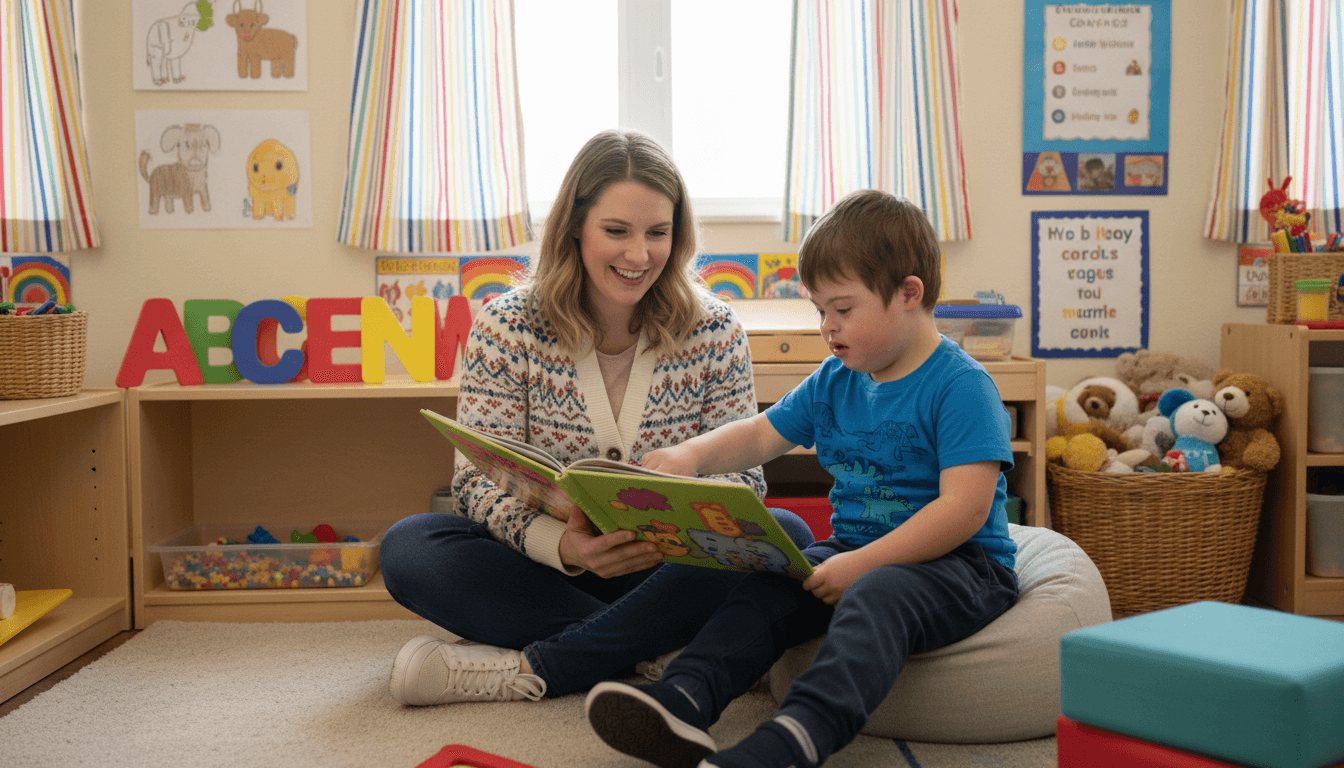
Early Childhood Special Education Newsletter: Communicating with Families of Young Children with Disabilities
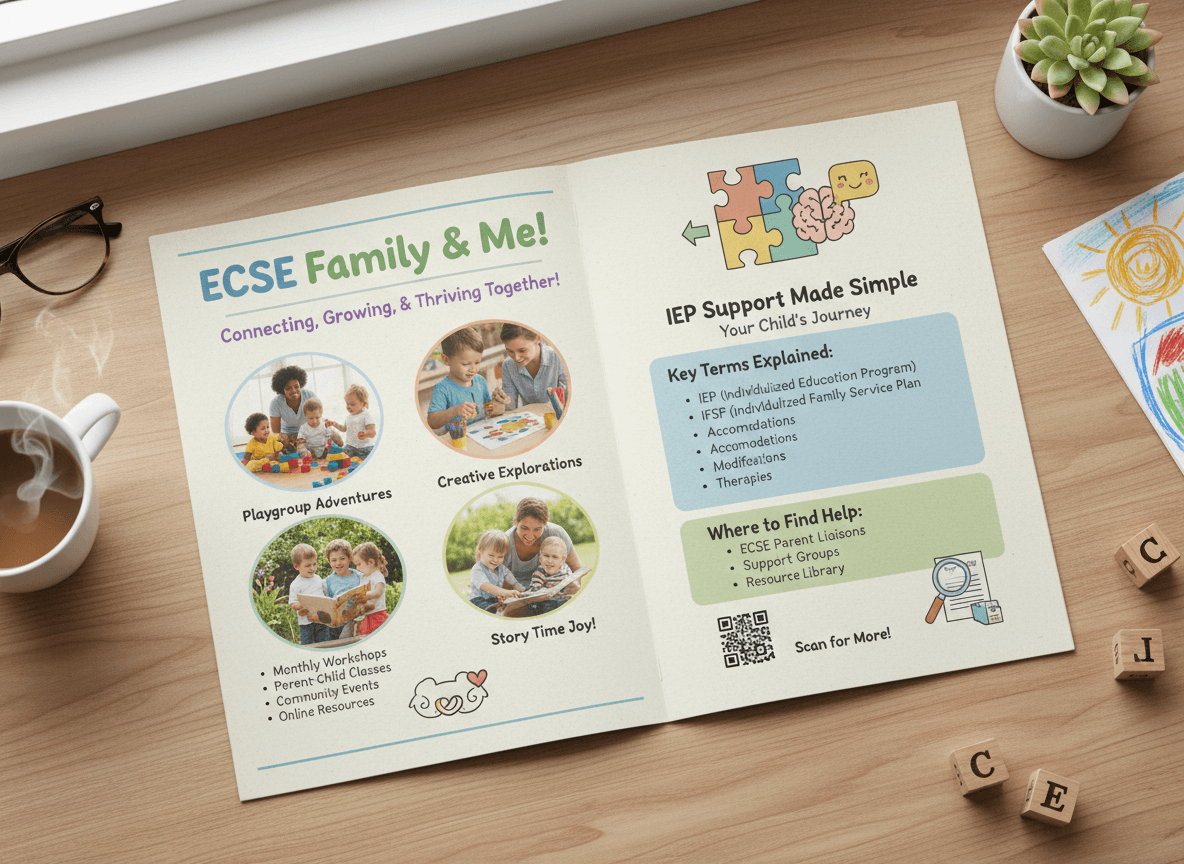
Families of young children with disabilities often feel that the communication they receive from schools is heavy on legal documentation and light on the everyday information that would help them feel connected to their child's day. IEP meeting notices, evaluation reports, and Prior Written Notices are necessary. They are also not what most families mean when they say they want to feel informed.
The newsletter is one of the most underused tools in early childhood special education. Used well, it complements the formal IEP process by giving families a window into the classroom that no legal document provides.
Understanding the IDEA Framework First
Early childhood special education sits under two parts of IDEA. Part C covers children from birth to age three through Early Intervention programs. Part B, Section 619 covers children ages three to five in preschool special education. Most ECSE teachers are working under Part B, either in self-contained classrooms, resource settings, or inclusive pre-k environments.
The transition from Part C to Part B at age three is one of the most stressful periods for families. The system changes substantially: from home-based services to school-based services, from an IFSP to an IEP, from a service coordinator who managed everything to a team the family now navigates largely on their own. Newsletters during this transition period carry extra weight. Families who felt supported through Early Intervention are suddenly in a new system. Clear, warm, consistent communication is one of the things that helps them land.
What Belongs in an ECSE Newsletter
The same class-level principle that applies to general preschool newsletters applies here, with additional privacy obligations. An ECSE newsletter describes what the class or group is working on, what the learning environment looks like, what themes or skills are in focus. It does not reference individual children's disabilities, goals, services, or progress.
This is not just good practice: it is a FERPA and IDEA requirement. Disability information is protected educational record information. A newsletter that goes to all families in a classroom cannot contain information about any individual child's disability status or special education services.
What it can contain: the general therapeutic and developmental approaches you use, the kinds of activities you do, the sensory supports or visual schedules that are part of your classroom environment, and what families can expect during the week ahead. All of this is informative without touching protected information.
What Families of Children with Disabilities Most Want to Know
Research on ECSE family priorities consistently surfaces the same themes. Families want to know that their child is safe and cared for. They want to know that their child has moments of success and enjoyment. They want to understand how their child's services connect to the rest of the school day. And they want to know who to call when they have a question.
A newsletter that addresses these questions at the class level gives every family a foundation of information that reduces anxiety and builds trust. "This week we are using visual schedules during transitions, and we are noticing that children are navigating the daily routine with more confidence than they were in September" communicates progress and approach without naming anyone.
IEP Communication: What the Newsletter Is Not
The newsletter is not a vehicle for IEP progress updates. Progress on IEP goals is reported through the formal progress report process required under IDEA, which must happen at least as often as report cards are issued for general education students.
If a family asks about their child's IEP goals in response to a newsletter, that conversation happens through the formal process: a meeting, a progress report, or a direct call. The newsletter triggers the question. The answer comes through the appropriate channel.
What you can do in the newsletter: briefly explain the connection between your classroom activities and the kinds of goals that appear in IEPs for children this age. "Our small-group activities are designed to build the communication, play, and self-regulation skills that are the focus of most of our students' learning plans" gives families context without disclosing any specific goal.
Tone and Language for ECSE Families
Families of young children with disabilities have often spent the past several years receiving communications that focus on what their child cannot do. Deficit- focused language is embedded in evaluation reports, eligibility determinations, and IEP present levels. It is the dominant frame of special education documentation.
Your newsletter is an opportunity to use a different frame. Write about what you observe children doing. Write about what is possible in your classroom. Write about the specific moments of connection, learning, and growth that happen in your room every week. Families of children who have heard "your child has significant delays in..." for years are not used to hearing "here is what your child did today that was remarkable."
This is not about ignoring challenges. It is about recognizing that the newsletter is not the channel for challenges. Challenges belong in IEP meetings and direct conversations. The newsletter is where you build the relationship that makes those harder conversations more productive.
Privacy When Classrooms Are Mixed
Many early childhood special education programs include children with and without IEPs in the same classroom. Inclusive pre-k and blended classrooms are common, and they present a specific communication challenge: the newsletter goes to all families, not just families of children with disabilities.
In a mixed classroom, the newsletter should read the same way it would in any general education pre-k setting. The presence of special education services, paraprofessionals, or therapeutic supports is part of the classroom environment that can be described neutrally: "Our classroom includes a full team of educators who work with children individually and in small groups throughout the day." You do not need to explain which children receive services or why.
Building the Newsletter into the Broader Family Support System
ECSE programs often have more touchpoints with families than general education classrooms: IEP meetings, annual reviews, parent training opportunities, home visits in some programs. The newsletter does not need to carry all family communication. It carries the warm, consistent, week-to-week connection that formal processes cannot provide.
Think of the newsletter as the layer of communication that reminds families, between IEP meetings, that their child is in a good place. That their teacher knows their child. That the classroom is working. That reminder, sent consistently every month, does something no legal document can do: it builds trust.
Get one newsletter idea every week.
Free. For teachers. No spam.
Frequently asked questions
When should ECSE teachers send newsletters to families of children with disabilities?
Monthly newsletters work well for most ECSE settings, with additional direct communication during high-stakes periods like the Part C to Part B transition at age three. Families navigating a new system benefit from more frequent contact in the first month, then settling into a predictable monthly rhythm once the family is oriented.
What should an early childhood special education newsletter include?
Include class-level activities and themes, a brief description of what children worked on together, upcoming dates, and a family engagement idea they can try at home. Individual progress toward IEP goals belongs in separate private documentation, not the group newsletter.
How should ECSE teachers handle privacy in newsletters?
Write exclusively about the class as a whole, never naming individual children or describing specific behaviors that could identify a child. Photos require separate consent forms, and in ECSE settings it is safest to use photos only with families who have given explicit written permission for each publication channel.
What are common mistakes in ECSE parent communication?
The most common mistake is relying entirely on formal IEP documentation to meet family communication needs, which leaves parents feeling informed on paper but disconnected from their child's actual day. A second mistake is writing newsletters at a reading level that excludes families with limited English literacy, which is a significant portion of many ECSE enrollments.
Are there tools that make ECSE newsletter creation easier?
Daystage is built for early childhood teachers, including those in special education settings, and is designed to make consistent parent communication manageable alongside the documentation demands of IEP work.

Adi Ackerman
Author
Adi Ackerman is a former classroom teacher and curriculum writer with 8 years in K-8 schools. She writes about school communication, parent engagement, and what actually works in real classrooms.
More for Pre-K
Ready to send your first newsletter?
3 newsletters free. No credit card. First one ready in under 5 minutes.
Get started free