

Pre-K Parent Newsletter: Math Support At Home Tips
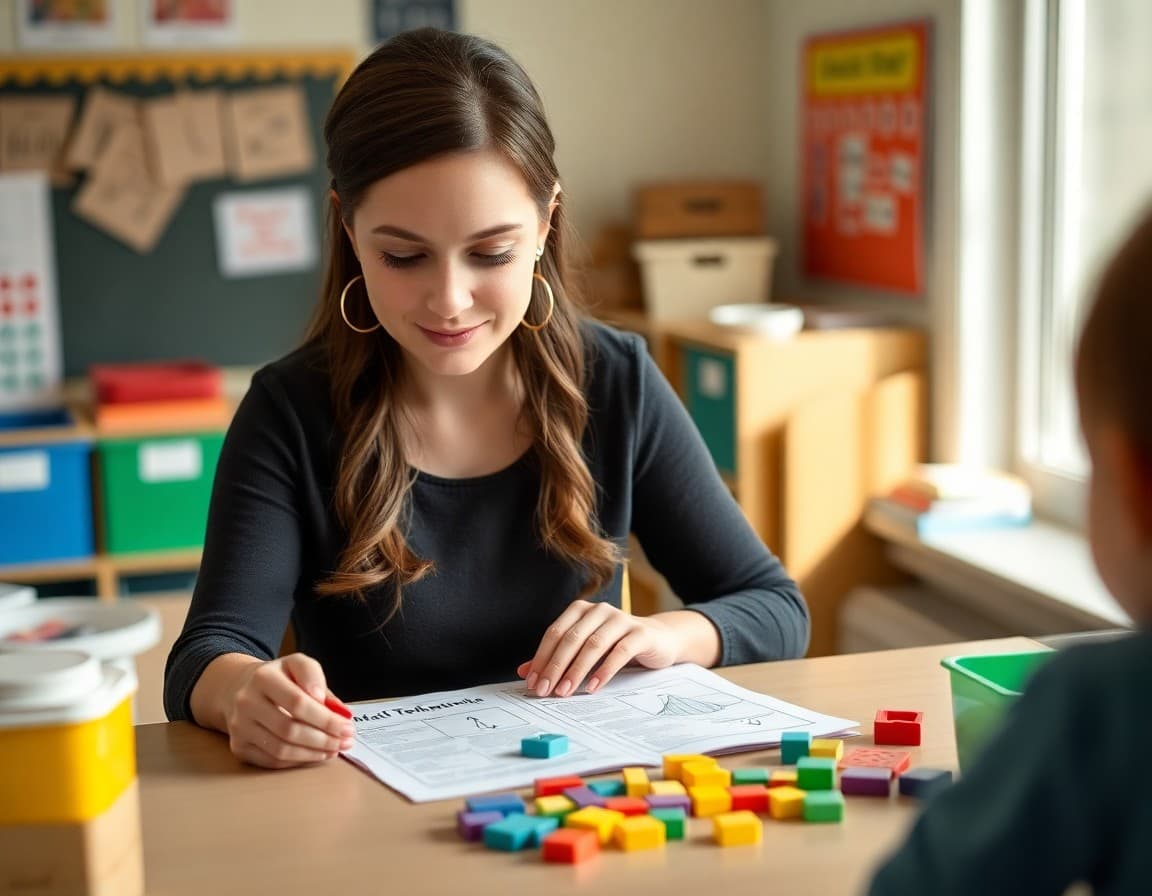
Pre-K math is everywhere in a child's day, but most parents don't recognize it when they see it. Sorting toys, counting steps, comparing sizes, setting the table: all of these are math. Your newsletter can shift the way families see their own home environment and turn ordinary moments into early numeracy practice, without any worksheets.
Why Everyday Math Beats Flashcards
Research on early childhood math learning consistently shows that children build stronger number sense through concrete, meaningful experiences than through repetitive drills. When a child counts the crackers on their plate and eats them one by one, they practice one-to-one correspondence in a context that actually means something to them. Your newsletter should lead with this idea. Families who understand the why behind informal math talk are far more likely to do it consistently.
Counting Throughout the Day
Give parents a handful of counting moments that fit naturally into their existing routine. Counting steps to the car, the number of books going into the backpack, or the bites of breakfast left on the plate are all low-effort and high-value. The important piece is that a caring adult counts alongside the child and makes it feel like a game. Speed and accuracy are secondary at this age. Participation and enthusiasm come first.
Shapes in the Real World
Shape recognition is one of the most accessible Pre-K math skills to build at home. Encourage parents to play “find the shape” on walks, at the grocery store, or during bath time. A stop sign is an octagon. A cracker might be a square. A clock face is a circle. When children connect geometric names to real objects, they retain the vocabulary far faster than from a worksheet where every shape is already labeled.
A Sample Newsletter Excerpt to Copy
Here's a short section you can paste into your own class update:
“This week we practiced putting objects in order from smallest to biggest. Try this at home with shoes! Line up everyone's shoes from smallest to largest and ask your child to find where their shoe belongs. You can also try it with cups, stuffed animals, or spoons. When they're done, ask: ‘Which is biggest? Which is smallest?’ That one question is doing a lot of math work.”
Sorting and Categorizing
Sorting is one of the foundational skills that builds toward data and logic in later grades, but in Pre-K it looks like putting all the red blocks in one pile and the blue blocks in another. Help parents see sorting opportunities everywhere: matching socks, grouping toys by type before cleanup, or separating fruit from vegetables in the grocery bag. Each sorting activity builds the child's ability to identify attributes and group by rules, skills that transfer directly to math and science reasoning later on.
Talking About More and Less
Comparison language, more, less, same, bigger, smaller, is a major strand of Pre-K math. Parents build this naturally when they narrate comparisons out loud: “You have more grapes than I do. Should we make them the same?” Or during snack: “Which cup has more juice?” These conversations sound simple, but they are building the conceptual foundation for addition, subtraction, and fractions years before a child sees a number sentence.
Board Games and Card Games
Simple games like Candy Land, Uno (with the number cards only), and Chutes and Ladders are legitimate early math tools. They build number recognition, turn-taking, and simple counting. Suggest two or three games in your newsletter and note that most of them can be borrowed from the school lending library or found at a dollar store. For families who want to go further, subitizing card decks with dot patterns are a great addition to game night.
Keeping Families in the Loop With Daystage
The most effective Pre-K math newsletters arrive regularly, stay short, and give families one concrete action per send. Daystage lets you build that kind of update quickly: a photo of what the class explored this week, a two-paragraph math tip, and a take-home activity. Families open it on their phones the same evening, and the math talk starts at the dinner table. That connection between school and home is what makes early numeracy development stick.
Get one newsletter idea every week.
Free. For teachers. No spam.
Frequently asked questions
What early math concepts should Pre-K families work on at home?
The big ones at this age are counting with one-to-one correspondence, recognizing numbers 1 through 10, comparing quantities (more and less), sorting by attributes, and identifying simple shapes. These concepts don't require workbooks. They show up naturally during cooking, getting dressed, setting the table, or playing with blocks. Your newsletter's job is to help parents see and name those moments.
How can parents support math without making it feel like homework?
By framing math as noticing and talking, not drilling. When a child sets the table, ask “How many plates do we need?” When sorting laundry, say “Let's put all the socks together.” Counting stairs, comparing fruit sizes at the grocery store, and filling containers in the bath are all math. The key is naming what the child is doing so they build vocabulary alongside the concept.
Is it too early to use workbooks or apps for Pre-K math?
For most 3- and 4-year-olds, hands-on and playful experiences build deeper understanding than screen-based drilling. Apps can supplement, but the tactile experience of counting actual objects, sorting real items, and building with blocks develops spatial reasoning in ways that screen taps cannot. If parents want an app, look for open-ended ones that let children explore rather than fill-in-the-blank formats.
What if a child shows anxiety about math activities at home?
Back off the activity and return to pure play. Math anxiety in young children often starts when adults inadvertently communicate that there is a right answer they need to reach quickly. Keep the tone curious: “I wonder how many we have?” is less stressful than “Count them. How many is it?” Let the child lead and accept approximations as valid starting points.
What tool do teachers use to send these math tips to families?
Daystage makes it easy to send a polished weekly or monthly Pre-K newsletter that includes a math tip, a photo of the week's activity, and a take-home idea. Parents receive it on their phone and can see exactly what their child worked on. You can build the whole thing in a few minutes and schedule it to send at the right time, no printing required.

Adi Ackerman
Author
Adi Ackerman is a former classroom teacher and curriculum writer with 8 years in K-8 schools. She writes about school communication, parent engagement, and what actually works in real classrooms.
More for Pre-K
Ready to send your first newsletter?
3 newsletters free. No credit card. First one ready in under 5 minutes.
Get started free