
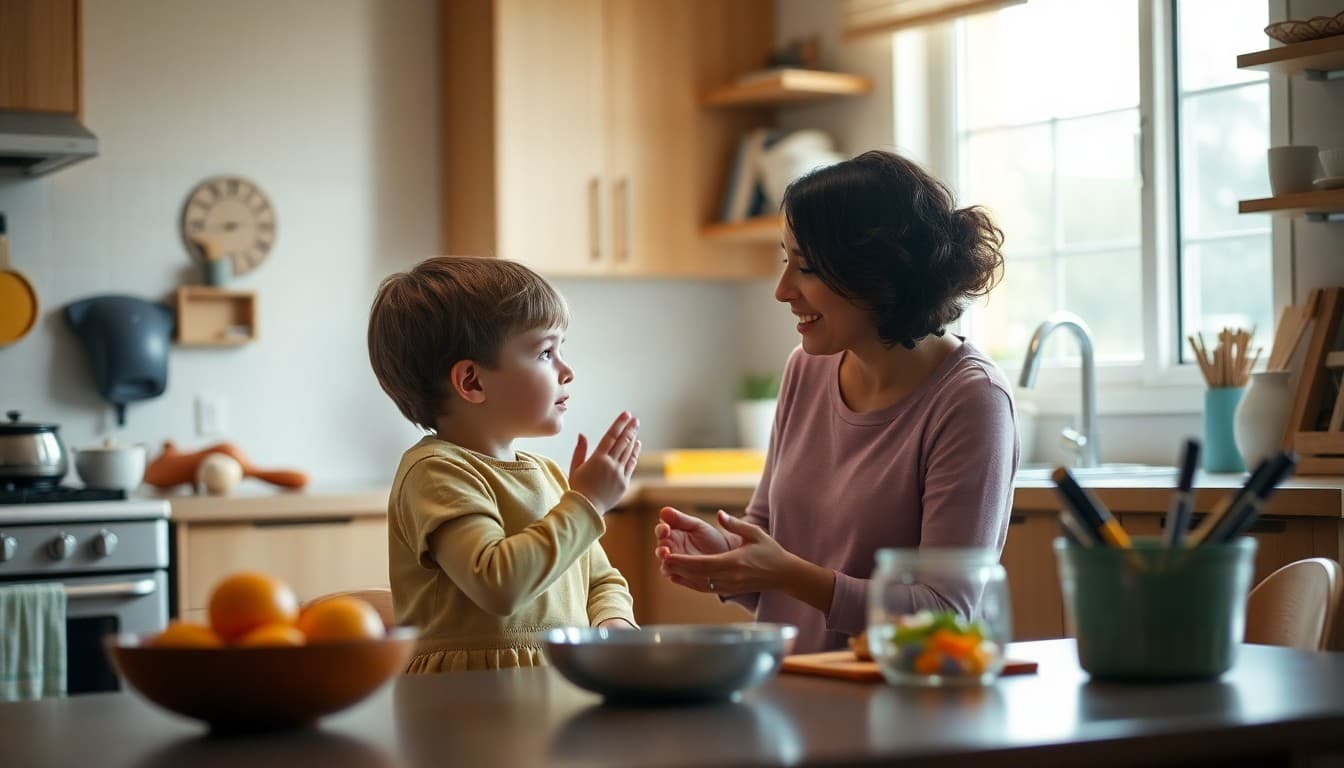
Social Emotional Learning Newsletter for Parents: Supporting Kids
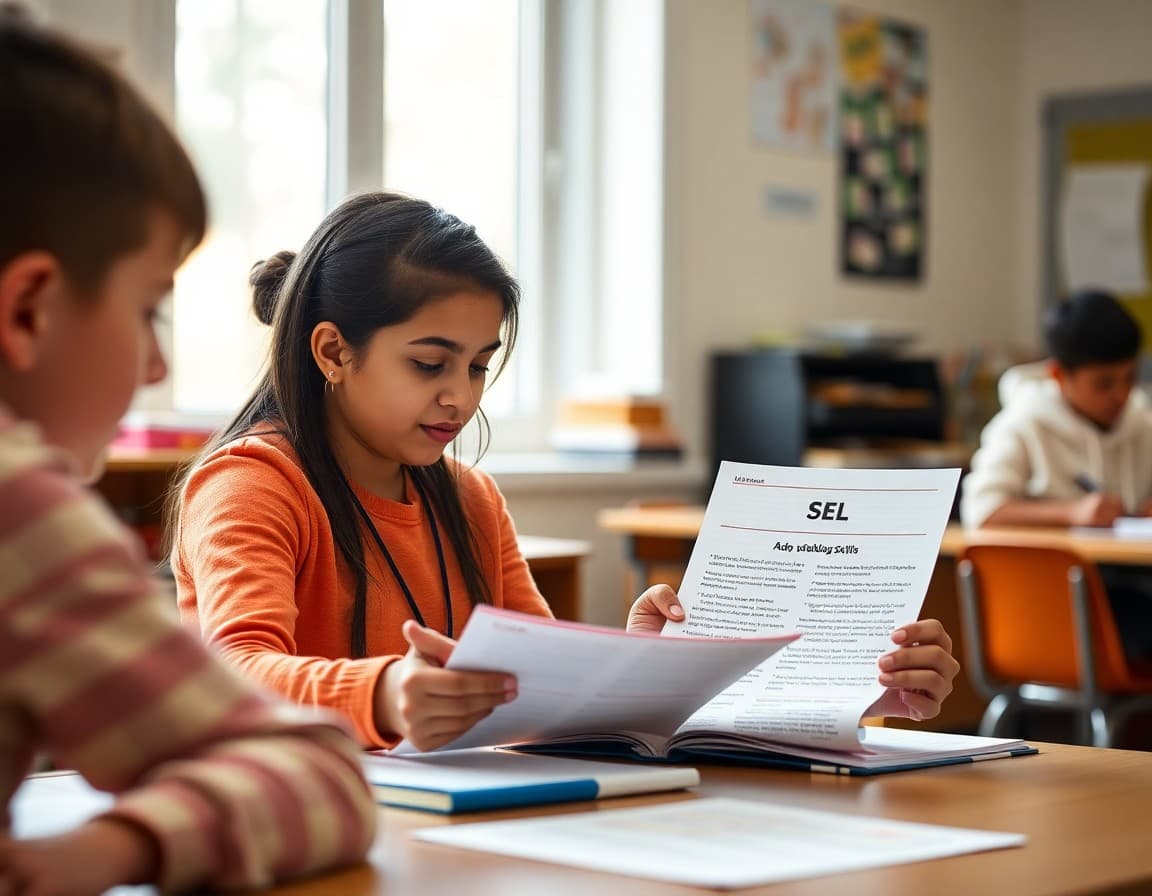
Social emotional learning is not a school program separate from academic work. It is the foundation that academic learning depends on. Children who can manage their emotions, work through conflict, and persist through difficulty perform better academically, build stronger relationships, and are better equipped for adult life than children who cannot. A parent SEL newsletter connects families to this work and gives them the tools to reinforce it at home.
What SEL Actually Looks Like in Practice
The CASEL framework, which most schools use, organizes SEL into five competencies: self-awareness (understanding your own emotions, strengths, and values), self-management (regulating emotions and behaviors), social awareness (understanding others' perspectives and showing empathy), relationship skills (communicating, resolving conflict, working collaboratively), and responsible decision-making (evaluating consequences and making ethical choices). These are not abstract categories. They show up in specific behaviors that parents observe every day: how a child handles losing a game, how they respond when a friend is upset, how they approach a difficult homework problem, and how they manage their reaction when things do not go their way.
Your newsletter can make this tangible by connecting the vocabulary to situations parents recognize. That connection is what moves SEL from a school acronym to a family conversation.
Self-Regulation: The Skill With the Widest Impact
Of the five CASEL competencies, self-regulation has the strongest correlation with academic outcomes. A student who cannot manage frustration during a difficult task gives up. A student who cannot regulate anxiety performs worse on assessments. A student who cannot control impulses in social situations struggles with peer relationships that affect their entire school experience. Parents who understand this are motivated to work on self-regulation at home, not as a character lesson but as an academic strategy.
Practical guidance for your newsletter: teach children that emotions are signals, not commands. Angry does not mean act. The pause between the feeling and the action is where self-regulation lives. Children can practice this with low-stakes frustrations at home: a hard video game level, a puzzle that will not go together, waiting for something they want. Allowing these frustrations to exist and then coaching through them, rather than removing them, builds the muscle.
A Template Section Connecting School SEL to Home
Here is a section you can adapt for your newsletter:
"SEL This Week: We worked on perspective-taking. Students read a short scenario and were asked to describe how three different characters might feel about the same event. The goal was to recognize that the same situation looks very different depending on where you are standing.
At home this week: After dinner, pick a situation from the day, something low-stakes, and ask your family to answer 'how do you think X felt about that?' You can use a scenario from TV, a book, or real life. There are no wrong answers. The practice is in the habit of asking."
That format, school context plus one home extension activity, takes about 60 words per issue and creates a direct bridge between classroom learning and family life.
Empathy at Home: What Parents Can Do
Empathy is not taught primarily through lectures. It is built through repeated experiences of feeling understood and of being asked to understand others. Parents support empathy development most effectively by: genuinely listening to their child's emotional experiences without minimizing, discussing the feelings of characters in books and movies, asking "how do you think that person felt?" in real situations, and modeling empathic responses in their own daily interactions. A parent who says "I can see why that made you upset" is teaching empathy. A parent who says "you shouldn't feel that way" is undermining it.
Your newsletter can normalize this framing for parents who received different messages about emotions in their own upbringing. Many adults were raised in households where emotional expression was discouraged, and they are now trying to parent differently without a clear model. A newsletter that provides specific language and specific scenarios is more useful than general encouragement to "be empathetic."
Conflict Resolution Skills Families Can Practice
Most children do not have natural conflict resolution skills. They need to be taught. The most effective home practice for this is structured problem-solving during actual conflicts. When siblings fight, rather than adjudicating who was right, walk both children through a four-step process: What happened (each person's version without interruption), How did each person feel, What does each person need now, and What could work for both of them. This takes longer than a parental decision, but children who practice this process internalize it and begin applying it independently, which is the actual goal.
Include a simplified version of this framework in your newsletter with the explicit note that it works for children as young as 5 and is the same framework their teacher uses in class. Shared vocabulary between home and school is one of the most effective accelerators of skill development.
Resilience: The Long Game
Resilience is built through supported adversity, not protected childhood. Children who are shielded from all difficulty do not develop the coping resources to handle difficulty when it inevitably arrives. Parents can build resilience by allowing children to experience failure without rescue, acknowledging struggle without removing it, and framing setbacks as information rather than indictments. The specific language matters: "You didn't get it this time. What did you learn?" is different from "It's okay, you'll get it next time." The first invites analysis. The second offers only comfort.
A newsletter section on resilience is particularly valuable at high-stress times in the school year: before standardized testing season, after a major school disappointment like a lost competition, or during the transition stress of beginning a new school year. Meeting families at these moments with specific, actionable guidance is more effective than sending general resilience content when nothing particular is happening.
Get one newsletter idea every week.
Free. For teachers. No spam.
Frequently asked questions
What is social emotional learning and why do parents need to know about it?
Social emotional learning (SEL) covers five core skill areas: self-awareness, self-management, social awareness, relationship skills, and responsible decision-making. Schools have been integrating SEL into the curriculum for two decades because the research showing its impact on academic outcomes and long-term life success is strong. Parents who understand what SEL is and how to reinforce it at home significantly amplify the school's work. Children who receive consistent SEL support at both home and school show stronger outcomes than those who get it only in school.
How can parents support self-regulation at home?
Self-regulation is the ability to manage emotions and impulses, especially in frustrating or stressful situations. The most effective home practices build this skill gradually and with low stakes. Let children experience minor frustrations without immediate parental rescue. When a child is upset, name the emotion without minimizing it and help them identify what regulation strategy might help: a few deep breaths, a short walk, or a five-minute quiet break. Model your own self-regulation by narrating your own process occasionally: 'I am feeling frustrated about this. I'm going to take a moment before I respond.' Children learn regulation strategies most effectively by watching adults use them.
At what age do children develop strong empathy?
Empathy develops gradually from infancy, with significant capacity emerging by ages 4 to 6. By age 8 to 10, most children can understand that others have internal experiences different from their own, which is called 'theory of mind.' The depth and consistency of empathy continues developing through adolescence. The most effective empathy builders at home are: perspective-taking conversations after books or movies, modeling empathic responses to others, validating the child's own emotional experiences (children who feel understood are more likely to extend that to others), and discussing how other people might feel in situations the child has not personally experienced.
How do I reinforce SEL skills at home when I do not know what is being taught at school?
Ask. Most schools are happy to share what SEL curriculum they use and what vocabulary and concepts are being introduced. A newsletter that explains the SEL framework being used in the classroom and provides a few specific home extension activities removes the guesswork. If the school teaches students to use a feelings check-in at the start of class, families can use the same routine at dinner. Shared vocabulary across home and school is one of the most powerful ways to reinforce SEL skills.
Can a Daystage newsletter help teachers communicate SEL content to families?
Yes, and it is particularly well-suited to this type of communication because SEL content benefits from regularity rather than occasional large doses. A brief 'SEL this week' section in every Daystage newsletter, covering what skill the class focused on and one way families can reinforce it at home, is far more effective than a single comprehensive SEL letter per semester. Families who receive weekly SEL home extension ideas report stronger connections between their conversations at home and what they observe in their child's behavior.

Adi Ackerman
Author
Adi Ackerman is a former classroom teacher and curriculum writer with 8 years in K-8 schools. She writes about school communication, parent engagement, and what actually works in real classrooms.
More for Parent Engagement
Ready to send your first newsletter?
3 newsletters free. No credit card. First one ready in under 5 minutes.
Get started free