

Text vs. Email for School Newsletters: How to Choose the Right Channel for Each Message
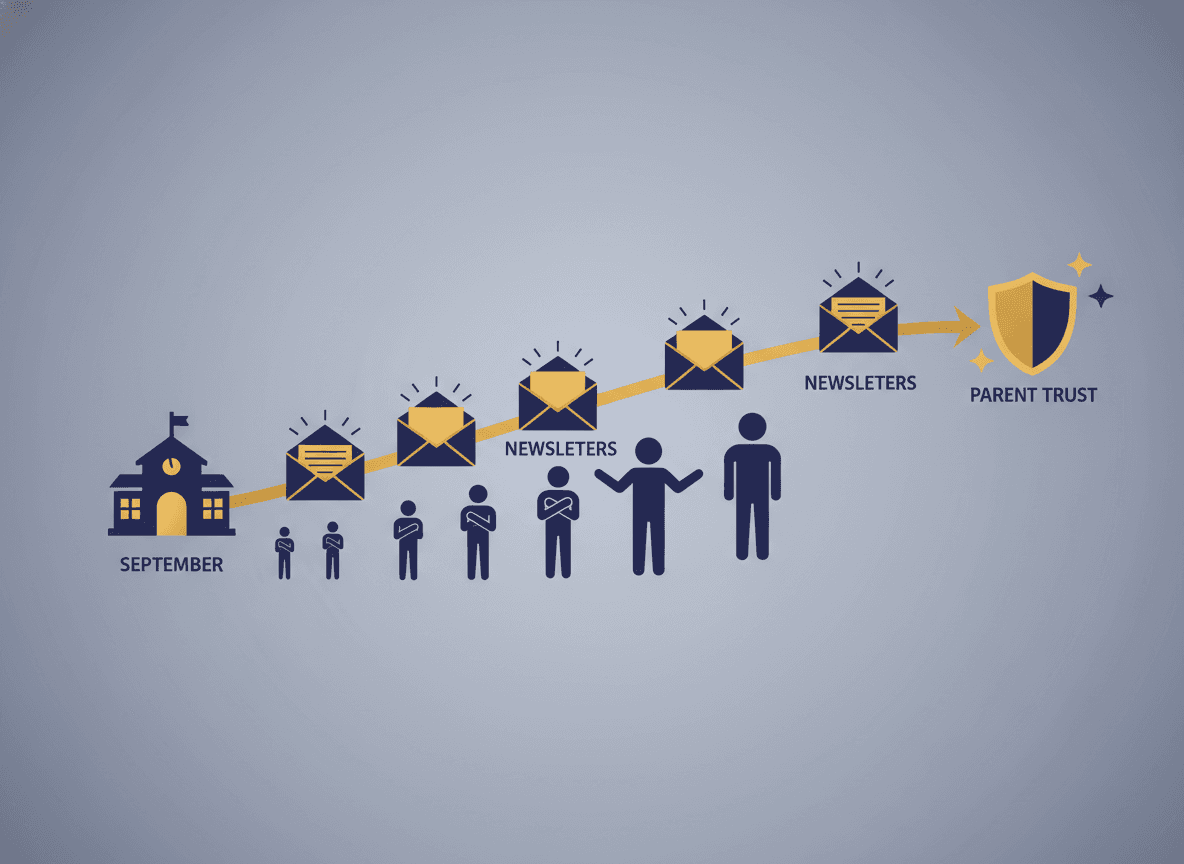
The channel question matters because the same message sent through the wrong channel fails. A school closure notice buried in a weekly newsletter email that parents open on Wednesday is a school closure notice families saw too late. A detailed curriculum explanation crammed into a text message is a curriculum explanation nobody read. Channel matching is the skill.
The Core Framework: Urgency and Depth
Text messages have near-100 percent open rates. Email newsletters have rich formatting, length capacity, and reference value. The decision between them should be driven by two questions: how urgent is this, and how much context does it require?
High urgency, low context: text. "School is closed tomorrow due to weather. More information coming by email." That text message does its job in nine words. It does not need to be a newsletter.
Low urgency, high context: email. "Here is what we covered in the ecosystem unit this month, how the upcoming test works, and how families can help at home." That belongs in a newsletter.
High-Urgency Messages That Belong in Text
School closure or delayed opening. Emergency lockdown notifications. Same-day event cancellations. Last-minute schedule changes. A reminder about a permission slip due today. A request for a parent to call the school urgently.
All of these are short, require immediate action or awareness, and benefit from the near-instant read rate of SMS. Sending these by email alone means a significant percentage of families will not see them in time.
Content That Belongs in Email Newsletters
Weekly classroom updates. Curriculum explanations. Upcoming event details. Family action items that are not time-sensitive. School community news. Policy explanations. Anything with links, images, or formatting. Anything that requires more than two sentences to explain.
Email newsletters are read when families have time, referenced when families need information again, and forwarded when families want to share something. Text messages are read immediately and then buried in a message thread. Design your content accordingly.
The Combination That Works Best
Many schools get the best results from a hybrid approach: weekly email newsletter for the full update, with a text notification that the newsletter is available. "This week's classroom newsletter is ready: [link]." That approach captures the high open rate of SMS and delivers it into the richer content experience of the email newsletter.
Families who prefer text as their primary channel still get the nudge they need to read the full newsletter. Families who open email directly see it there. No one misses the content because of channel preference.
Over-Texting Destroys the Channel
Every school that has started using SMS communication has eventually faced the temptation to text more than the urgent situations justify. Parents who receive eight texts a week from school, most of them non-urgent, stop treating school texts as high-priority and start ignoring them. The channel's value depends on scarcity. Use it only when the message genuinely warrants immediate attention.
Get one newsletter idea every week.
Free. For teachers. No spam.
Frequently asked questions
When should schools use SMS text instead of email for parent communication?
Use SMS for time-sensitive, high-priority, brief communications: school closures, emergency notifications, same-day schedule changes, event reminders sent the day before, and urgent calls to action. Text messages have near-100 percent open rates and are typically read within minutes. Email is for richer, longer content that families read at their convenience. The rule is: urgency goes to text, depth goes to email.
Can a school newsletter be sent as a text message?
A newsletter's purpose, to deliver a range of updates and content in a readable format, does not fit in a text message. What can work is a text alert that tells families a newsletter is available: 'This week's classroom newsletter is ready. Read it here: [link].' That type of notification combines the open rate advantage of SMS with the content richness of an email newsletter.
Do parents prefer text or email for school communication?
Research and school surveys consistently show that parents prefer text for urgent, brief communications and email for detailed content they want to reference later. The preference is not either-or. It is channel-matched to message type. A parent who says 'just text me' usually means they want urgent updates by text, not that they want their full newsletter as a string of text messages.
What are the consent requirements for school SMS communications?
TCPA regulations in the US require written consent before sending automated text messages to parents. Schools typically collect this consent during enrollment. It is important to make opt-out easy and to honor opt-out requests immediately. Many school SMS platforms handle compliance automatically, but schools should confirm with their district's legal team about specific consent requirements in their state.
How does Daystage integrate with SMS for school communication?
Daystage newsletters can generate a direct link that can be shared via any channel, including SMS. Schools that use a separate SMS notification system can send the Daystage newsletter link directly to parents by text so they receive the notification by text and the full newsletter by clicking through.

Adi Ackerman
Author
Adi Ackerman is a former classroom teacher and curriculum writer with 8 years in K-8 schools. She writes about school communication, parent engagement, and what actually works in real classrooms.
More for Parent Engagement
Ready to send your first newsletter?
3 newsletters free. No credit card. First one ready in under 5 minutes.
Get started free