
7 Parent Communication Mistakes Teachers Make (And How to Fix Them)
Teachers who struggle with parent communication usually are not making dramatic mistakes. They are making small ones that compound over the school year: a newsletter that is consistently too long, a tone that feels institutional, an inconsistent schedule. Each one costs a little trust. Together, they cost a lot.
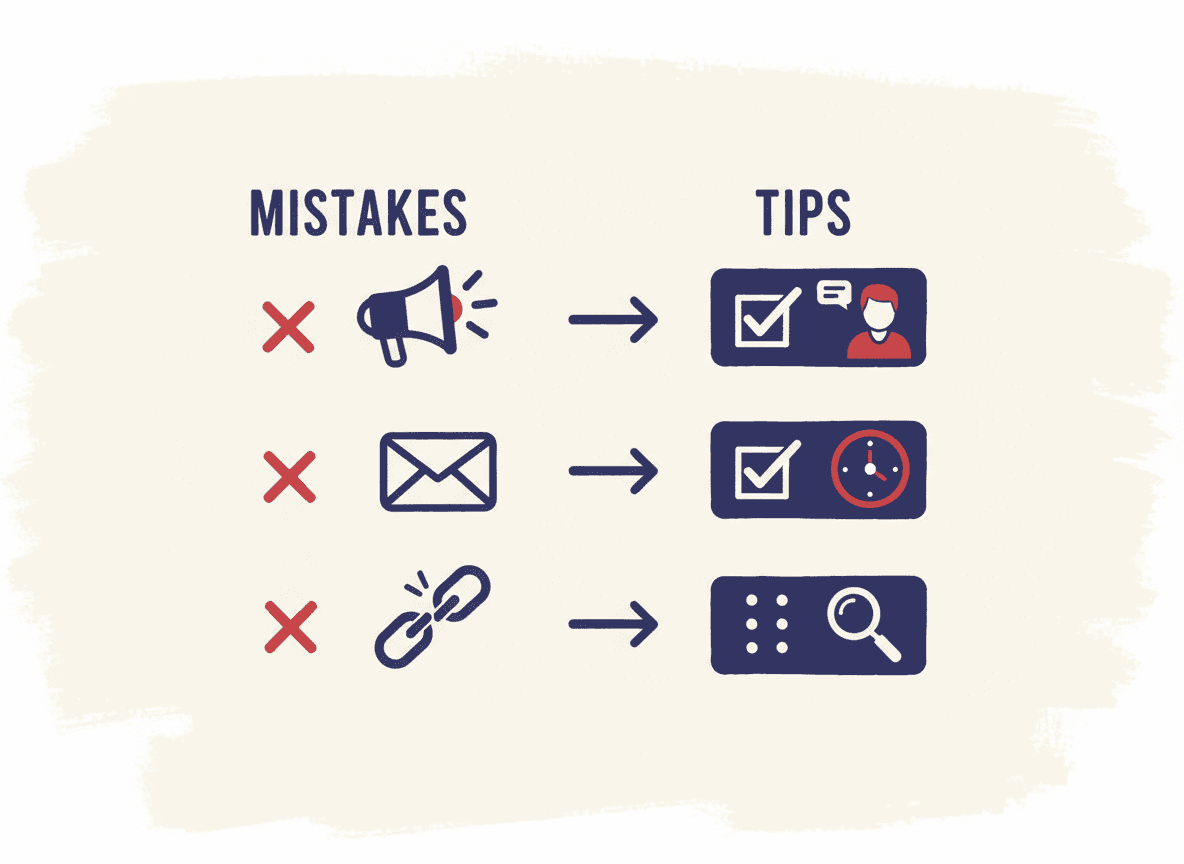
Here are the seven most common parent communication mistakes teachers make, with specific fixes for each.
Mistake 1: Sending too infrequently, then compensating with volume
The pattern goes like this: a teacher does not send a newsletter for three weeks, then sends one with three weeks of updates. It is long, covers too much, and overwhelms parents. They skim it, miss the important items, and file it away. Then the teacher gets frustrated that parents "never read the newsletter."
Fix: Commit to weekly newsletters, but keep each one short. 400 words of current information is more useful than 1,200 words of catch-up. If a week was genuinely light, send a short newsletter anyway. Consistency beats comprehensiveness.
Mistake 2: Using jargon parents did not sign up to understand
"We are focusing on phonemic awareness this week as students continue their phonics progression" means something very specific to educators. To most parents, it means nothing.
Fix: Translate every education term you use. "We are practicing breaking words into their individual sounds, which helps children read new words they have not seen before" says the same thing in language parents can use with their child at home.
Mistake 3: Burying action items
The permission slip due Friday is in the fourth paragraph of the third section. Half the parents miss it. The other half see it but do not feel the urgency because everything around it has the same visual weight.
Fix: Create a dedicated "Action needed this week" section at or near the top of every newsletter. Put everything that requires parent action in one clearly labeled place. Bold the deadline. Make it impossible to miss.
Mistake 4: Only reaching out when there is a problem
Some teachers send frequent newsletters but almost never contact individual parents proactively unless something is wrong. Parents begin to associate the teacher's name in their inbox with bad news, and dread replaces engagement.
Fix: Build positive individual outreach into your weekly rhythm. Send one or two brief positive notes per week to individual parents about something good their child did. These do not need to be long. "Wanted to let you know Marcus led a discussion in class today that impressed me" takes 30 seconds to write and leaves a lasting impression.
Mistake 5: Writing at parents instead of with them
Newsletters that list what happened and what is coming up without ever inviting parent input or response train parents to be passive recipients. Over time, they stop reading because there is nothing to respond to and nothing that requires their involvement.
Fix: End each newsletter with an invitation. "Reply to let me know if you have questions about the new reading log." "I would love to hear what your child says about our geography unit at home." These small openings create two-way communication habits that pay off all year.
Mistake 6: Inconsistent formatting from week to week
A newsletter that looks different every week requires parents to re-orient every time they open it. They cannot find the action items because the action items are in a different spot than last week.
Fix: Lock your structure and stick to it. Same sections in the same order every week. Same font, same colors, same header. The content changes. The format does not. This is one of the strongest arguments for using a dedicated newsletter tool like Daystage instead of a new Google Doc every week.
Mistake 7: Not tracking whether parents are actually reading
Many teachers have no idea whether their newsletters are being read. They assume some parents read them and some do not, but they have no data to make decisions from.
Fix: Use a newsletter tool that shows open rates and click rates. Track those numbers over the year. If your open rate drops after you start sending longer newsletters, that is signal. If click rates spike when you include specific resources, that is also signal. Data turns guessing into deliberate improvement.
One more thing: start with what you can sustain
The worst communication system is an ambitious one that collapses in November. A teacher who sends a weekly newsletter in September and October and then nothing for six weeks has created a consistency problem that is hard to recover from.
Start with a system you can maintain from August to June. If that means biweekly newsletters for now, so be it. A reliable biweekly newsletter outperforms an inconsistent weekly one.
Get one newsletter idea every week.
Free. For teachers. No spam.
Frequently asked questions
When should teachers send individual parent communications beyond the newsletter?
Contact individual parents proactively 2 to 3 times per week with positive notes about specific things their child did well. Parents should not first learn about a pattern of academic struggle at a conference. Reach out at least two weeks before that conversation needs to happen.
What tone and language most affects whether parents engage with school newsletters?
Plain, direct language beats institutional phrasing every time. Translating every education term into language parents can use at home turns a newsletter from a school document into something actually useful. 'We practiced breaking words into individual sounds to help children read new words' says the same thing as 'phonemic awareness' and is understood by far more parents.
How should teachers structure newsletters so action items do not get missed?
Create a dedicated 'Action needed this week' section at or near the top of every newsletter. Bold the deadline and make it visually distinct from the rest of the content. A permission slip buried in the fourth paragraph of the third section will be missed by most parents, not because they do not care but because the structure made it easy to miss.
What communication mistakes most damage teacher-parent relationships over the school year?
Only contacting parents when something is wrong, being inconsistent with send schedules, and never tracking whether parents are actually reading. Parents who associate a teacher's name in their inbox with bad news disengage over time. A pattern of inconsistent communication signals that something is off even when nothing is.
What tool helps teachers avoid the most common parent communication mistakes?
Daystage is built to address the structural mistakes directly. It provides a consistent template so formatting does not shift week to week, built-in scheduling so newsletters go out reliably, and open rate tracking so teachers know whether their communication is landing.

Adi Ackerman
Author
Adi Ackerman is a former classroom teacher and curriculum writer with 8 years in K-8 schools. She writes about school communication, parent engagement, and what actually works in real classrooms.
More for Parent Engagement
School Newsletter Design Tips: How to Format Your Newsletter for Maximum Readability
Parent Engagement · 6 min read
School Newsletter Welcome Series: How to Onboard New Families the Right Way
Parent Engagement · 5 min read
QR Codes in School Newsletters: A Practical How-To for Teachers
Parent Engagement · 5 min read
Ready to send your first newsletter?
3 newsletters free. No credit card. First one ready in under 5 minutes.
Get started free