
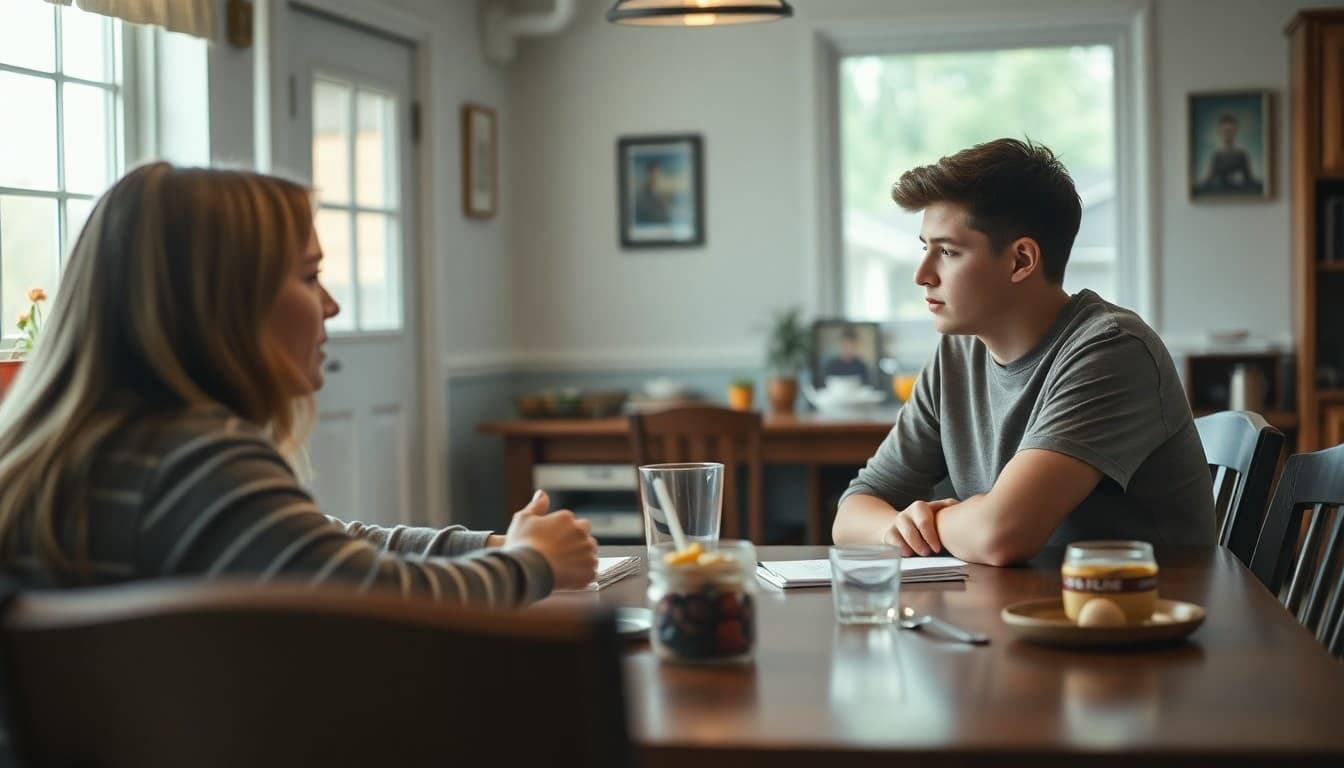
Drug Prevention Newsletter for Parents: Start the Conversation

The most effective drug prevention for adolescents does not happen in school programs or law enforcement presentations. It happens at home, in the relationship between parents and their children, before substances are encountered. A newsletter that gives families the information and language to build that prevention foundation is a direct investment in student health outcomes.
Why the Parent Relationship Is the Strongest Prevention Tool
Decades of prevention research point to the same conclusion: the quality of the parent-child relationship is the single strongest predictor of adolescent substance use outcomes, stronger than school programs, peer influence alone, or neighborhood factors. Children who feel genuinely close to their parents, who know their parents are interested in their lives, and who trust they can come to their parents with difficult information are significantly less likely to use substances and more likely to disclose a problem early if they do.
This finding should be motivating for families because it is actionable. Parents do not need specialized training or clinical expertise to be protective. They need to show up consistently, be interested without being intrusive, and have clear positions on substance use that they have communicated directly rather than assumed their child understands. A newsletter that frames drug prevention this way shifts families from passive recipients of school programming to the primary prevention asset in their child's life.
Current Substances Families Should Know About
Prevention conversations are more effective when parents have specific, current information rather than generic drug awareness. The landscape of substances accessible to adolescents includes several categories your newsletter should name. Alcohol remains the most widely used substance among teens, and underage access typically comes through family supply or peer networks rather than retail purchase. Cannabis, now legal in many states, is increasingly perceived by teens as safe or harmless due to legalization, which has shifted attitudes in ways that outpace the evidence on adolescent brain effects. Prescription stimulants, used non-medically for academic performance, are common in high-achieving high school environments and are often supplied by students with legitimate prescriptions.
The most urgent risk families should understand is fentanyl contamination of counterfeit prescription pills. Pills that look identical to legitimate Xanax, Percocet, or Adderall are circulating in many communities and are manufactured with fentanyl, which is lethal in doses measured in micrograms. One pill can kill. Parents should tell their children directly that any pill not dispensed from a pharmacy under their child's name should be assumed to contain fentanyl. This specific warning, delivered clearly, could prevent a death.
A Template Section: Starting the Conversation
Here is a section ready to use:
"A 10-Minute Conversation Worth Having This Month
You do not need a script. You need a starting point. Here is one:
'I want to talk about something real for a few minutes. Not a lecture. I am going to tell you where our family stands on this, and then I want to hear what you are actually seeing out there.'
Tell them where you stand: 'We are a no-drug family. That includes alcohol before you are legal, and anything that is not prescribed to you. That is our position and it is not up for debate. But I also know that peer pressure is real and sometimes really hard, and I want to be the person you call, not the person you hide things from.'
Then listen. Ask: 'What are kids doing at school or at parties? What do you see?' The answers tell you what your child already knows and how close they are to exposure.
End with one specific safety message: 'If you ever take something from someone at a party and are not sure what it is, call me. I will not interrogate you. I will make sure you are safe first, and we can talk about everything else later. Deal?'"
Warning Signs at Home That Warrant Attention
Give families a specific and non-alarmist list of behavioral signs that warrant a direct conversation. Significant change in friend group combined with secrecy about new friends. Unexplained changes in money, either having more than expected or repeatedly needing more. A shift in sleep patterns where the child is up late and then difficult to wake. Red or glassy eyes not explained by illness. Unexplained smell of alcohol, cannabis, or chemicals. Decline in academic performance combined with decreased interest in activities that previously mattered. Changes in mood that track with access to a specific friend group or time away from home. None of these is definitive alone, but a pattern warrants attention and a direct conversation.
What to Do If You Find Evidence of Drug Use
The instinct is to confront immediately. The more effective approach is to pause, gather your thoughts, and plan the conversation rather than reacting in the moment. The goal of the initial conversation is information: what was used, how often, in what context, with whom, and what the child's understanding of the risk is. That information determines the appropriate response, which ranges from a clear family conversation and increased monitoring for casual experimentation, to professional assessment and treatment referral for regular use or use of high-risk substances. A school counselor or pediatrician can help families determine the appropriate level of response when parents are uncertain.
Using the School as a Resource, Not Just a Reporter
Families often think of the school as an enforcement entity regarding substance use. Your newsletter can reframe this. The school counselor, the student assistant coordinator if your district has one, and the health teacher are resources before an incident as much as after one. Families who feel uncertain about what their child is experiencing, what information to share, or how to have a difficult conversation can reach out for support proactively. A school that communicates this availability through its newsletter creates a different relationship with families than one that only communicates about discipline after the fact.
Get one newsletter idea every week.
Free. For teachers. No spam.
Frequently asked questions
At what age should parents start talking to their children about drugs?
Prevention researchers recommend starting basic conversations about substances by age 9 to 10, well before most children encounter them. These early conversations do not need to be comprehensive or alarming. They should establish that the family's position is clear, that the child can come to the parent with questions without judgment, and that the parent is a resource when peer pressure eventually arrives. Waiting until middle or high school to have the first conversation means the conversation happens after many children have already been offered substances or witnessed peers using them.
What is the most evidence-based approach to drug prevention at home?
The Substance Abuse and Mental Health Services Administration (SAMHSA) identifies five evidence-based family protective factors: clear and consistent family rules about substance use, parental monitoring and communication about activities, strong parent-child relationship, parental involvement in school life, and family routines and rituals. Of these, research consistently shows that the parent-child relationship and the clarity of family rules are the two strongest predictors of adolescent substance use outcomes. Children who feel close to their parents and know exactly where their parents stand on drug use are significantly less likely to use substances.
What are the most common substances adolescents encounter today?
Alcohol remains the most widely used substance among teens, followed by cannabis. Vaping products containing nicotine and THC are increasingly common. Prescription drug misuse, particularly stimulants and opioids, affects high school students at higher rates than parents typically realize. Fentanyl contamination of counterfeit prescription pills is a significant and rapidly growing danger: pills that look like legitimate Xanax, Adderall, or Percocet are frequently manufactured with fentanyl and are potentially lethal in a single dose. Parents should specifically name fentanyl contamination in their conversations because this risk is not well understood and its consequences are catastrophic.
How do I talk to my teenager about drugs without pushing them toward rebellion?
Express your position clearly and without lecturing repeatedly. A single clear statement is more effective than repeated admonitions. Focus on the reasons the family holds its position rather than just citing rules. Acknowledge peer pressure as real and difficult rather than dismissing it. Avoid the D.A.R.E.-style scare tactic approach, which research has consistently shown to be ineffective and sometimes counterproductive. Ask more questions than you answer. A teenager who feels heard is far more likely to disclose a difficult situation than one who feels lectured.
How can Daystage newsletters help schools communicate drug prevention information to families?
Timely, specific drug prevention communication is most effective when it reaches families before incidents occur. A Daystage newsletter section on current substances seen in the school or community, sent at the start of the year and when new information is relevant, gives families a concrete and current picture that general awareness campaigns cannot provide. For schools that have seen specific substances in the building, naming them in the newsletter with guidance on what to watch for at home converts a reactive disciplinary situation into a proactive prevention conversation.

Adi Ackerman
Author
Adi Ackerman is a former classroom teacher and curriculum writer with 8 years in K-8 schools. She writes about school communication, parent engagement, and what actually works in real classrooms.
More for Parent Engagement
Ready to send your first newsletter?
3 newsletters free. No credit card. First one ready in under 5 minutes.
Get started free