

When Is the Best Time to Send Your School Newsletter?
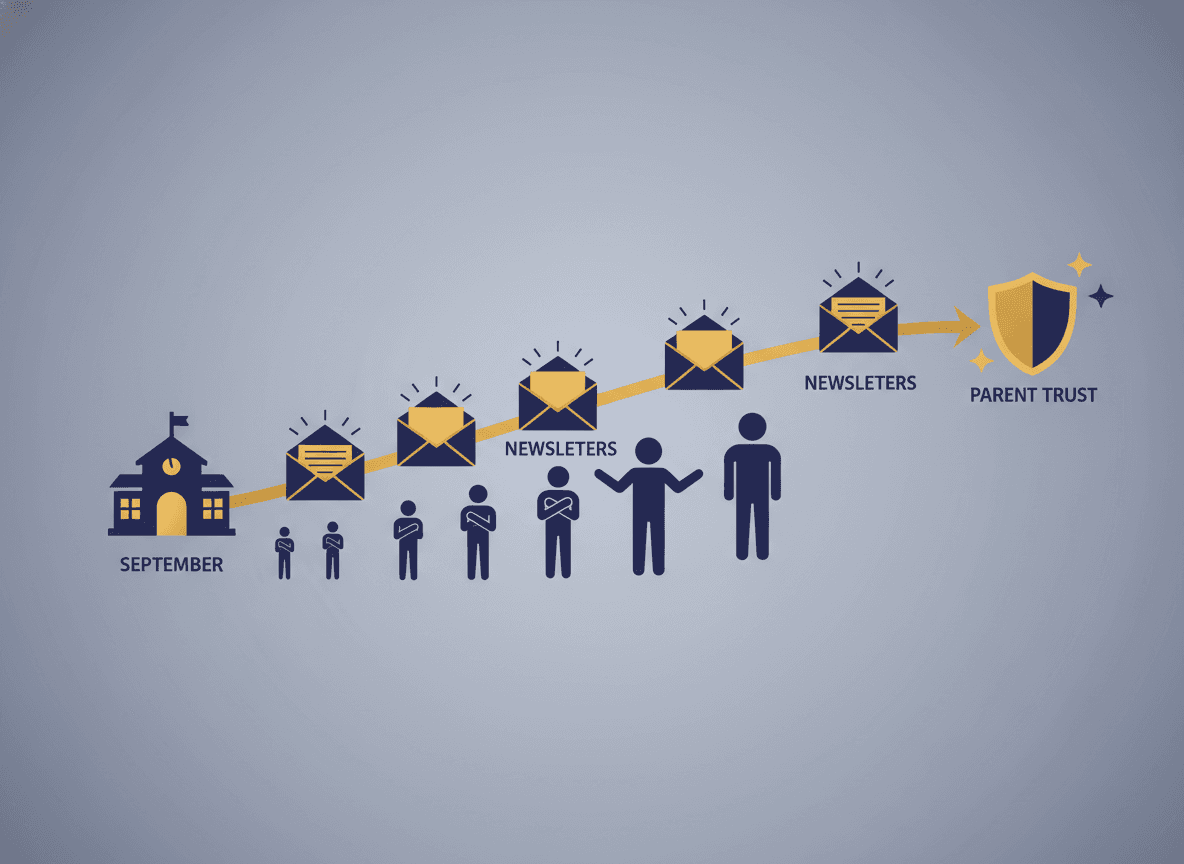
Most teachers send their newsletters when they finish writing them, which usually happens sometime between "late Thursday" and "Sunday morning panic." The send time is an afterthought. But timing is not irrelevant. The day and hour your newsletter arrives in a parent's inbox shapes whether it gets opened in the next 30 minutes, flagged for later, or buried by Monday morning.
The strongest windows for parent newsletters
Sunday evening, roughly 6 pm to 9 pm, is consistently cited by teachers with strong open rates as their best send window. Parents in this window are winding down the weekend, thinking about the week ahead, and in a mental state where school communication feels relevant rather than intrusive. A newsletter that arrives Sunday at 7 pm is often read before Monday morning.
Early Monday morning, before 8 am, is a secondary peak. Parents checking email during morning routines have school on their minds. The risk is that a Monday morning send gets buried under the flood of other emails that accumulated over the weekend, so Sunday evening typically edges it out.
Thursday evening has a dedicated following among teachers who want families to use the newsletter for weekend planning. Families who need to arrange permission slips, RSVP for events, or prepare something for the following week appreciate the Thursday timing.
Why Friday afternoon is a harder time slot
Friday afternoon sends face a consistent headwind: most parents are mentally transitioning away from school concerns for the weekend. An email that arrives at 3 pm Friday competes with pickup, weekend plans, and the end-of-week mental shift. Open rates are generally lower, and even when parents open the email, action rates on any requests tend to be lower too.
There are exceptions. School communities where parents prefer to plan the weekend around school activities may actually prefer Friday sends. If your class is heavily composed of parents who are active planners, Friday could work well. Pay attention to what your specific community actually does rather than what any general guide recommends.
Demographics influence the optimal timing
Parent communities with high proportions of service industry workers, shift workers, or two working parent households may have very different peak attention windows than communities with more flexible schedules. A parent working a 6 am to 2 pm shift is not going to read a Sunday evening newsletter at 8 pm. They might open it at 5 pm before the dinner shift, or on a Saturday morning.
One useful approach is to ask families directly, at the start of the year, when they prefer to receive newsletters. A one-question survey is enough: "What time of week do you typically read school communications?" The responses often reveal a clear preference that you would not have guessed.
Consistency matters more than the perfect time slot
The research on email timing is consistent: regularity and predictability drive engagement more than finding the single optimal send window. Families who receive your newsletter at the same time every week develop a habit. They know to look for it. That habit is worth more than a marginal improvement from switching from Sunday to Monday.
If you are currently sending on a random day whenever the newsletter is done, moving to any consistent day will improve your open rates simply by creating that expectation. Find a day that fits your writing schedule as well as your families' reading habits, then stick to it.
Test and observe before committing to a permanent change
If you want to find the optimal time for your specific parent community, run a simple test: send for four to six weeks on one day, track your open rates, then switch to a different day for four to six weeks and compare. The difference between your best and worst day may be small or surprisingly large. You will not know until you look.
Get one newsletter idea every week.
Free. For teachers. No spam.
Frequently asked questions
What day of the week gets the highest open rates for school newsletters?
Sunday evening and early Monday morning consistently produce strong open rates for school newsletters. Parents transitioning into the school week are in a mindset to process school-related information. Thursday is a secondary peak for families who use the weekend to plan the following week.
Does the time of day matter when sending a school newsletter?
Within a reasonable range, yes. Newsletters sent between 7 pm and 9 pm on weeknights reach parents after dinner and evening tasks when they have a few minutes to read. Very early morning sends can get lost in the morning rush. Very late night sends can feel intrusive.
Do school newsletters sent on Fridays perform well?
Friday afternoon sends get lower open rates on average because parents are mentally transitioning away from school communication for the weekend. However, some families prefer Friday sends because it gives them the weekend to process information and plan ahead. Knowing your specific parent community matters more than any general rule.
Should teachers change their send day to improve engagement?
If your current send day is producing low open rates, testing a different day is worth trying. But consistency matters as much as timing. Families who know to expect your newsletter on Sunday evenings develop a reading habit. Changing the day disrupts that habit. If you change, stick with the new day long enough to establish a new pattern.
Does Daystage let teachers schedule newsletters to go out at specific times?
Yes. Daystage includes scheduling so you can write your newsletter at any point in the week and set it to deliver at the time most likely to reach your families. This separates your writing workflow from the optimal delivery window.

Adi Ackerman
Author
Adi Ackerman is a former classroom teacher and curriculum writer with 8 years in K-8 schools. She writes about school communication, parent engagement, and what actually works in real classrooms.
More for Parent Engagement
School Newsletter vs. School App: Which Is Better for Parent Communication?
Parent Engagement · 7 min read
QR Codes in School Newsletters: A Practical How-To for Teachers
Parent Engagement · 5 min read
Charter School Parent Communication: Newsletter Strategies for Mission-Driven Schools
Parent Engagement · 6 min read
Ready to send your first newsletter?
3 newsletters free. No credit card. First one ready in under 5 minutes.
Get started free