
Scoliosis Screening Newsletter for Middle School Families

Scoliosis screening is a routine part of middle school health programming in most states because the middle school years are when idiopathic scoliosis most commonly appears and progresses. Catching a significant spinal curve early, before it progresses through the remaining growth years, is the primary purpose of the screening. A clear, factual newsletter that explains what the screening involves, what a referral means, and what families should do next removes the anxiety that comes with receiving an unfamiliar health notice from school.
What the Screening Involves
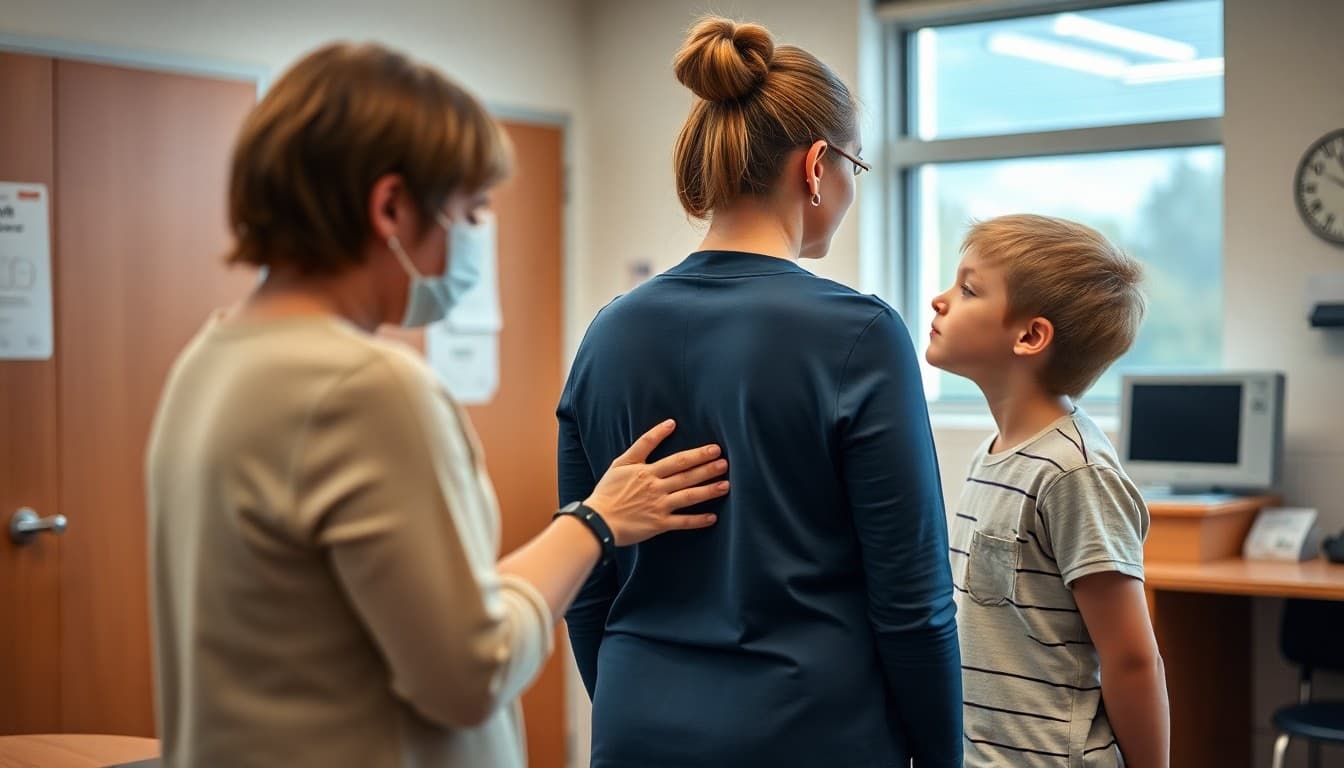
The school scoliosis screening uses the Adam's forward bend test, which has been the standard tool for school-based screening for decades. Students are asked to bend forward at the waist with their arms hanging loosely and their feet together. The school nurse or health screener observes the spine from behind, looking for asymmetry in the rib cage or a visible lateral curve. The test takes less than one minute. Students do not need to undress, though the back should be visible, and the screening is conducted privately in the health office. All students in [grade levels being screened] will be screened on [date].
What a Referral Does and Does Not Mean
Families who receive a referral letter after the screening sometimes assume it means their child has been diagnosed with scoliosis. That is not what a referral means. School screenings are designed to be cautious, meaning they flag students whose spine warrants a closer professional look rather than confirming a condition. A significant number of students who are referred after school screening turn out, after a physician examination, to have either no measurable curve or a curve too small to require any intervention. A referral letter means: please have a doctor check this. It does not mean anything is wrong.
Following Up With Your Child's Doctor
If your child receives a referral, the next step is to schedule an appointment with your family doctor or pediatrician. Bring the referral letter. The physician will conduct a physical examination and, if warranted, order a standing X-ray of the spine to measure the degree of curvature in degrees. This measurement is the key number that guides all subsequent decisions. A curve under 10 degrees is generally not considered clinically significant. Curves between 10 and 25 degrees are typically monitored with follow-up X-rays every six to twelve months during the growth period. Most students identified through school screening fall into this monitored category.
Understanding the Treatment Spectrum
If a physician confirms a significant curve, treatment options depend on two factors: the degree of curvature and how much skeletal growth remains. Adolescents in active growth have curves that are more likely to progress than those who are near skeletal maturity, which is why the middle school years matter for identification. For growing adolescents with curves in the 25 to 45 degree range, a brace is the most common recommendation. Bracing does not straighten the spine, but research shows it can effectively prevent a curve from progressing to the point where surgery becomes the best option. Curves above 45 to 50 degrees are typically referred to a pediatric orthopedic specialist for a surgical consultation. The majority of students identified in school screenings never reach that threshold.
What Students Can Do in the Meantime
For students awaiting a follow-up medical appointment after a referral, there is no reason to restrict activity. Scoliosis is not caused by carrying a heavy backpack, sitting poorly, or playing sports, and there is no activity that will make a curve significantly worse in the short window before a medical appointment. Students can and should continue their normal physical activity, including PE and athletics. If a student is self-conscious about the screening or a referral, a matter-of-fact approach from families is most helpful: this is a routine check, you will see a doctor, and we will figure out what it means together.
Privacy and the Screening Process
The screening is conducted privately in the health office, not in a group setting. Referral results are sent directly to families, not shared with teachers or other students. Student health records, including screening results and any referral documentation, are protected under FERPA and the school's health information policies. Families with questions about the screening process, specific results, or accommodations for students who have already received a scoliosis diagnosis should contact the school nurse at [contact information]. Students who have an existing diagnosis and an orthopedic provider should let the health office know in advance so their records can be updated appropriately.
When to Expect Results
Families will receive written notice of their student's screening result within [number] school days of the screening date. Students who are not referred will receive a brief notification confirming the screening was completed with no referral indicated. Students who are referred will receive a referral letter with instructions for scheduling a follow-up appointment and the contact information for the school nurse if you have questions. If you do not receive any communication within [number] days of the screening date, contact the health office to confirm your student participated.
Get one newsletter idea every week.
Free. For teachers. No spam.
Frequently asked questions
What age do schools typically screen for scoliosis?
Most school-based scoliosis screening programs target students in sixth and seventh grade, roughly ages 11 to 13, because this is the period of highest growth velocity when idiopathic scoliosis most commonly develops and progresses. Some states screen all middle school grades. The newsletter should state which grade levels are being screened and on what date.
What does a scoliosis screening at school involve?
The Adam's forward bend test is the standard school screening tool. The student bends forward at the waist with arms hanging down and feet together while the screener observes the spine from behind. An asymmetry in the rib cage or a visible curve prompts a referral for a medical evaluation. The test takes less than a minute and does not require any undressing beyond the back being visible.
What does it mean if my child is referred after the screening?
A referral does not mean your child has scoliosis. School screenings are designed to be sensitive, meaning they flag students who need a closer look rather than confirming a diagnosis. Many students who are referred turn out not to have a clinically significant curve when evaluated by a physician. A referral means a doctor should examine the spine, typically with an X-ray, to measure the degree of curvature and determine whether any monitoring or treatment is needed.
What are the treatment options if scoliosis is confirmed?
Treatment depends on the degree of curvature and the student's remaining growth potential. Curves under 25 degrees are typically monitored with periodic X-rays to track progression. Curves between 25 and 45 degrees in a growing child often prompt bracing, which does not correct the curve but is effective at preventing significant progression in many cases. Curves above 45 to 50 degrees may warrant surgical evaluation. Most students identified through school screening have mild curves that require only observation.
How does Daystage help school nurses communicate health screening information to families?
Daystage lets school nurses and health staff send clear, formatted newsletters that explain screening procedures, next steps for referred students, and follow-up timelines without families having to track down paper forms. A Daystage newsletter reaches all families at once and can include the nurse's contact information for follow-up questions.

Adi Ackerman
Author
Adi Ackerman is a former classroom teacher and curriculum writer with 8 years in K-8 schools. She writes about school communication, parent engagement, and what actually works in real classrooms.
More for Middle School
Ready to send your first newsletter?
3 newsletters free. No credit card. First one ready in under 5 minutes.
Get started free