

Agenda Planner Newsletter: Getting Middle Schoolers to Actually Use Their Planner
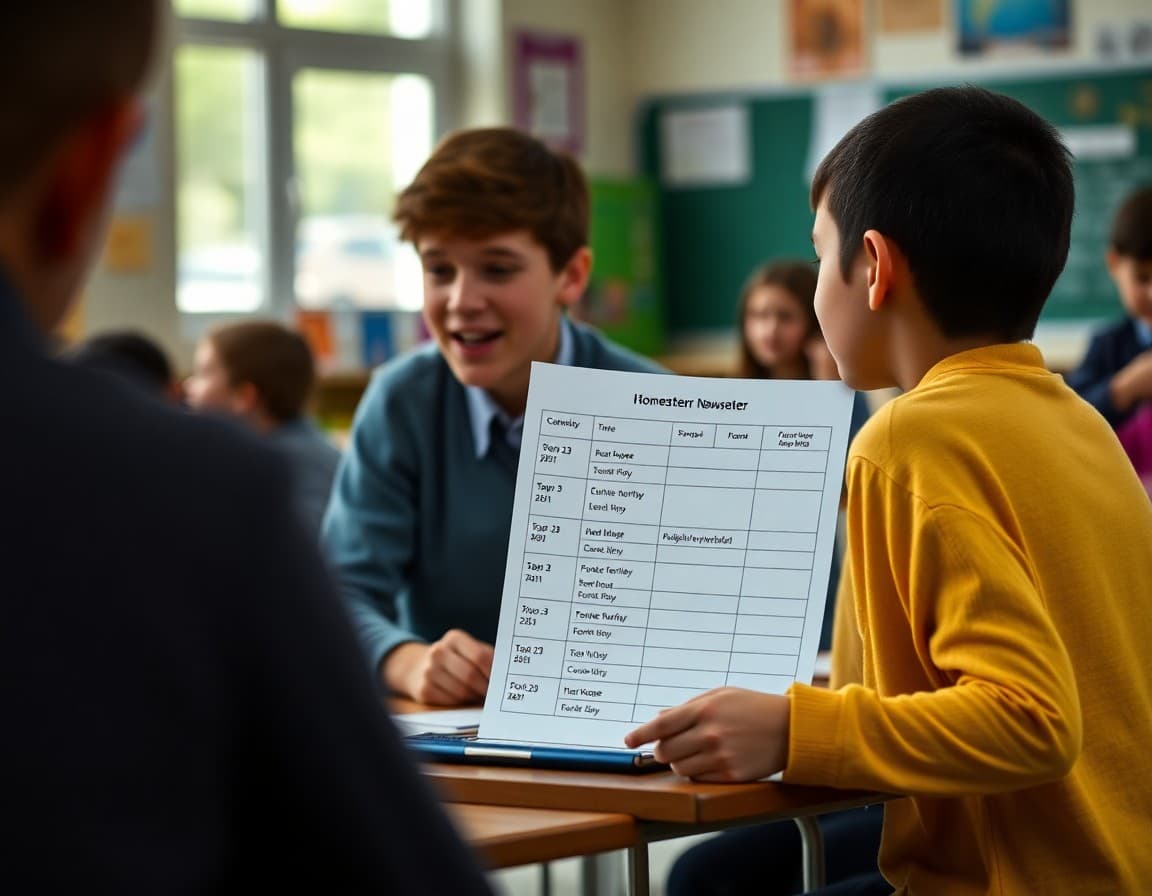
The agenda planner is given to middle school students with good intentions and used by a minority of them with any consistency. The gap between having a planner and using a planner is where most middle school organizational support falls short. A newsletter that explains specifically how to use the planner, what to record in it, and how families can reinforce the habit at home gives the planner a chance to become a genuine tool rather than an empty notebook that gets lost in a backpack by November.
What Goes in the Planner and How to Record It
A planner entry needs more than just the assignment name. Teach students to record four things for every assignment: the class, the specific task, the due date, and a time estimate. “Math, pages 24-26 problems 1-15, Thursday, 25 min” is a complete entry. “Math HW” is not. The specific task tells the student exactly what to do when they sit down to work. The due date is obvious but must be written because even students who are sure they will remember sometimes do not. The time estimate is the most powerful element. When a student looks at their planner on Tuesday evening and sees four assignments totaling ninety minutes, they can plan the evening realistically. Without time estimates, students routinely underestimate their workload and run out of time before finishing.
The Resistance and Why It Is Normal
Middle schoolers resist using planners for predictable reasons. Writing things down takes time and feels like admitting they might forget. Their friends are not doing it. They genuinely believe they will remember. They have not yet experienced the direct consequence of a forgotten assignment often enough to change the behavior. The newsletter should acknowledge this resistance directly rather than pretending that good organizational intentions are sufficient. “Most students believe they do not need a planner because they can remember their assignments. By October, most students who thought this have had the experience of forgetting something important. The planner is a tool for preventing that experience.” That honest framing is more effective than a lecture about the importance of organization.
The Family Planner Check Routine
A planner check is more effective than a homework check because it happens before the homework rather than after. A student who shows their parent a complete planner at 4 PM has already identified what needs to be done and can begin with a plan. A parent who checks homework at 9 PM discovers whether it was completed but cannot help the student plan when it is too late to plan. The planner check takes thirty seconds. Ask to see the planner. Is every subject represented? Are all due dates filled in? Is anything due tomorrow that has not been started? These three questions take less than a minute and give the parent an accurate picture of the evening's workload before the homework session begins.
When the Planner Is Empty
A planner that shows nothing due in any class for three days is almost certainly not accurate. Teach families that an empty planner is a conversation prompt, not proof that there is no homework. “Your planner shows nothing due this week. That seems unlikely. Can you check each class and confirm?” This question invites the student to verify rather than treating the empty planner as evidence of no work. Students who are challenged gently to verify their own records develop more honest self-monitoring habits than students whose empty planners are accepted without question.
Digital Versus Paper: The School's Decision
Some middle schools have moved to digital planners through Google Calendar or classroom management systems. Others maintain paper planners as a specific writing practice. Whatever your school's approach, the newsletter should specify which format the school uses and why. Families who receive this explanation do not buy the wrong planner or try to set up a digital system that conflicts with the classroom expectation. If the school uses paper planners, explain the practical benefit of the paper format: it requires the student to write by hand, which research suggests aids memory retention compared to typing. If the school uses digital, explain how parents can view the digital planner and how to set up the notification preferences.
Building the Habit When It Has Not Stuck
For students who are at week four and still not using the planner consistently, a habit-building approach works better than repeated reminders. Commit to one week where the planner check happens at the same time every day. Do not skip it for any reason during the trial week. At the end of the week, review what happened: did using the planner make the homework feel less stressful? Was there anything due that might have been forgotten without writing it down? One week of consistent practice is enough for most students to notice the utility of the habit, which is the internal motivation that sustains it long-term. Using Daystage to send a habit-building mid-October newsletter, specifically for families whose students are still not using the planner, is a targeted intervention that costs five minutes to write and helps a significant number of families.
Get one newsletter idea every week.
Free. For teachers. No spam.
Frequently asked questions
Why do middle schoolers resist using their planner?
Most middle schoolers resist using a planner because it feels like extra work with no immediate reward. They know their assignments, or they think they do. They believe they will remember. They do not want to look studious in front of classmates by writing things down. They have not yet experienced the consequences of not writing things down, or they have experienced them but attributed the failure to something other than poor planning. Planners become useful only when students discover through their own experience that writing assignments down reduces stress and forgetting. The newsletter can help families create the conditions for that discovery.
What should a planner habit newsletter include for families?
Explain what the school expects students to record in the planner. Describe the specific planner format the school uses or recommends. Include the nightly homework check routine families can use to verify that the planner is being used. Give families the specific questions to ask rather than a general instruction to 'check the planner.' Explain what to do when a student has written nothing: that means either no assignments were given (unlikely) or the student did not record them. Include the habit-building sequence for students who have never maintained a planner successfully.
How should middle schoolers fill in their planner?
Every assignment should be recorded with four pieces of information: the class, the specific assignment, the due date, and a time estimate for how long it will take. Recording a due date is not enough because a student who looks at three assignments due next Friday may not realize they all require significant work the night before. Time estimates force realistic planning and help students prioritize on evenings when they have limited time. Teachers who require planner checks in class give students an external reason to maintain the habit until it becomes internal.
How do you do the planner check at home without conflict?
Make the planner check a brief neutral question at a consistent time: before dinner, right after school, or during the transition from school to homework. 'Can you show me your planner?' rather than 'did you write in your planner?' requires the student to produce evidence rather than answer a yes/no question. When the planner is complete, acknowledge it briefly. When it is not complete, ask what the student thinks they need to do to make sure it is complete tomorrow. Avoid turning it into a lecture. The planner check works best as a brief routine rather than an occasion for a productivity conversation.
How does Daystage help teachers communicate homework organization strategies to families?
Daystage lets teachers send practical newsletters with specific routines families can adopt immediately. The planner habit newsletter is most effective when it arrives at the start of the school year when families are in the mindset of establishing new routines. A well-timed newsletter from Daystage with a specific nightly planner check script gives families something actionable that they can start that same week.

Adi Ackerman
Author
Adi Ackerman is a former classroom teacher and curriculum writer with 8 years in K-8 schools. She writes about school communication, parent engagement, and what actually works in real classrooms.
More for Middle School
Binder System Newsletter: Teaching Families How Middle Schoolers Manage Their Materials
Middle School · 6 min read
Locker Organization Newsletter: Practical Tips Middle School Families Can Act On
Middle School · 6 min read
Introducing Cornell Notes in Middle School: A Newsletter for Families
Middle School · 6 min read
Ready to send your first newsletter?
3 newsletters free. No credit card. First one ready in under 5 minutes.
Get started free