6th Grade Social Skills Newsletter: Relationship Building at School
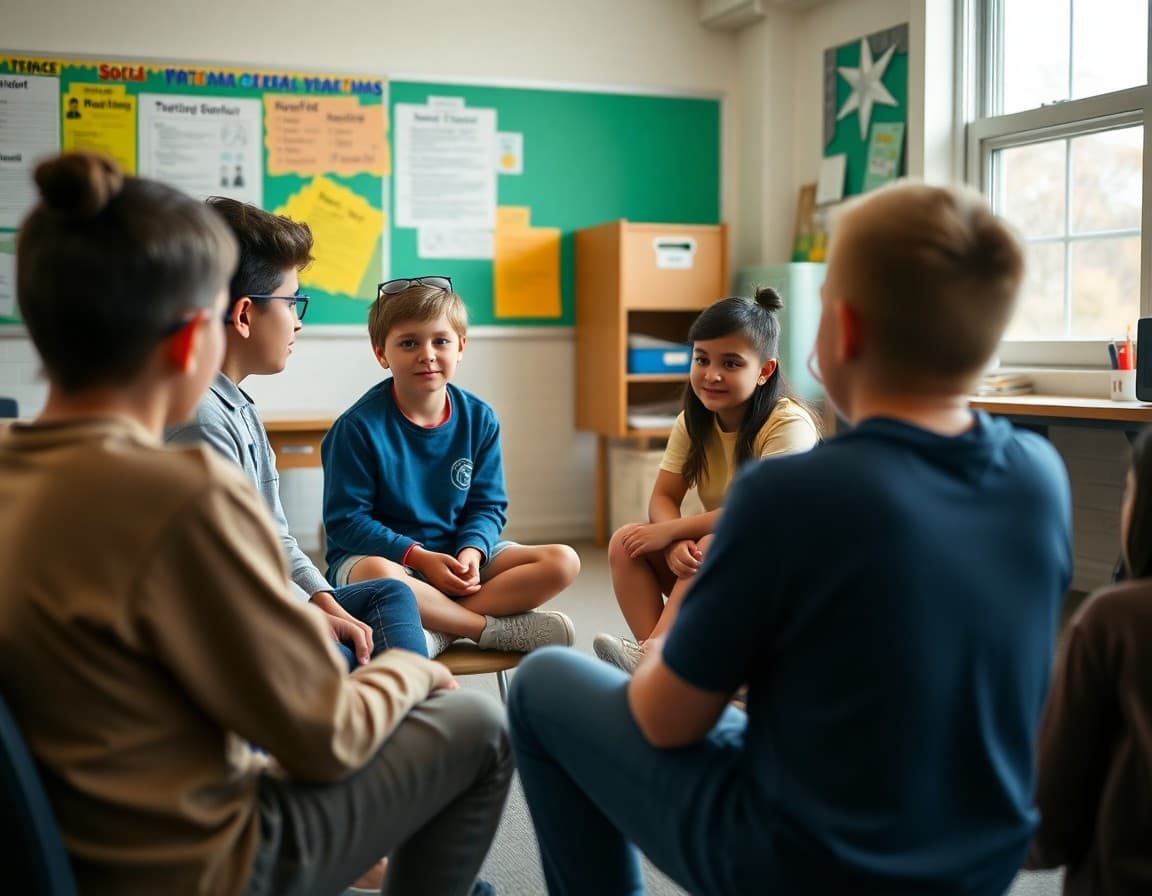
The transition into 6th grade is socially one of the most turbulent shifts in a student's school experience. New school, new peer group, new social rules. Students who had a solid friend group in 5th grade may feel like they are starting over. Families who understand this are better equipped to support their child, and a newsletter that names the reality gives them real tools to work with.
Name the Social Landscape of 6th Grade
Start your newsletter by describing what the social environment of 6th grade actually looks like. Cliques form and shift. Friendships from elementary school may stretch or break under the new pressures. Students are experimenting with identity, which means they are also experimenting with who they want to spend time with. A paragraph that names this gives families the frame to understand what their child is telling them at home.
Explain What You Are Teaching in Class
Whether it is through advisory, a social-emotional curriculum, or classroom community practices, share what specific social skills students are working on. This month you might be teaching active listening or how to give a compliment without backhanded meaning. When families know the skill, they can ask about it at home and reinforce it in real situations.
Give Families Language for Hard Conversations
One of the most useful things a newsletter can do is give parents a script. Here is an example:
"If your child comes home upset about a social situation, try starting with: 'That sounds hard. What happened first?' Then: 'What did you do?' Then: 'What do you think you could try tomorrow?' Resist the urge to jump straight to solutions or call the other child's parents. Middle school students who are coached through their own problem-solving develop more durable social skills than students whose conflicts are resolved by adults."
Normalize Common 6th Grade Struggles
Social struggles that feel alarming to parents are often developmentally typical. A student who suddenly has no one to eat lunch with for a week is not necessarily being bullied. They may be in a normal period of social reorganization. A student who drops an old friend is not necessarily being cruel. They may be figuring out who they are. Your newsletter can normalize these patterns without dismissing the real pain they cause.
Teach Families the Difference Between Conflict and Bullying
This distinction matters because the response is different. Conflict is two-sided and happens between peers with roughly equal power. Bullying is repeated, intentional, and involves a power imbalance. Families who treat every conflict as bullying escalate situations that could be resolved through peer mediation. Families who dismiss real bullying as normal conflict leave their child unsupported. A clear definition in your newsletter helps families respond appropriately.
Share What the School Does to Support Social Development
Tell families about your advisory program, any social-emotional learning curriculum you use, peer mediation options, and counseling resources. Families who know what is available are more likely to request help when their child needs it rather than assuming it is not there.
Address Online Peer Dynamics
Social skills in 6th grade extend into group chats and gaming platforms. The same skills that matter in the hallway matter in a Discord server. Your newsletter can acknowledge this briefly: how to handle exclusion online, how to read tone in text-only communication, and when to step away from a conversation that is escalating.
End With Something Positive
Social skills newsletters can feel heavy. End with a brief story about a moment of genuine connection you saw in your classroom this month. A student who went out of their way to include someone. A class that handled a hard conversation really well. That story reminds families and students that the skills are being built, not just practiced in theory.
Get one newsletter idea every week.
Free. For teachers. No spam.
Frequently asked questions
What social skills should 6th graders be developing?
Active listening, perspective-taking, conflict resolution, reading social cues, and managing peer pressure are the core social skills of early middle school. Students at this age are also learning how to form friendships across different identity groups and how to repair relationships after a conflict. These skills take practice and support from both school and home.
How can parents support social development without overriding their child's independence?
The goal is to be a thinking partner, not a fixer. Parents who ask their child what they tried already before jumping to solutions are developing problem-solving skills. Parents who call the other family or email the teacher about every conflict are taking over a process the student needs to navigate themselves. The newsletter can help families find that balance.
How do I communicate about social challenges in the newsletter without identifying specific students?
Speak at the class level, not the individual level. "We have been working on how to disagree respectfully" communicates the skill without naming anyone. Families who have a student involved in a specific situation can connect those dots themselves without anyone being publicly identified.
What is normal social behavior for 6th graders that families might mistake for a problem?
Testing limits, forming exclusive friend groups, and fluctuating between wanting parental closeness and strong independence are all typical at this age. Drama that flares up and resolves within a day or two is usually normal social learning. A newsletter that normalizes this developmental reality helps families avoid panicking over typical behavior.
What tool can I use to send social skills newsletters to 6th grade families?
Daystage works well for this type of newsletter because you can combine a warm, personal tone with structured content like conversation starters and resource links. The format keeps communication consistent without requiring a major time investment each time.

Adi Ackerman
Author
Adi Ackerman is a former classroom teacher and curriculum writer with 8 years in K-8 schools. She writes about school communication, parent engagement, and what actually works in real classrooms.
More for Middle School
6th Grade Classroom Community Newsletter: Building Belonging
Middle School · 6 min read
6th Grade Digital Citizenship Newsletter: Safe Tech for Families
Middle School · 6 min read
8th Grade Behavior Newsletter to Parents: Communicating with Families of 8th Graders Honestly and Constructively
Middle School · 7 min read
Ready to send your first newsletter?
3 newsletters free. No credit card. First one ready in under 5 minutes.
Get started free