
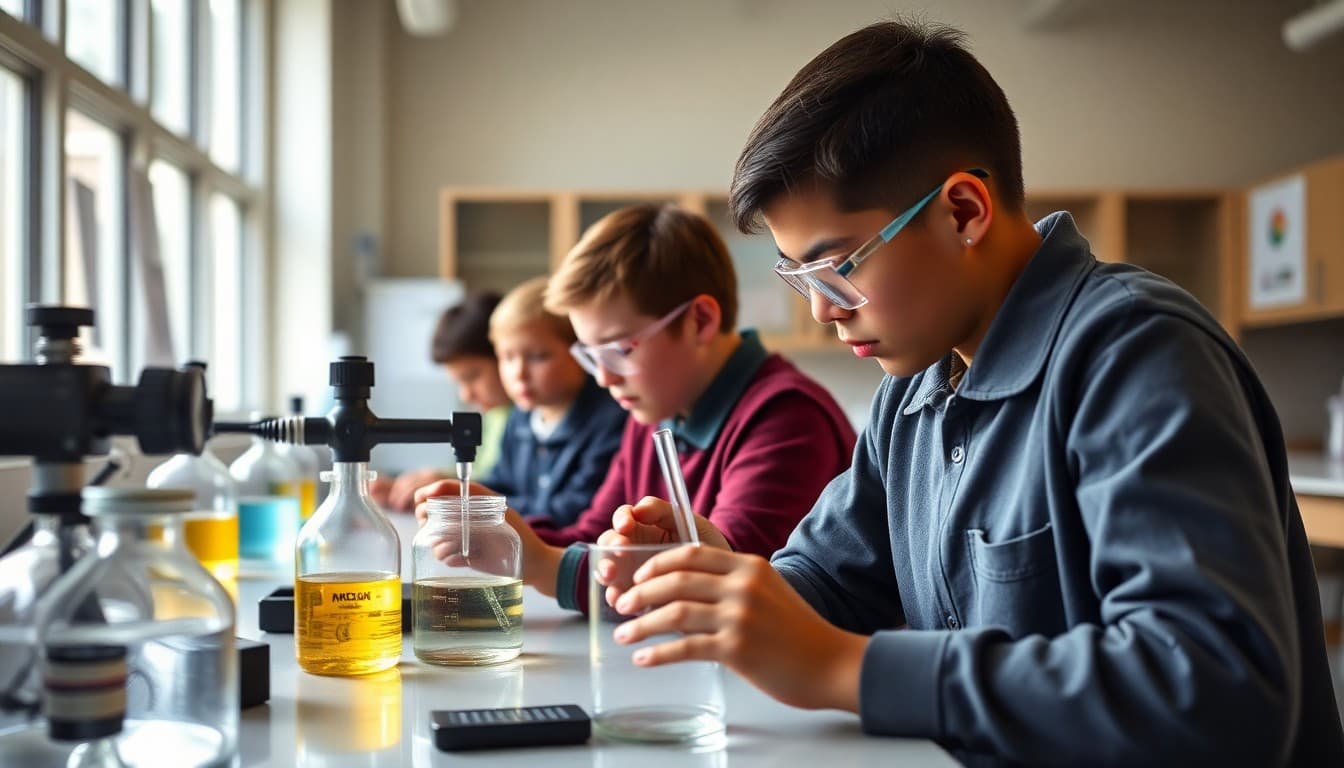
Science Magnet School Newsletter: Labs Research and Discovery

A science magnet school is only as compelling as its communication about what actually happens there. Families who chose the school based on its reputation for advanced lab work and research want to see evidence that those promises are real. A newsletter that describes actual student experiments, reports competition results with student names and project titles, and explains how the program prepares students for science in college and career is worth reading and worth sharing.
Showcasing Lab Work Specifically
The science magnet newsletter should describe specific lab work, not just mention that lab work happens. "Ninth graders completed a three-week unit on electrophoresis, running gel electrophoresis to separate DNA fragments and analyze the results. One student team identified an unexpected banding pattern and designed a follow-up experiment to investigate it" is a description of real learning that families can engage with. "Students conducted experiments in our state-of-the-art labs" is not. The specificity is what makes the newsletter worth reading.
Student Research Projects
If the school has a research program or connects students to university labs, the newsletter should document that work with specific project descriptions. Include the student's name and grade, the research question, the methodology, and if available, the findings. Research projects often take an entire semester or year to complete. Quarterly updates on ongoing projects keep families invested in the outcomes. When a student places at a science fair or publishes in a student journal, that is major news for the school community and deserves a dedicated newsletter feature.
University and Research Institution Partnerships
Science magnet schools often have formal or informal partnerships with nearby universities, research hospitals, national labs, or private research companies. The newsletter should name these partners and describe what they provide: laboratory access, mentorship, summer research positions, or guest lecturers. Families who see these partnerships understand that the school provides access beyond what any traditional school can offer. A junior who spent six weeks working in a university virology lab has an application essay topic and a letter of recommendation source that their peers at traditional schools cannot replicate.
Science Competitions: Announcing and Celebrating
Science competitions are among the most visible markers of a magnet program's quality. The newsletter should announce major competitions at least four weeks before registration deadlines, describe what the competition involves for families who are unfamiliar, and publish results with specific student or team names and rankings. A first-place team at the regional Science Olympiad invitational is news that families of current and prospective students want to know about. A student who qualifies for the state Biology Olympiad deserves to be named publicly. These recognitions build community pride and recruiting visibility.
The Science Curriculum Sequence
Science magnet schools often run students through an accelerated or enriched course sequence: biology and chemistry in eighth grade, AP or IB science in ninth grade, and multiple advanced sciences concurrently in eleventh and twelfth grade. The newsletter should describe this sequence explicitly so families planning ahead understand when specific courses are offered and what prerequisite preparation is expected. A family with a seventh grader needs different information than a family with a tenth grader. Consider grade-specific inserts or sections in the newsletter to address different planning horizons.
Field Trips and Externships
Science learning that happens outside the building is particularly valuable and particularly newsletter-worthy. A class trip to a water treatment plant, an externship at a biotechnology company, or a field collection day at a local nature preserve all demonstrate that science at this school extends into the real world. A newsletter that recaps these experiences with specific observations and student reflections reinforces why the science magnet program is worth the commute or the application process for families weighing their options.
College Placement and Career Pathways
Science magnet school families often chose the program because they want a clear pathway to competitive college science programs. The newsletter should report annually on college placement outcomes for the graduating class: what percentage are pursuing STEM majors, which colleges admitted science magnet graduates, and what programs are accepting them. Include a brief graduate spotlight each year: a recent alumnus who is now in a PhD program, in medical school, or working as an engineer who can speak to how the magnet program shaped their path.
What Families Can Do to Support Science Learning at Home
Science parents often want to do more than attend the science fair. The newsletter should give them specific ideas: subscribing to a science podcast together, visiting a natural history museum or science center, discussing a current science news story, or encouraging the student to participate in citizen science programs. Families who engage with science outside of school reinforce the school's culture and signal to their student that what they are learning has value beyond grades. The newsletter is the channel for making those connections explicit.
Get one newsletter idea every week.
Free. For teachers. No spam.
Frequently asked questions
What distinguishes a science magnet school from a traditional school?
A science magnet school typically offers a curriculum that integrates science across all subjects at higher depth and earlier progression than standard courses, provides advanced laboratory facilities and equipment not available in traditional schools, connects students to research institutions and university partnerships, prepares students for science competitions like Science Olympiad and ISEF, and develops pathways toward college programs and careers in STEM fields. Students typically apply and are selected based on academic readiness and interest in science.
What should a science magnet school newsletter highlight?
Cover student research projects and what they found, science competition results and upcoming opportunities, lab facility upgrades or new equipment, university and research partnerships, college placement outcomes for science graduates, science-related field trips and externships, faculty expertise and any publications or grants, and how students can get involved in after-school research clubs or programs. The newsletter should make the science that is actually happening at the school visible to families, not just describe the program in the abstract.
How do science magnet schools prepare students for college applications?
Science magnet graduates typically have a competitive profile for STEM-focused colleges: AP or IB science and math coursework, original research experience with a faculty mentor or at a university lab, competition participation and awards, and a clear articulation of their scientific interests developed through years of focused study. The newsletter should communicate the college preparation aspects of the program so families understand how the magnet investment translates to higher education access.
What science competitions are most relevant for science magnet students?
Key competitions include the Science Olympiad (team event, grades 6-12), Science Fairs including regional events feeding into ISEF (Intel International Science and Engineering Fair), the American Mathematics Competition, Biology Olympiad, Chemistry Olympiad, Physics Olympiad, and regional and state science bowl. The newsletter should announce competitions with registration deadlines, congratulate teams and individuals who place, and explain what each competition involves so families understand the scope of the achievement.
What tool helps science magnet administrators send regular program newsletters to families?
Daystage lets science magnet coordinators build a structured newsletter with student research spotlights, competition announcements, and lab project descriptions. You can include photo galleries from lab sessions and competition events without needing a separate website or platform for program communications.

Adi Ackerman
Author
Adi Ackerman is a former classroom teacher and curriculum writer with 8 years in K-8 schools. She writes about school communication, parent engagement, and what actually works in real classrooms.
More for Magnet & IB
Ready to send your first newsletter?
3 newsletters free. No credit card. First one ready in under 5 minutes.
Get started free