

IB Language B Newsletter: Second Language Learning Updates
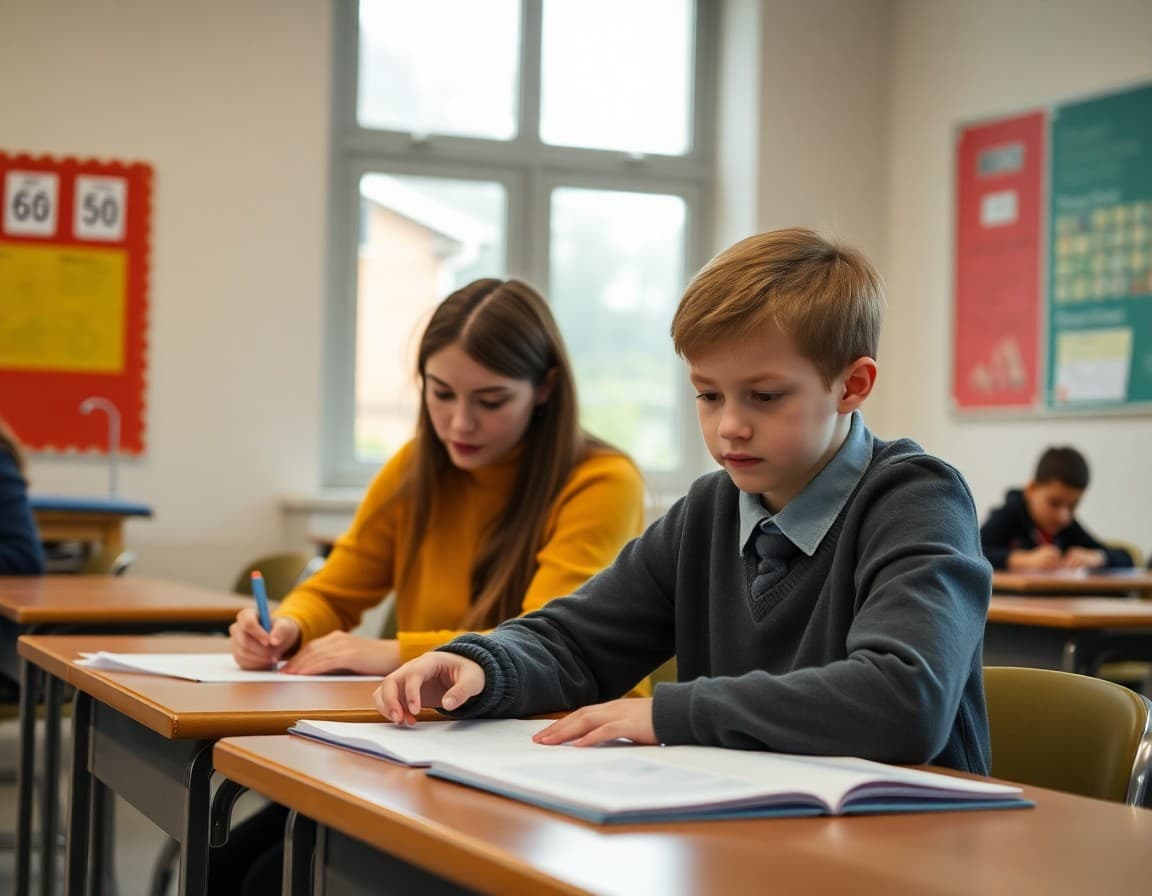
IB Language B is a second-language acquisition course that takes students from functional proficiency to genuine fluency in reading, writing, speaking, and listening. For families who do not share the target language, it can feel opaque. Your newsletter is the bridge between what happens in your classroom and what families see at home: a student muttering vocabulary on the drive to school, rewatching the same ten minutes of a foreign series, or nervously preparing for an oral exam. A clear, regular newsletter turns that effort visible and gives families the context to support it.
Explain the Difference Between Language A and Language B
Families regularly confuse IB Language A (literature and language in the student's strongest language) with IB Language B (a second language studied for proficiency). Your first newsletter should clarify this in one sentence: "Language B is a second-language acquisition course. Your student is developing proficiency in [language] as a language they have studied before but do not use as their primary language." That distinction sets accurate expectations for the type of work the course requires.
The Five Themes and What They Mean in Practice
IB Language B organizes content around five themes: identities, experiences, human ingenuity, social organization, and sharing the planet. These are not just organizing categories; they shape the texts students read, the tasks they complete, and the vocabulary they need. When you transition between themes, note it in your newsletter. "We are moving from identities to experiences this month. Students will work with texts about travel, rites of passage, and personal transformation. The vocabulary shift means new thematic word sets at home." That level of specificity helps families understand that each theme is a new phase, not just a change in topic.
Individual Oral Preparation
The individual oral is often the assessment component that generates the most student anxiety and the most parent questions. In the IB Language B oral, students respond to a visual stimulus (a photo or image) by making connections to the themes of the course, then engage in a conversation with the examiner. In your newsletter, demystify the format. "The oral is 15 minutes. Students speak for 3 to 4 minutes about an image and its connections to the course themes, then answer the examiner's questions for about 10 minutes. Practice conversations at home in the target language, even simple ones, are directly helpful." That guidance is actionable for any family, regardless of whether they speak the language.
What Families Can Do at Home
Daily immersion in the target language is the most effective supplement to classroom instruction. Recommend specific resources in each newsletter. For Spanish: the Dreaming Spanish YouTube channel for comprehensible input, a playlist from a Spanish-language streaming service, or NPR's Spanish-language podcast. For French: TV5Monde's learner platform, RFI's Journal en Français Facile. For Mandarin: ChinesePod at the relevant level. A student who spends 20 minutes daily with native-level input in addition to classroom work will outperform a student who only studies for tests.
Text Types and the Writing Component
IB Language B writing is organized around text types: emails, articles, speeches, blog posts, brochures, and more. Students must produce two written tasks using appropriate format, register, and vocabulary. Each text type has a different convention. When you are teaching a new text type in class, name it in your newsletter and describe the conventions: "This month we are writing formal letters. Students are learning how to adjust register, open and close professionally, and organize information according to the conventions of the text type." That transparency gives families vocabulary for discussing homework with their students.
Tracking Progress Toward Proficiency
IB Language B sits at approximately B1 to B2 on the Common European Framework of Reference (CEFR) for SL, and B2 to C1 for HL. If your families are familiar with language learning frameworks, this reference is useful. If they are not, translate it into plain terms: "By the end of the course, students should be able to read a newspaper article, follow a radio broadcast, write a formal letter, and hold a sustained conversation on a range of topics. They are not expected to sound like native speakers, but they are expected to communicate clearly and accurately in a variety of contexts."
Exam Season Guidance
Before the May exam session, send a focused newsletter covering the format of each paper. Paper 1 is reading comprehension with text-handling exercises. Paper 2 is writing, where students produce two texts from a choice of tasks. The listening component is integrated into the written papers. Students who practice reading past papers aloud, not just answering questions, develop the processing speed they need under exam conditions. Recommend a practice schedule: two hours per week on reading comprehension, one hour on writing under timed conditions, starting eight weeks before exams.
Celebrating Language Milestones
Language learning has milestones that are worth sharing. When a student successfully navigates a real interaction in the target language, gives an excellent oral presentation, or produces a polished piece of writing, name it in the newsletter. "One of our students recently completed a phone call in Spanish to a local business for a project. That kind of real-world interaction is exactly what the IB Language B course is building toward." Families who see their student's progress reflected in your newsletter stay motivated alongside them.
Get one newsletter idea every week.
Free. For teachers. No spam.
Frequently asked questions
What should an IB Language B newsletter explain to families?
Start with a plain-language explanation of what Language B is and how it differs from Language A. Language B is for students who have studied the language before but are not native speakers. The course develops proficiency through real-world contexts and texts. Families need to understand this distinction so they have accurate expectations for their student's progress and for the types of tasks assigned.
How do I explain IB Language B assessment in a newsletter?
The Language B assessment has four components: writing (25%), individual oral (25%), reading and listening papers combined (50%). In your first newsletter, break each component down in one sentence. 'Students write two texts using different text types and registers. They prepare a 15-minute oral presentation on a visual stimulus and respond to the examiner's questions. Written papers test reading and listening comprehension.' That overview takes three sentences and eliminates most family confusion about what the course demands.
How can families support their student's IB Language B progress at home?
The most effective home support is exposure to the target language through media. Recommend three or four specific resources in your newsletter: a podcast at the appropriate level, a streaming series with subtitles, a news website in the target language. Students who spend 20 minutes a day with native-level input progress faster than those who only study from textbooks. Name specific resources with direct links so families can set them up at home.
How often should I send an IB Language B newsletter?
Monthly during the academic year. IB Language B organizes content around five themes: identities, experiences, human ingenuity, social organization, and sharing the planet. Moving between themes creates natural newsletter anchor points. Each month you can note which theme you are exploring and which skills are being developed.
What tool should I use to send IB Language B newsletters?
Daystage works well because you can embed audio clips, video links, and formatted text. For a language class, the ability to share a short listening example or a link to a podcast episode directly in the newsletter body adds real value. Families who engage with the content are better prepared to support their students.

Adi Ackerman
Author
Adi Ackerman is a former classroom teacher and curriculum writer with 8 years in K-8 schools. She writes about school communication, parent engagement, and what actually works in real classrooms.
More for Magnet & IB
Ready to send your first newsletter?
3 newsletters free. No credit card. First one ready in under 5 minutes.
Get started free