

IB Film Class Newsletter: Communicating the Creative Process
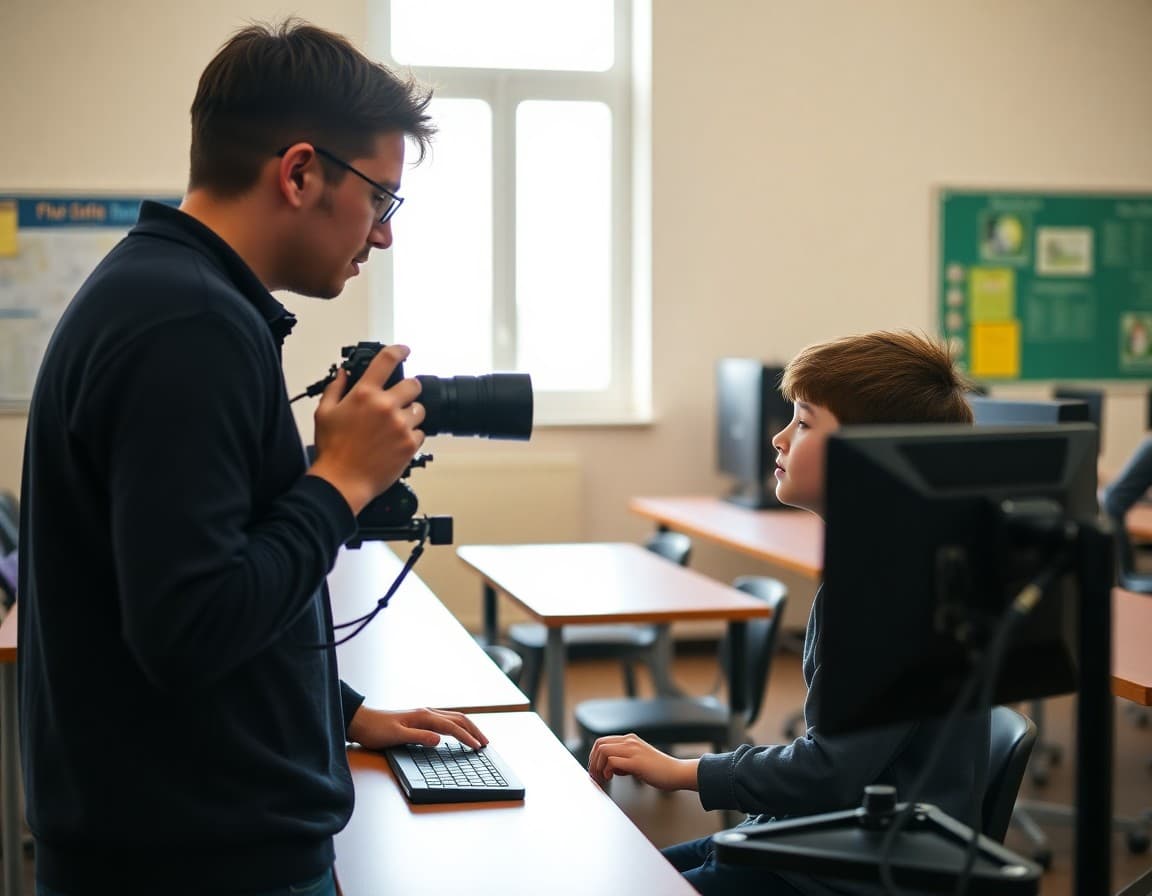
IB Film is one of the most misunderstood courses in the Diploma Programme by families who equate it with watching movies. It is in fact an intensive academic and creative course that requires students to analyze cinema as a cultural and artistic form and to produce original films under rigorous assessment conditions. A newsletter that explains what the course actually demands, what students are producing, and when screening events are scheduled helps families take the course seriously and engage with their student's work as the substantial achievement it is.
Film as Academic and Creative Discipline
Lead the newsletter by establishing what IB Film is. Students in IB Film develop two parallel competencies: the ability to analyze film as a cultural text and the ability to create film as a form of expression. They study films from multiple national cinemas and historical periods, applying theoretical frameworks from film studies. They analyze how cinematography, editing, sound design, narrative structure, and mise-en-scene create meaning. They also direct, cinematograph, edit, and sound design original short films under specific production constraints. This dual development distinguishes IB Film from both a film appreciation class and a simple media production elective.
The Production Timeline
IB Film production happens in bursts around specific assessment deadlines. The newsletter should communicate the production calendar to families in advance: when the collaborative film project is assigned, when principal photography is scheduled, when editing deadlines fall, and when the film must be submitted for assessment. Students who are in the middle of principal photography need their families to understand why they may be out late with a camera crew on a Wednesday. A newsletter sent before the production cycle begins prevents conflict and builds understanding.
The Film Portfolio
The film portfolio documents each student's production decisions: the script or treatment, storyboards, production reflections, and a cover letter explaining the creative choices made. This documentation is often as demanding as the film itself. Students who treat the portfolio as an afterthought produce work that does not reflect the depth of their creative thinking. The newsletter should explain the portfolio requirement to families so they understand why their student is spending time on documentation in addition to filming. The portfolio is internally assessed, and the quality of its reflection significantly affects the student's grade.
The Collaborative Film Project
The collaborative film project is produced by a student crew working together in assigned roles: director, cinematographer, sound designer, and editor. Students rotate or specialize based on the teacher's structure. The newsletter should describe this collaborative component and what it requires: meeting outside school hours for production, dividing responsibilities clearly, and managing the interpersonal dynamics of a small crew under deadline pressure. These are professional filmmaking skills. The experience of working as a crew is also one of the most valued components of the course in terms of real-world preparation.
Announcing the Screening Event
Most IB Film teachers organize an end-of-year screening of student films, which is one of the most engaging events on a school's calendar. The newsletter should announce the screening four to six weeks in advance with the date, time, location, and whether it is open to the broader community or to families only. Describe the selection process: will all student films be screened or a curated selection? Will there be a Q and A with student filmmakers afterward? A screening invitation that communicates the significance of the event generates the attendance and audience engagement that makes the occasion meaningful for students.
What Students Are Watching and Analyzing
Include a brief description of the films students are currently studying in the textual analysis component. "This semester's students are studying Parasite, Bicycle Thieves, and Moonlight as case studies in how directors from different cultural contexts use visual storytelling to address social themes." That description tells families what their student is watching and why, reduces the concern some parents have about specific films, and connects the viewing to the course's academic purpose. It also gives families conversation starters for discussing the films at home.
Equipment and Resource Access
IB Film students often use school-provided equipment: cameras, lighting, audio recording gear, and editing workstations. The newsletter should describe what equipment is available, whether students can check out equipment for off-campus production, and what the procedures are for equipment care and return. If the school has recently upgraded its facilities, a brief description of the new equipment builds community confidence in the program's investment. If equipment limitations are a genuine constraint on student production quality, acknowledging this and describing the school's plan for addressing it is more honest than pretending the constraints do not exist.
College Applications and the Film Reel
For students pursuing film studies, media studies, or communications at the college level, the IB Film course produces directly usable application materials. A short film produced for the collaborative project or the independent study can anchor a film school application portfolio. The textual analysis and portfolio demonstrate critical writing in the discipline. The newsletter should connect the course to college application preparation for families who are planning ahead, and should describe how to request teacher recommendations or course documentation for film school applications.
Get one newsletter idea every week.
Free. For teachers. No spam.
Frequently asked questions
What does the IB Film course cover?
IB Film is offered at both Standard Level and Higher Level. Both levels develop students' ability to analyze and create film through three primary competencies: film theory and history, critical study of film texts, and practical filmmaking. Students study films from diverse cultural and historical contexts, analyze film techniques and their effects on meaning, and produce original films as part of their assessed work. Higher Level students complete additional practical components and study more films than SL students.
What are the IB Film assessment components?
IB Film SL assessment includes a textual analysis, a film portfolio, and a collaborative film project. HL adds an independent study component. The textual analysis involves the student analyzing an unseen short film extract in a timed examination. The film portfolio documents the student's planning, production, and reflection on an original film or sequence. The collaborative film project requires students to work as a crew to produce a short film under specific constraints. These components are designed to assess both analytical and practical filmmaking skills.
How should families support IB Film students during production?
IB Film production often requires filming outside school hours and in locations beyond the school building. Families can support by allowing use of home spaces for filming when appropriate, providing transportation to filming locations, respecting the student's creative process without directing the content, and understanding that editing is time-intensive and may occupy significant hours during specific assessment periods. The newsletter should set these expectations before production cycles begin so families are prepared rather than surprised.
How does IB Film prepare students for college and careers in film or media?
IB Film graduates who have produced original short films, written film analysis, and studied international cinema have a genuine portfolio and theoretical foundation for college film programs. They have practiced the critical vocabulary of film studies, worked under deadline pressure, and experienced the collaborative nature of film production. These students enter college-level film courses with significantly more contextual knowledge and practical experience than peers who have only consumed film as audiences.
What tool helps IB Film teachers communicate course requirements and screening events to families?
Daystage lets IB Film teachers and coordinators send a formatted newsletter announcing screening events, explaining assessment timelines, and sharing student work highlights. You can include embedded video links to student film previews for families who want to see what their student is producing before the public screening.

Adi Ackerman
Author
Adi Ackerman is a former classroom teacher and curriculum writer with 8 years in K-8 schools. She writes about school communication, parent engagement, and what actually works in real classrooms.
More for Magnet & IB
Ready to send your first newsletter?
3 newsletters free. No credit card. First one ready in under 5 minutes.
Get started free