
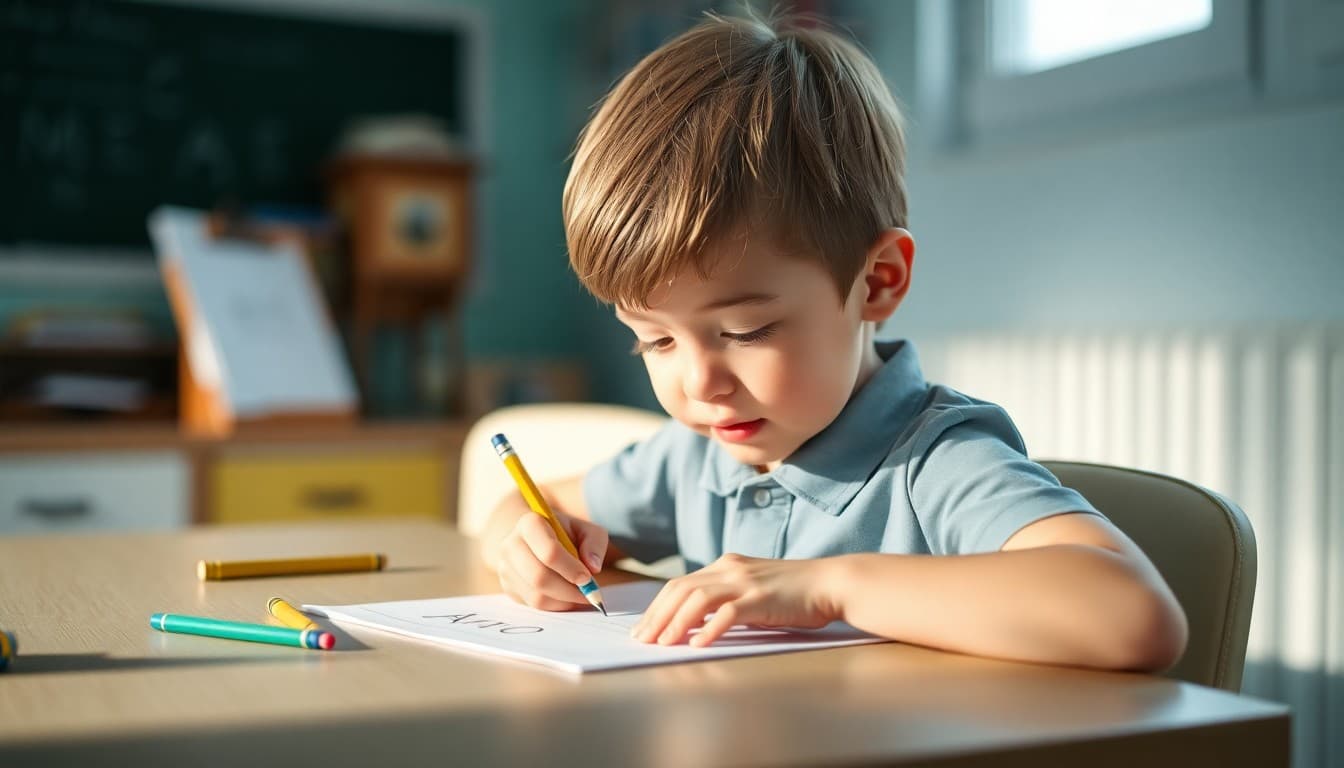
Kindergarten Writing Newsletter: Early Writing Skills at Home
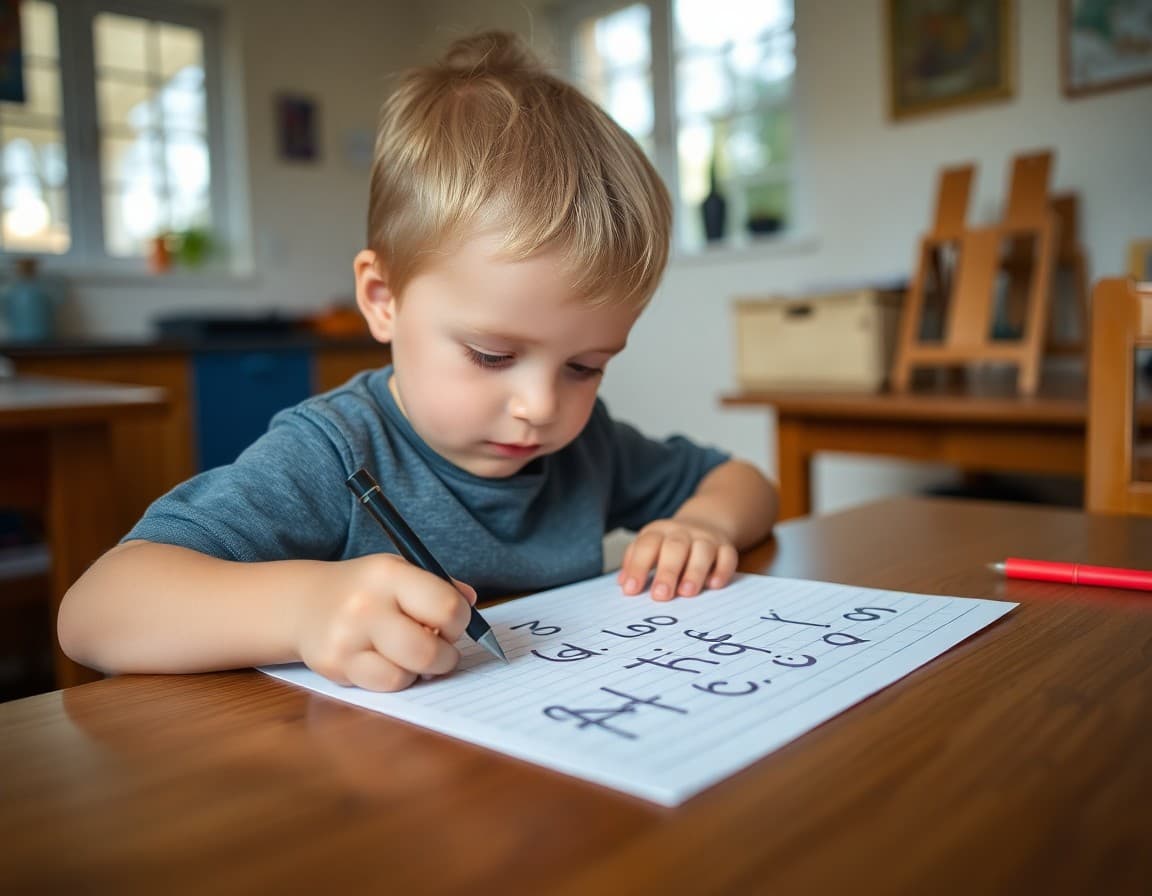
Writing in kindergarten is one of the most visible and emotionally loaded skills for families to observe. A child who grips their pencil awkwardly, forms letters backward, or cannot yet write their full name causes parental worry that is rarely warranted. Understanding the actual developmental trajectory of early writing, and how to support it without pressure, gives families a much more helpful lens than comparing their child to an imagined standard.
Where Kindergarten Writing Actually Starts
Kindergarten writing instruction begins with the understanding that marks on paper carry meaning, that letters are specific shapes with specific names, and that those letters combine to represent sounds and words. Early writing looks nothing like adult writing and should not be expected to. Scribbles with letter-like shapes, random letters strung together, and phonetic approximations like "MI DOG" for "my dog" are all developmentally appropriate and should be celebrated, not corrected.
Help families understand the writing development continuum: drawing, scribbling, random letter strings, phonetic inventions, and gradually more conventional spelling are all stages in the sequence. A child in November who writes "I LV U" has made more progress than a child who never attempts to write because they fear getting it wrong.
Letter Formation: Teach Correct Habits Early
Letter formation habits established in kindergarten are difficult to retrain in later grades. If a child forms their letters starting from the bottom rather than the top, or circles letters clockwise rather than counterclockwise, these habits slow writing speed and legibility as text demands increase. The classroom teaches specific starting points for each letter. Families can reinforce the same approach at home.
Include a simple letter formation reference in your newsletter showing the starting point and stroke direction for the most commonly written letters. Many programs use verbal cues: "Start at the top, go down, then bump around" for lowercase b. These cues give children a self-directed way to remember the correct sequence without needing an adult to prompt them on every letter.
Fine Motor Strengthening Through Play
Writing requires hand strength and control that comes from months of fine motor activity, not from writing practice alone. Families who want to support writing readiness should offer children daily fine motor play: playdough manipulation, tearing paper into small pieces, picking up small objects with tweezers or tongs, using stickers, threading beads, and building with small blocks or LEGO.
These activities build the intrinsic hand muscles and pincer coordination that pencil control requires. A child who plays with playdough for 10 minutes a day has noticeably better grip strength by the end of the school year than one who only practices writing. The play comes first; the writing skill follows.
Practice on Low-Stakes Surfaces
Children who practice writing only on paper often become hesitant and perfectionistic because mistakes are visible and feel permanent. Writing on erasable surfaces builds willingness to try. Dry-erase boards, windows or shower doors with bath crayons, sand trays, shaving cream spread on a tray, or salt in a cookie sheet with a stick all give children a practice surface where "wrong" letters disappear effortlessly.
Suggest that families dedicate one erasable surface for letter practice. A small whiteboard on the refrigerator where the child can write and erase freely is worth more for writing development than an equivalent amount of time on practice worksheets.
Name Writing: The First and Most Important Word
A child's name is the most important writing goal of kindergarten and the one with the most immediate daily relevance. Children write their name on work, on belongings, and in social contexts every single day. Correct formation of their own name, including appropriate capitalization (capital first letter, lowercase remaining letters for most programs), is the single writing skill with the highest practical payoff in the first semester.
Recommend name writing practice in varied contexts: name on drawings at home, name on birthday cards, name traced in a sand tray, name written in chalk on the sidewalk. Variety in context and surface keeps practice engaging and builds the generalization that name writing is not just a school activity but a real-world skill.
Support Independent Writing Without Correcting
When a child writes independently, whether a story, a label for a drawing, or a note to a relative, the goal is communication, not correctness. Resist the urge to correct spelling during the composition phase. Ask what they wrote, celebrate the attempt, and let the writing stand as written. Children who receive corrections during independent writing learn to write less and ask "how do you spell it?" before attempting every word. That dependency slows writing development significantly.
A brief note for families: "When your child shows you something they wrote, read it together and respond to the meaning. 'You wrote about your dog. I love it.' Not 'you forgot the e.' Correctness comes with time and instruction. Confidence comes from being heard."
Get one newsletter idea every week.
Free. For teachers. No spam.
Frequently asked questions
What writing skills should kindergartners have by end of year?
End-of-year kindergarten writing benchmarks typically include: writing their first and last name with correct letter formation, writing all 26 letters of the alphabet in both uppercase and lowercase, using a functional pencil grip, composing simple sentences using phonetic spelling and sight words, and beginning to understand that writing communicates meaning. By spring of kindergarten, many children can write 2-3 simple sentences about a topic with minimal support.
My kindergartner reverses letters like b and d. Is that normal?
Yes, completely normal through the end of first grade and sometimes into second. Letter reversals are a sign that the brain is still developing directional consistency, not a sign of dyslexia or a learning disability. Calling attention to reversals repeatedly can create anxiety and self-consciousness that actually slows the brain's natural resolution of the issue. If reversals persist past age 7 or are accompanied by other reading or writing difficulties, that is worth discussing with the teacher.
What pencil grip should kindergartners use?
The tripod grip (thumb, index, and middle finger holding the pencil) is the standard taught in most schools because it promotes control and reduces fatigue. However, many occupational therapists note that a quadrupod grip (four fingers) is also functional and should not be forcibly corrected if the child writes well with it. What matters is that the child can form letters with reasonable control and does not experience pain or fatigue during brief writing activities.
What materials help children develop writing skills at home?
Wide-lined paper (the kind with a mid-guide line) appropriate for kindergarten, standard pencils with erasers (not mechanical pencils which require extra pressure), crayons for drawing, and white boards with dry erase markers for low-stakes practice. Optional but helpful: letter tracing cards, alphabet stamps, and a sand tray for tactile letter formation. Avoid workbooks with very small letter grids that require fine motor precision beyond most kindergartners' current ability.
Can Daystage help send a kindergarten writing support newsletter?
Yes. Daystage lets teachers include photos of letter formation models, writing samples from the class (with student permission), and specific home activity recommendations. A well-designed writing newsletter sent monthly gives families a visual reference for the letter formation their child is learning and practical activities that build the fine motor strength writing requires.

Adi Ackerman
Author
Adi Ackerman is a former classroom teacher and curriculum writer with 8 years in K-8 schools. She writes about school communication, parent engagement, and what actually works in real classrooms.
More for Kindergarten Transition
Ready to send your first newsletter?
3 newsletters free. No credit card. First one ready in under 5 minutes.
Get started free