
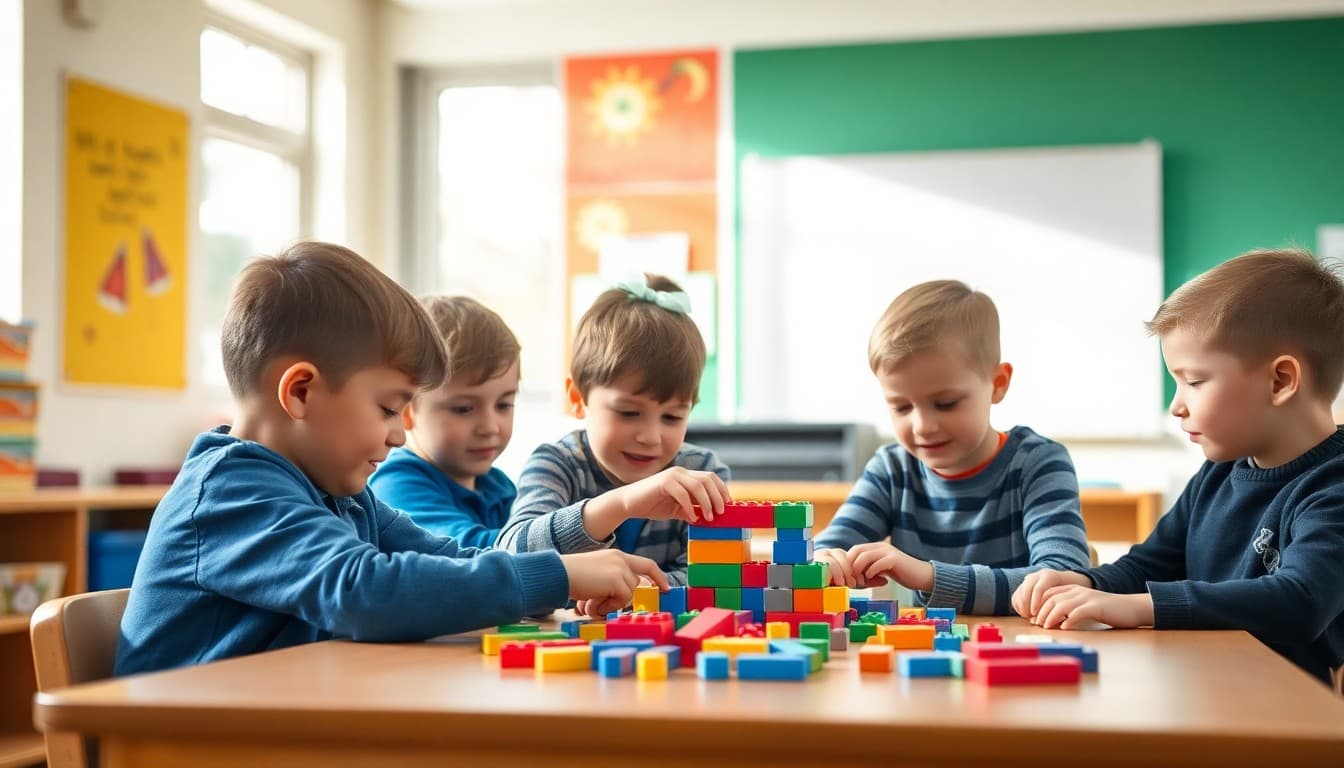
Kindergarten Transition Newsletter: Social Skills Your Child Needs
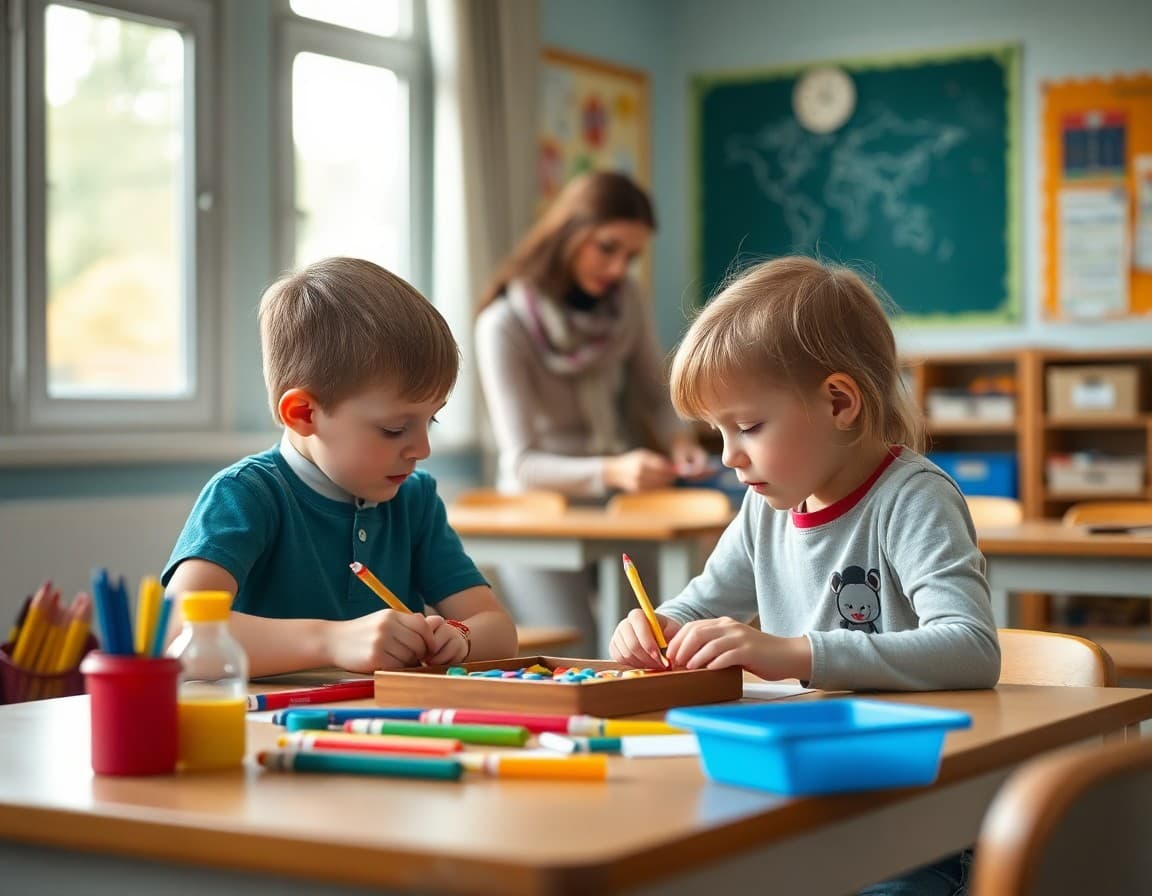
Every kindergarten teacher has a version of the same observation: the children who thrive in the first months of kindergarten are not necessarily the ones with the strongest academic preparation. They are the ones who can function in a group, handle disappointment without falling apart, and communicate their needs to an adult they have just met. This newsletter covers the specific social skills that make the biggest difference in kindergarten and how to build them.
Following directions in a group
The first social skill that matters in a classroom is the ability to follow directions given to the group, not to the individual. "Everyone put your pencils down" requires a child to attend to an instruction that was not directed at them specifically. Many children who follow individual instructions easily struggle with group directions because they have not had experience with them.
Build this at home by giving group instructions when multiple family members are present. Include your child in the group rather than always addressing them directly.
Waiting without a meltdown
Waiting is the social skill that comes up the most in a kindergarten classroom. Waiting for a turn to speak, waiting for materials to be distributed, waiting for recess to start. Children who cannot wait without escalating pull the entire classroom off task. The ability to wait calmly is not just polite, it is a learning prerequisite.
Practice waiting in real situations: in line at the grocery store, at a restaurant, at a doctor's office. Do not always shortcut the wait for a child who is impatient. The experience of waiting and surviving it teaches the skill.
Using words when upset
Physical responses to frustration, grabbing, hitting, pushing, are very common at five years old and create significant problems in a classroom. The move from physical to verbal expression is one of the core developmental tasks of early childhood, and it is not automatic. Children who have language for their emotional states and who have practiced using it are significantly ahead.

Asking for help from an adult
A child who cannot or will not ask for help from an unfamiliar adult will struggle in kindergarten. The skill involves knowing when to ask, who to ask, and how to ask, none of which are obvious to a five-year-old who has only had experience with familiar caregivers. Practice this explicitly: role-play asking a teacher for help finding something or telling a teacher they do not understand an instruction.
Joining a group activity in progress
One of the hardest social moves for kindergartners is joining an activity that is already happening. Walking up to a group playing on the playground and asking to join, or sitting down at a table where other children are already working, requires social skills that are more sophisticated than many people realize.
Practice this at home and on playgrounds over the summer. When you see your child hesitating at the edge of an activity, coach them through it rather than doing it for them.
Handling losing without a crisis
Games are woven through the kindergarten day and playground. A child who cannot handle losing creates problems for the entire group. The ability to lose a game with grace is a learnable skill, and the best way to learn it is to lose in a safe environment where the loss is acknowledged, the feeling is validated, and play continues.
Get one newsletter idea every week.
Free. For teachers. No spam.
Frequently asked questions
What social skills do kindergartners need on day one?
The ability to follow a two-step direction, wait for a turn without a meltdown, use words rather than physical responses when upset, greet an adult or peer appropriately, and separate from their caregiver without prolonged distress. These are the minimums. A child who has these five skills can function in a kindergarten classroom even if they have gaps in every other area.
How do I teach my child to take turns before kindergarten?
Play games. Board games, card games, and even simple exchanges with a ball build the turn-taking muscle in a context where the child is motivated. The key is that turn-taking happens at the pace of the game, not at the pace of the child's preference. A child who has played a hundred rounds of a simple board game has practiced waiting more than any classroom instruction can replicate in the same time.
What if my child is aggressive with peers?
Address the specific behavior directly and consistently, give the child language to use instead, and get the school counselor involved early if the pattern continues. Physical aggression in kindergarten is common but not acceptable, and the earlier it is addressed through consistent, specific intervention, the less likely it is to become entrenched. Tell the teacher at the start of the year what you are working on at home.
Should I worry if my kindergartner is shy and does not make friends easily?
Shyness and introversion are normal traits, not social deficits. A child who warms up slowly but eventually forms close, sustained friendships is socially healthy. Watch for: does the child want friendships even if they have difficulty initiating them? Do they have at least one positive peer connection? Are they excluded or do they choose to play alone? The desire for connection alongside difficulty initiating is very different from not caring about peers.
How does Daystage help teachers communicate social-emotional learning goals to kindergarten families?
A weekly newsletter through Daystage can include a brief note about the social skill the class is working on, such as raising hands, taking turns in a group discussion, or using "I feel" statements. When families know what the classroom is targeting, they can use the same language at home. The consistency between school and home is one of the most powerful accelerators of social skill development.

Adi Ackerman
Author
Adi Ackerman is a former classroom teacher and curriculum writer with 8 years in K-8 schools. She writes about school communication, parent engagement, and what actually works in real classrooms.
More for Kindergarten Transition
Kindergarten Parent Newsletter: Social Skills Support At Home
Kindergarten Transition · 6 min read
Kindergarten Transition Newsletter: How to Help Your Child Make Friends
Kindergarten Transition · 6 min read
Kindergarten Transition Newsletter: Is My Child Ready? A Real Guide
Kindergarten Transition · 6 min read
Ready to send your first newsletter?
3 newsletters free. No credit card. First one ready in under 5 minutes.
Get started free