
Kindergarten Transition Newsletter: Math Readiness Activities for Families
Kindergarten math is built on number sense, a deep, intuitive understanding that numbers represent real quantities and relate to each other in predictable ways. That understanding does not come from memorization. It comes from counting real objects, comparing real groups, and playing with quantities in hands-on contexts. This newsletter covers the math readiness skills that matter and the activities that build them.
Counting with meaning, not just sound
Many children who can recite numbers to twenty cannot reliably count twenty objects with one-to-one correspondence. They count too fast and touch two objects for one count, or lose track. The rote counting is not the skill. The controlled, accurate counting of real objects is the skill.
Build this by counting real things together: the stairs, the grapes, the cars on the block. Slow down the count and touch each object. Practice counting in different directions, left to right, top to bottom, around a circle. The flexibility builds more solid number sense than always counting the same way.
Number recognition through everyday life
Numbers are everywhere and pointing them out builds recognition faster than any flashcard system. The number on the house, the aisle number at the store, the score of a game, the page number of a book. Make numerals part of the landscape your child notices rather than isolated symbols on paper.
Comparing quantities: the language of math
More, fewer, the same, greater than, less than: these words are the language of early mathematical reasoning. Use them naturally in daily life. "You have more crackers than I do. How many more?" "We need six plates and I only have four. How many more do I need?" Children who hear and use this language regularly develop mathematical thinking faster than those for whom the vocabulary is new in kindergarten.

Shapes and spatial reasoning
Shape recognition, circle, square, triangle, rectangle, and some early geometry concepts like sides and corners are part of kindergarten math. But the deeper skill under shape recognition is spatial reasoning: the ability to think about how shapes fit together, how a piece rotates, how a building is structured.
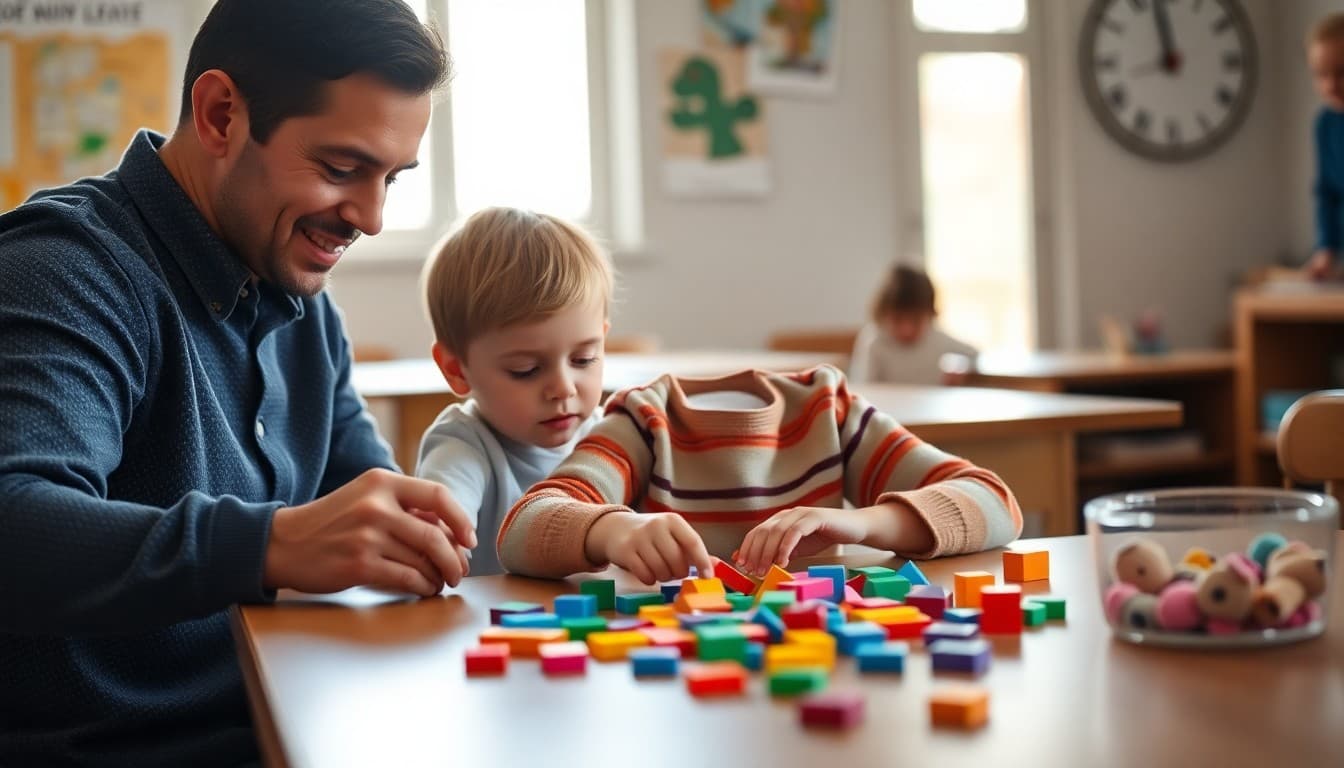
Build spatial reasoning through puzzles, blocks, and tangrams. These are the toy-based activities with the strongest research connection to mathematical ability in school. A child who plays with puzzles and building blocks regularly has developed something that arithmetic drills cannot build.
Sorting and classifying
Sorting objects into groups by color, size, shape, or type is one of the foundational mathematical skills of kindergarten. It builds logical classification thinking that connects directly to later data work. A sorting basket with mixed objects, a collection of buttons or coins or small toys, is one of the most mathematically productive things you can have in your home.
Games: the most sustainable math practice
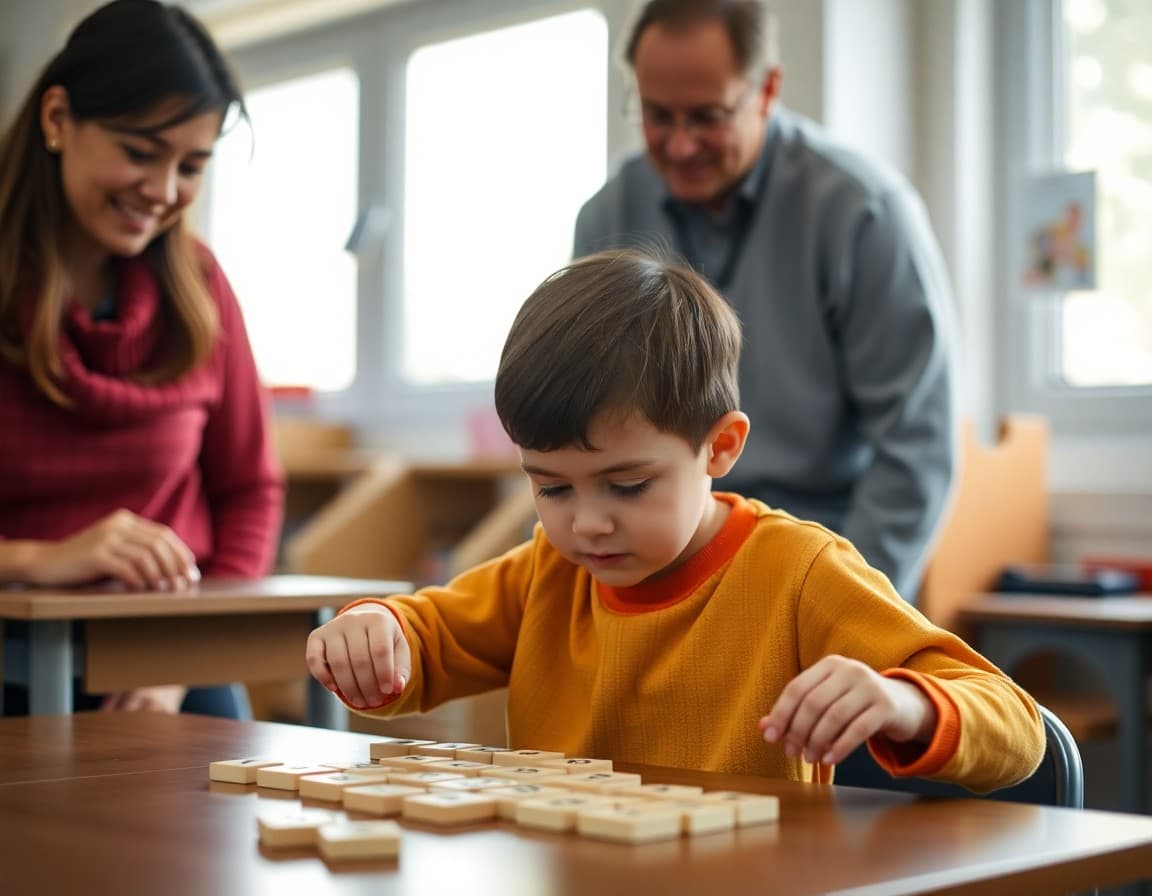
Board games, card games, and dice games build number recognition and comparison in a context where your child is motivated. The math happens as a means to an end, winning the game, which is why it sticks. A child who has played two hundred rounds of simple number games has practiced mathematical thinking more than any worksheet sequence can replicate.
Get one newsletter idea every week.
Free. For teachers. No spam.
Frequently asked questions
What math skills should a kindergartner have at school entry?
Counting ten to fifteen objects with one-to-one correspondence, recognizing numerals zero through ten, comparing two groups and using words like more, fewer, or the same, identifying basic shapes like circles, squares, triangles, and rectangles, and sorting objects by one attribute like color or size. These are the foundations the kindergarten curriculum builds on, and children who have them are ready for formal math instruction.
How do I know if my child has number sense?
Ask them to count out exactly six objects from a larger pile and stop. A child with solid one-to-one correspondence will count out six and stop. A child still developing it will count but continue beyond six or stop early. You can also hold up five fingers on one hand and ask them to show you five without counting, just recognizing it. Quick, accurate quantity recognition is a sign of developing number sense.
Is learning to count to one hundred important before kindergarten?
Not particularly. Rote counting to one hundred is a memorization exercise. The skill that predicts mathematical success is quantity understanding: does the child understand what five means and can they compare it to four and six? A child who understands quantity is better prepared than one who can recite numbers to one hundred without understanding what they represent.
What is spatial reasoning and why does it matter for kindergarten math?
Spatial reasoning is the ability to think about shapes, positions, and how things fit together. It predicts mathematical ability at least as strongly as number skills and is built through play with blocks, puzzles, and manipulatives. Building towers, completing puzzles, and describing where things are using position words like above, below, next to, and beside are all spatial reasoning activities.
How does Daystage help teachers communicate math readiness activities to incoming kindergarten families?
A summer newsletter sent through Daystage to incoming kindergarten families can include five or six specific math readiness activities, along with a brief explanation of why each one matters. That newsletter gives families who want to prepare their child specific and achievable things to do, without creating unnecessary anxiety about academic preparation.

Adi Ackerman
Author
Adi Ackerman is a former classroom teacher and curriculum writer with 8 years in K-8 schools. She writes about school communication, parent engagement, and what actually works in real classrooms.
More for Kindergarten Transition
Kindergarten Parent Newsletter: Math Support At Home Tips
Kindergarten Transition · 6 min read
Kindergarten Transition Newsletter: Is My Child Ready? A Real Guide
Kindergarten Transition · 6 min read
Kindergarten Transition Newsletter: Fine Motor Skills for Kindergartners
Kindergarten Transition · 6 min read
Ready to send your first newsletter?
3 newsletters free. No credit card. First one ready in under 5 minutes.
Get started free